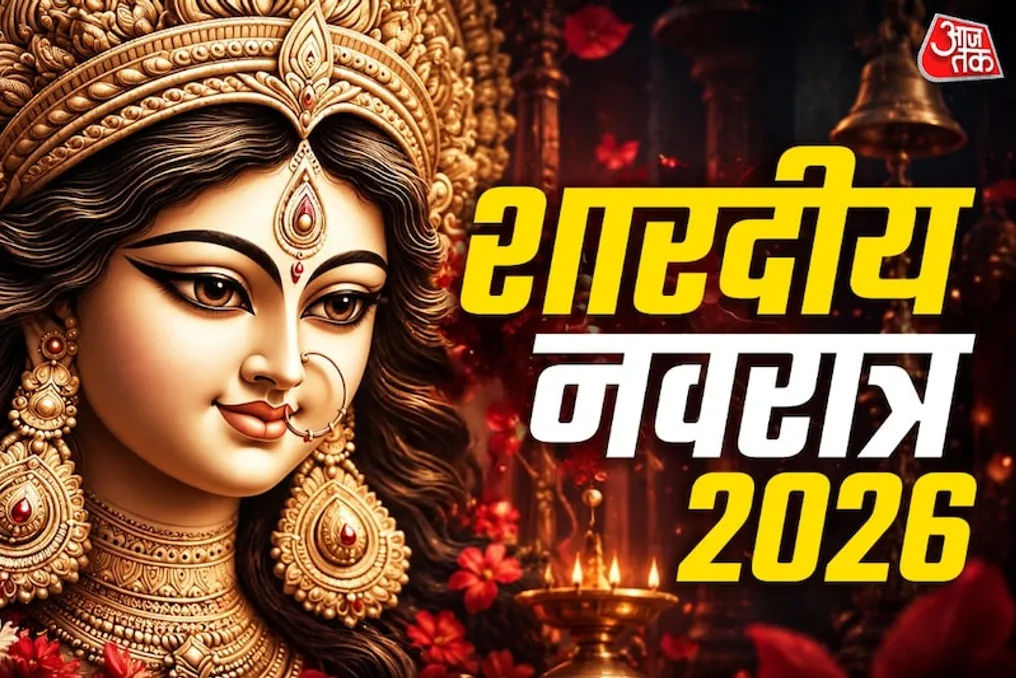
Dates and Auspicious Time to Begin Sharadiya Navratri 2026: Information on Kalash Sthapana
Read more
Aaj Tak
www.aajtak.in

Dates and Auspicious Time to Begin Sharadiya Navratri 2026: Information on Kalash Sthapana

Navratri, known as Sharadiya Navratri, is approaching. Questions arise regarding the start dates of the festival, the auspicious time for installing the kalash (Kalash Sthapana), and the significance of this event. These questions are addressed by Pandit Pravin Mishra.

Every year, Sharadiya Navratri begins after the end of Pitru Paksha, with the first date of the Ashwin lunar month. The nine days of Navratri are considered extremely important for worship and devotion to Goddess Durga, during which the nine aspects of Mother Durga are revered. This period concludes with the festival of Vijayadashami, or Dasara, celebrated on the tenth day.

Sharadiya Navratri Dates 2026

To dispel doubts about the timing, it is reported that in 2026, Sharadiya Navratri will begin on October 11. The start date is linked to the fact that the first lunar phase of the Ashwin month will begin on the evening of October 10 at 21:19 and last until 21:30 on October 11. According to the ascending date, the first day of Navratri will be counted from October 11.

Auspicious Time for Kalash Installation

Regarding the auspicious time for performing Ghat Sthapana, or kalash installation, on October 11, there is a primary auspicious window from 6:32 AM to 10:26 AM. During this interval, the kalash installation can be performed, and worship can commence during Navratri. If for any reason the ceremony cannot be held at the specified time, the kalash installation is also possible on October 11 from 12:02 PM to 12:48 PM.

Goddess Worship Schedule

The first day of Navratri, October 11, is dedicated to worshipping Maa Shailputri. The second day, October 12, will be dedicated to worshipping Maa Brahmacharini. The third day, October 13, is for worshipping Maa Chandraganta. The fourth day, October 14, is for worshipping Maa Kushmanda. The fifth day, October 15, is for worshipping Maa Skandamata. The sixth day, October 16, is for worshipping Maa Katyayani. The seventh day, October 17, is for worshipping Maa Kalaratri; since the seventh date extends for two days, the worship of Maa Kalaratri will also take place on October 18.

After this, on October 19, the eighth and ninth days will occur simultaneously. On this day, worship of Maa Mahagauri will be performed first, followed by worship of Maa Siddhidatri. Thus, October 19 will be the last day of Sharadiya Navratri, and the following day, October 20, 2026, will be marked by the festival of Vijayadashami, or Dasara.
Similar stories

Pitru Paksha Dates for 2026: Information on Shraddha Rituals
Read more
www.aajtak.in

Pitru Paksha Dates for 2026: Information on Shraddha Rituals

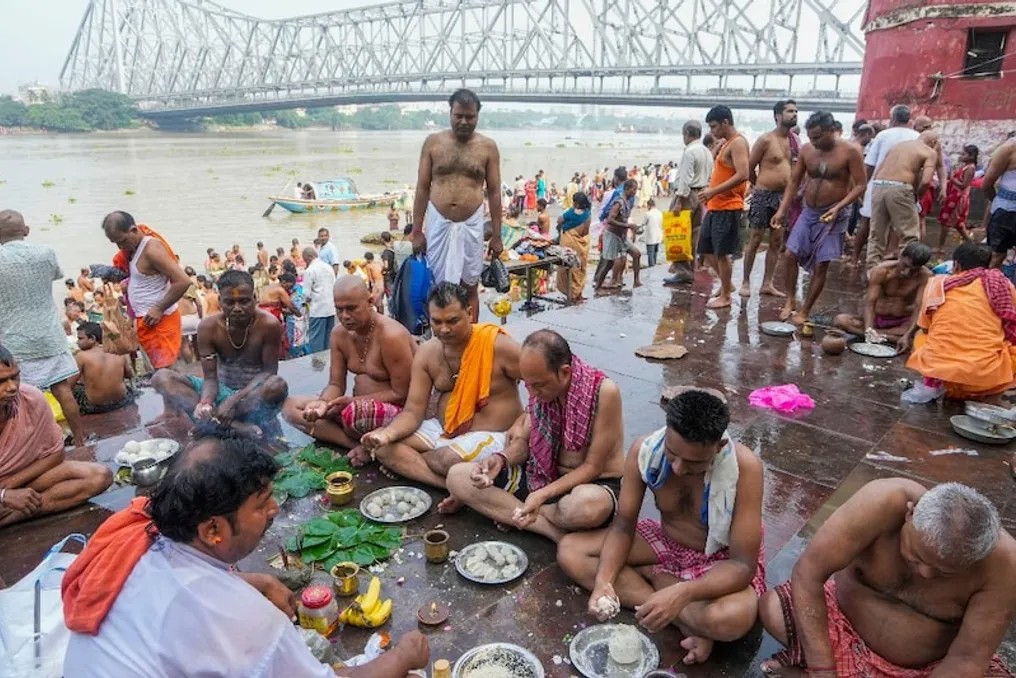
In Hinduism, Pitru Paksha is considered a special period for honoring ancestors and expressing reverence towards them. During this time, various rites such as Shraddha, Tarpan, and Pindadaan are performed for deceased family members. There is a belief that remembering ancestors and performing religious acts for their spiritual peace holds particular significance during these days.

Pitru Paksha 2026

In 2026, Pitru Paksha will begin on September 27th and conclude on October 10th, which is Sarvapitri Amavasya. Additionally, a Pournima Shraddha will be performed on September 26th.

When does Pitru Paksha start?

Pitru Paksha in 2026 starts on September 27th. During this period, ancestor remembrance is conducted according to different dates. Traditionally, Shraddha is performed on the day of a person's death. However, it should be noted that differences may exist across various regions and families based on Panchanga calculations.

The last day of Pitru Paksha will be October 10th, when Sarvapitri Amavasya is observed. This day is also important for ancestors whose dates of death are unknown.

Main Dates of Pitru Paksha in 2026

The main dates include: Pournima Shraddha — September 26th; Pratipada Shraddha — September 27th; Dwitiya Shraddha — September 28th; Tritiya Shraddha — September 29th; Chaturthi Shraddha — September 30th; Panchami Shraddha — October 1st; Shashthi Shraddha — October 2nd; Saptami Shraddha — October 3rd; Ashtami Shraddha — October 3rd; Navami Shraddha — October 4th; Dashami Shraddha — October 5th; Ekadashi Shraddha — October 6th; Dwadashi Shraddha — October 7th; Trayodashi Shraddha — October 8th; Chaturdashi Shraddha — October 9th; and Sarvapitri Amavasya — October 10th.

It is important to remember that Shraddha dates depend on lunar calendars and local Panchanga calculations, so when determining the time for a specific ritual, one should refer to the local Panchanga or family traditions.

What is Shraddha?

Shraddha is related to expressing respect and reverence for ancestors. During Pitru Paksha, family members perform Shraddha rituals according to the date of death of their deceased relatives. These rites involve worship, offering food, and charity, and their performance may vary depending on family and regional traditions.

How is Tarpan performed?

Tarpan also holds great significance during Pitru Paksha. In this ritual, water is offered to the ancestors. According to many traditions, water in a copper vessel, black seeds, milk, and Ganga water are used for Tarpan. Kusha is also considered a sacred plant. Traditionally, when performing Tarpan, one should face south, as the southern direction is associated with the Pitras in Hindu beliefs.

What is the significance of Pindadaan?

Pindadaan is an important part of pitra rituals. During this, pindas are offered to the ancestors. The method of making and offering pindas can vary depending on different religious traditions and family customs. Some families also perform Pindadaan at pilgrimage sites during Pitru Paksha, following methods indicated by local traditions and the priest.

What is included in the food during Shraddha?

Many families have a tradition of preparing sattvic food on Shraddha days. The composition of the dishes may differ depending on the region and family customs. According to several traditions, a portion of the food during Shraddha is given to animals such as cows, dogs, and crows, which is considered part of the religious practice.

What is avoided during Pitru Paksha?

Pitru Paksha is generally viewed as a time for ancestor remembrance and performing religious rites. Therefore, many families try to avoid holding large and auspicious events during this period. Traditionally, auspicious events such as weddings, as well as starting new businesses or important endeavors, are refrained from during these days. It is also recommended to refrain from moving into a new house or purchasing expensive or luxurious items, as well as holding large festivals or celebrations. Nevertheless, adherence to these rules is not universal for all families, as religious traditions can change depending on the region, community, and family customs.

Furthermore, there is a tradition during Pitru Paksha of donating and helping the needy. Many people donate food, clothing, footwear, til, and other necessary items during this period. Charity is seen as a way to express reverence for ancestors and help those in need.

It is important to remember that the methods of performing Shraddha and Tarpan are not uniform everywhere. The correct determination of the date and method of Shraddha should be based on the traditions of one's family and the local Panchanga.

Popular