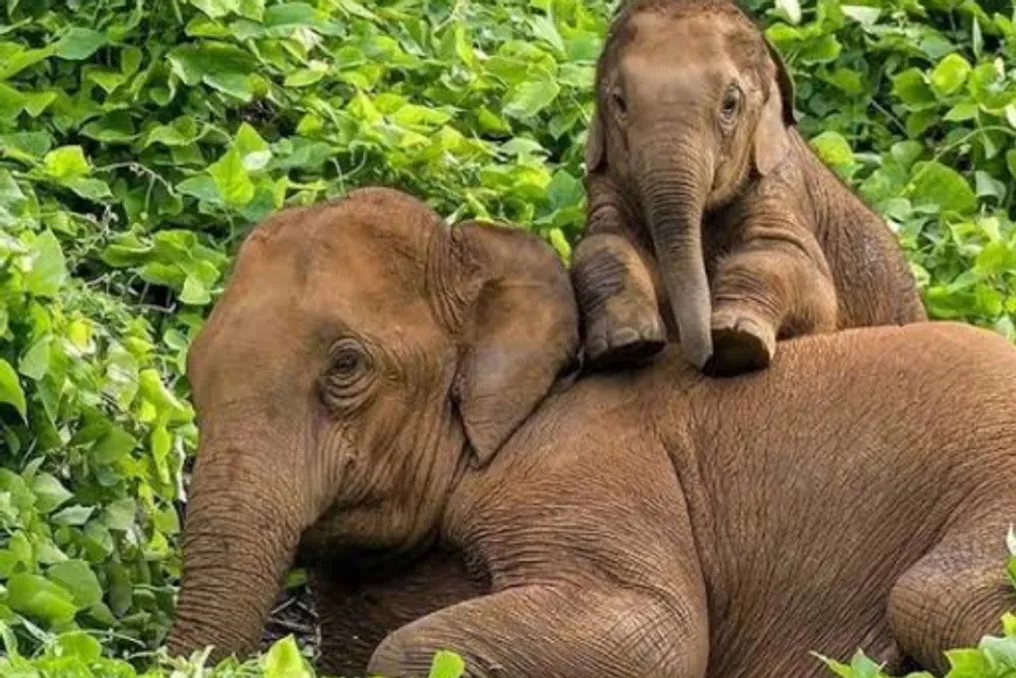
Elephant family orientation system guides them across the India-Nepal border, supported by local residents
Read more
The Better India
thebetterindia.com

Elephant family orientation system guides them across the India-Nepal border, supported by local residents

As part of National Wildlife Week, various ways in which human choices influence relationships with wildlife are being examined, including what we grow, what we believe, what we consume, and how we understand animals. A series of four stories explores daily conflicts and connections, as well as people who find more thoughtful ways to coexist with wild animals.

Elephants learn about the world much like children learn a new place: they follow someone, observe their steps, and gradually master the route. Their classroom is a forest spanning two countries, and the teacher is often the oldest female in the family, who traversed this path decades ago.

Before dawn, the elephant herd begins to move. The oldest female leads, moving confidently without stopping to search for the way forward or hesitating at junctions. Her guide is memory—her own and that of her mother.

Behind her, the rest of the herd follows in a line. Mothers keep their calves close. It is an impressive sight when a herd of about 60 elephants crosses railway tracks between Habaipur and Lamsakhang on October 16, thanks to the heroic actions of Loko Pilot Das and Assistant Loko Pilot Umesh Kumar.

None of the calves have ever made this journey, yet by the end of the day, they will cross the river, enter another country, and reach the forests. Along the Terai Arc landscape, the herds travel back and forth between the Katarnigat reserve in Uttar Pradesh and Bardia National Park in Nepal, using the same forest corridors their families have used for generations.

Elephants possess culture, and every journey serves as a means of transmitting this culture. The answer to the significance of culture for an elephant begins at the river.

Lessons in Motion

When the herd reaches the Gerua River, the current is strong after the rains, but the matriarch enters first. Younger females follow her, and the youngest calves stop on the bank, placing their feet exactly where their mothers stood previously. Adults instinctively close ranks, forming a loose circle around the youngest family members during the river crossing.

Conservationists note that upon closer inspection, this does not look like just an ordinary river crossing. According to Apurva Dikshit, an Indian Forest Service employee and Divisional Forest Inspector of the Katarnigat division, elephants continue to return because the Terai still provides a connected habitat with abundant water and food resources. He notes that the Terai region has plenty of water, extensive sugarcane cultivation, and suitable habitat, although habitat fragmentation elsewhere can affect their behavior.

Dikshit also believes that changes in parts of the Nepali landscape may shape how herds use the corridor today, making the connected forests in the Indian Terai increasingly vital. However, he is most struck by the river crossing itself. He says it is one of the most beautiful sights to witness—entire herds crossing together, with calves often stopping to play in the water or try to swim while adults wait, demonstrating their deep sociality.

These moments are difficult to quantify with numbers. Calves learn where the river is shallow enough to cross, how to move with the current, when to wait, and when to follow. No one gives them instructions; they learn simply by being near, much like a child learning to cross a busy road while holding a parent's hand and copying their movements.

In biology, culture is defined as knowledge and behavior acquired socially and passed down through generations, rather than inherited genetically. For elephants, this includes migration routes, feeding grounds, communication, reaction to danger, and even seasonal movement timings. Their world is built not only on instincts but also on memory.

Now Even the Law is Catching Up

On August 17, 2026, the Supreme Court intervened to protect these ancient paths, clearly stating that elephants should not be stopped merely because their journey crosses farms or settlements. In a hearing regarding the protection of wildlife ecological corridors, the three-judge bench led by the Chief Justice of India, Surya Kant, ruled: 'We clearly understand that there should be no obstacles on wildlife routes. Elephant herds have the practice of long-distance travel.'

The court directed the Centre to conduct a new nationwide review of elephant corridors and identify obstacles, emphasizing that crop damage cannot justify blocking traditional routes.

The Herd's Living Library

At the center of this system is the matriarch. Unlike species where leadership depends on physical strength, elephants are guided by experience. The oldest female carries decades of knowledge accumulated from repeated journeys through forests, rivers, and grasslands. She remembers which watering holes survive the driest summers, knows where bamboo regrows after the rains, and where mineral-rich salt licks are hidden. She recognizes safe places to cross rivers and understands which routes have become more difficult due to landscape changes.

Her memory becomes the herd's map. Sometimes this map determines who survives. Researchers studying African elephants in Tanzania during a severe drought found a striking fact: families led by older matriarchs who remembered previous droughts and knew where else to find water lost significantly fewer calves than families led by younger females.

Thus, migration is much more than just moving between two points.

Why Elephants Return

Across India, from the Nilgiri Biosphere Reserve in the south to the forests of Assam, Odisha, northern West Bengal, and the Terai, herds continue to follow ancient paths now recognized as elephant corridors. GPS tracking has shown that elephants repeatedly return to the same river crossings, forest clearings, and seasonal feeding grounds with astonishing accuracy. They are not wandering in search of habitat; they are repeating routes learned by previous generations.

The Katarnigat elephant corridor is one of the clearest examples of this continuity. Spanning across India and Nepal, it connects the Katarnigat reserve with Bardia National Park, allowing elephants, tigers, and rhinos to move freely across an ecological landscape that existed before political borders. Before the international border divided the two countries, these forests constituted a single ecosystem, and the elephants behave as if it still does.

Sitanshu Das, Assistant Project Manager (Biodiversity) at the Nature and Wildlife Society (NEWS), notes: 'The presence of natural barriers, such as rivers, is not the problem. Poorly planned development leading to forest loss and fragmentation affects elephant movement across landscapes and hinders connectivity.' He adds that when corridors disappear, elephants risk losing the ability to transmit knowledge accumulated over generations. A calf prevented from following a traditional route cannot learn it, and if enough generations miss this journey, the entire migratory tradition could vanish.

Understanding this changes the approach to conservation in landscapes like Katarnigat. Since October 2023, the Gajamitra (Elephant Friend) program has placed local communities at the center of these efforts. Residents trained under this initiative monitor elephant movements, warn nearby villages, patrol forest boundaries, and help safely guide herds without causing harm.

Ajanta Dey, Deputy Secretary and Program Director at NEWS, states: 'Our goal is not only to reduce crop losses or property damage but also to create an environment where humans and elephants can coexist safely and sustainably.' He emphasizes that NEWS's future for conservation lies in combining science, community management, and strong institutional partnerships.

For forest officials, these crossings serve as a reminder of how deeply rooted these traditions are. Thus, a calf splashing in the Gerua River is doing more than just playing; it is rehearsing a journey it will repeat throughout its life. Years from now, one of these calves will become a matriarch. She will lead the next generation through the same forests, stop at familiar river bends, and choose the paths she first learned by walking alongside her mother. This is how their culture survives.
Similar stories

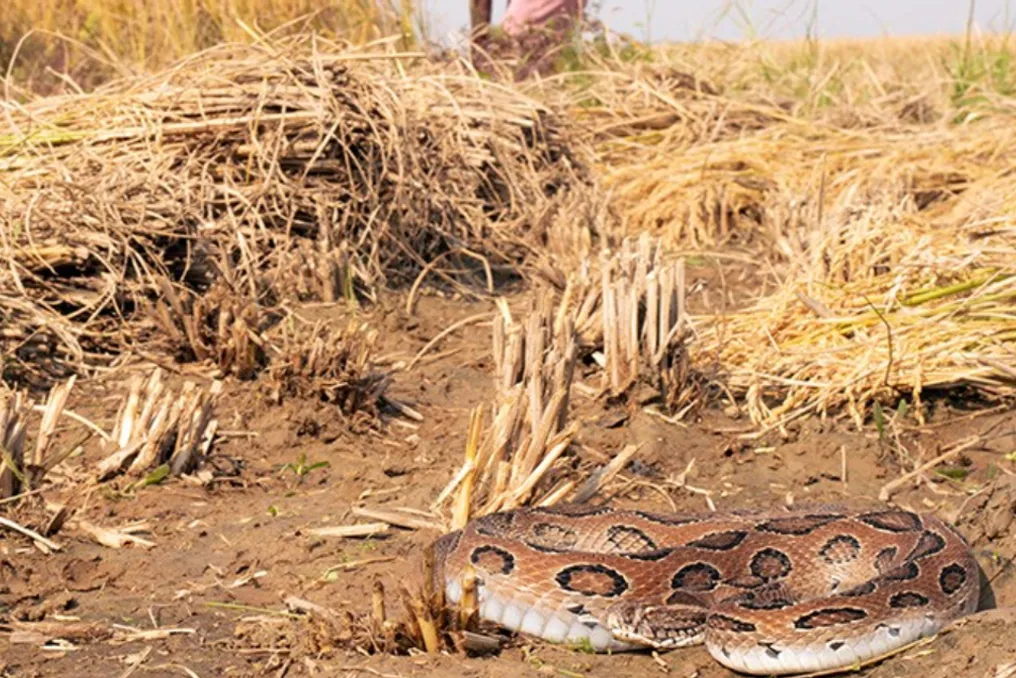
Experts discuss how to make snake encounters safer, as completely excluding them from residential areas is impossible
Read more
thebetterindia.com

Experts discuss how to make snake encounters safer, as completely excluding them from residential areas is impossible

On a rainy day, a snake does not distinguish that the dry spot it finds belongs to a human. This could be a garage, a storeroom, a pile of building materials, a drain, a garden, a car hood, or the space under a bed. If its usual shelter is flooded with water, the animal simply looks for another place to survive.

This is one of the reasons why snake encounters are becoming more frequent in the rainy months of India. In the past, during the monsoon, such cases were recorded in both apartment buildings and university campuses. In Agra, rescuers reported over a hundred calls to rescue snakes between June and mid-July, and in Kashmir, snakes inside car hoods and chicken coops were also reported.

Although such observations can generate striking photographs, the scale of the problem is difficult to measure because many bites never enter the official healthcare system, according to the National Center for Disease Control of India's Guidelines for Standard Snakebite Treatment. The document notes that many victims first consult traditional healers and do not register at hospitals.

A new study published in PLOS Medicine in 2026 by researchers affiliated with the Liverpool School of Tropical Medicine estimates that between 2.1 and 7 million people worldwide may be poisoned by snakes annually. The modeling of this study places India among countries with the highest burden, with estimates in the hundreds of thousands of cases and an upper limit of about 1.3 million snakebites per year.

Mortality in India is also significant. Earlier studies based on nationally representative mortality data estimated around 58,000 deaths from snakebites annually between 2000 and 2019. An analysis conducted in Nature Communications in 2022 estimated 51,100 deaths from snakebites in India in 2019 alone, noting significant uncertainty in the figures. These figures vary because snakebite cases remain underreported.

However, in India, a snakebite is simultaneously an issue of wildlife, a public health concern, and a question of how people build and inhabit landscapes. The publication The Better India examined public health data and interviewed Bijju Raj, Director of Conservation Projects and Senior Wildlife Biologist at Wildlife SOS, to understand the reasons for these encounters, why some become fatal, and why even the age-old belief about milk can put snakes at risk.

How Rain Changes the Map

Snakes are cold-blooded animals, meaning their body temperature is largely regulated by the environment. Thus, weather, temperature, and water affect where they can shelter and move. Bijju Raj explains: 'When it is sunny, snakes move to cooler places. That is how their body thermoregulation works.' He continues that rain, whether monsoon, sudden downpour, or unprecedented flooding, can completely disrupt the snake's habitat.

A burrow, crevice, or patch of vegetation that was safe yesterday might be flooded today. 'They are forced to move away from the water and look for dry land or some shelter,' he says. This shelter can be anywhere that provides protection. This is why the idea that a snake somehow decided to 'intrude' into a house can be mistaken.

Raj notes: 'It is not necessarily the snake's fault. The problem is that we sometimes invite them.' He adds that wherever there is garbage, unused materials, or items lying in one corner for years, rats are likely to appear. 'If you have rats in your car, for example, the smell of rat urine can become extremely strong. Snakes can detect this smell and head to that area because they associate it with a potential food source.'

This means the problem is not limited to villages or mud houses. 'Snakes are not necessarily forest animals living only in jungles like tigers or leopards. Wherever they find suitable shelter and a place where prey, such as rats, is available, they can survive.'

Can You Test if a Snake is Venomous?

Raj warns that the first mistake after spotting a snake is trying to figure out what species it is. Several species can look similar, and approaching the animal for a better view can turn an encounter into a confrontation. So, what is the ideal first reaction when seeing a snake?

'We always tell people not to approach the snake,' says Raj. 'Observe it from a safe distance and watch where it moves.' If this can be done without approaching the animal, a photograph can be helpful. 'Our rescuers often ask people to send us a photo. Even if it takes a rescuer an hour to reach the location, a photo can help us identify the snake and inform the person whether it is a rat snake or another harmless species.'

One should not try to catch it. Videos of trained rescuers can create another problem by making handling snakes seem easier than it actually is. Raj explains: 'The difference lies in the rescuer's experience and how they handle the situation. The snake can still be dangerous, even if it seems calm.'

Therefore, the safest reaction is distance, observation, and having a trained rescue service available, if one exists.

The Answer Has Changed Now

He recalls that when organized snake rescue was just developing in Delhi, people often called the police when a snake appeared. By the time a trained rescuer arrived, the animal might already have been killed. This approach has not disappeared entirely. However, awareness and access to trained rescuers have changed the course of many encounters.

Raj asserts: 'Wildlife rescue has advanced significantly from that situation. Now people are willing to wait two or three hours for a trained rescuer to arrive.' Awareness has also spread beyond social media. 'There are still many people who do not use social media and rely on newspapers. They see photos and reports of rescue operations, save numbers, and call when they encounter a snake.'

A snake that is not cornered and not subjected to unnecessary handling is less likely to be provoked into defensive behavior. But avoiding the snake is only part of the problem. The other part begins when a person is bitten.

The Real Emergency

Snakebite poisoning is treatable, but treatment depends on time. The WHO has identified access to effective treatment and stronger healthcare systems as central elements in reducing snakebite mortality. Its global strategy aims to halve snakebite-related mortality and disability by 2030.

India's National Action Plan for Prevention and Control of Snakebite Envenoming, launched in March 2024, similarly focuses on surveillance, healthcare capacity, emergency services, access to antivenom, training, and public awareness. However, the problem is that people at the highest risk may also be the furthest from timely treatment. For a person bitten in a remote Indian village, the hospital might be somewhere in the district. Therefore, the question is whether the person can quickly reach a facility with trained personnel and proper treatment.

Raj emphasizes: 'The most important thing is timely arrival at the hospital. You cannot waste time after a snakebite.' This is why a snakebite cannot be reduced to a story about snakes. It is also a story about roads, transport, medical facilities, awareness, and data.

Awareness is Important Due to Myths

There is a belief that snakes drink milk. But snakes are not milk-drinking animals. 'Snakes are reptiles, and they cannot digest milk,' says Raj. 'They are predators. They eat other animals; milk is not part of their natural diet.'

So why might a snake appear to drink milk? 'If you keep a snake without water for 10 or 20 days, and then place it in liquid, it may consume that liquid because it is severely dehydrated. It reacts to the availability of fluid, not specifically chooses milk; it might consume sweet drinks too.'

'The snake seeks fluid because it is dehydrated, but milk can harm it because it is not something the snake can digest.'

Don't Let This Go Unnoticed

The 2026 PLOS Medicine study notes that data on snakebites remains sparse and uneven across different countries, and that modeling is necessary because many cases are never recorded in formal systems. For India, therefore, the task is twofold. People need to know how to avoid dangerous encounters and seek prompt treatment. At the same time, snakes should not be viewed as invaders just because they crossed an invisible human boundary.

We need to understand why this happens, reduce the conditions that lead to unnecessary closeness between snakes and humans, leave wildlife handling to trained rescuers, reject myths that harm animals, and ensure that medical treatment is not delayed in the event of a possible venomous bite.

Popular