
Women's safety in South Africa is viewed as a factor in strengthening the country's future
Read more
IOL
iol.co.za

Women's safety in South Africa is viewed as a factor in strengthening the country's future

There comes a point when a nation must pause, step beyond daily headlines, and ask itself a difficult question: what will happen to society if its women cannot live, work, travel, raise families, and participate in public life safely? South Africa is experiencing such a critical period.

In such moments, the phrase 'I am my sister's guardian' takes on deep meaning. This theme, chosen for the newly established AWSISA Women's Forum, goes beyond a simple expression of solidarity among women. It is a call for collective responsibility, asserting that the well-being of one woman is inextricably linked to the well-being of another.

The forum challenges society to abandon indifference and recognize that the threat, violence, or murder of one woman weakens the entire community. Behind every statistic is a daughter who will not return home, a mother whose children will grow up without her, a sister whose absence will be felt at family gatherings, and a community deprived of irreplaceable human potential.

For this reason, femicide cannot be viewed solely as a problem of criminal justice; it is also a crisis of social, cultural, economic, and developmental nature. Women are the primary custodians of living heritage, through which societies reproduce. For generations, they have passed down languages, stories, customs, culinary traditions, local knowledge, family lore, and community values.

When a woman dies, more than just a life is lost; a chain of knowledge, care, memory, and belonging is broken. A nation that constantly loses its women to violence is not just losing citizens—it is dismantling the human foundation of its future. The principle of 'I am my sister's guardian' extends not only to protection from physical violence but also to preserving the knowledge, values, traditions, and connections that women pass down through generations.

This is also closely related to another vital resource—water. Water and women are intrinsically linked to life. Water sustains households, agriculture, healthcare, and communities. Historically, women, especially in rural and underserved areas, have borne a disproportionately large responsibility for finding, managing, and protecting water for their families, which remains a global reality.

Local data from South Africa confirms the gender aspect of water access. According to Statistics South Africa reports, female-headed households are more often forced to draw water from streams or rivers than male-headed ones, and women spend more time doing so. The consequences go far beyond mere inconvenience.

Therefore, water infrastructure is also social infrastructure. A reliable tap closer to home is not just a service delivery achievement; it can mean less time spent walking, greater dignity, increased safety, and new opportunities for women and girls.

During South Africa's National Water Month in 2026, this very connection was highlighted, placing water and gender at the center of its theme and spotlighting women's leadership in water decision-making.

The forum must become a platform where the voices of women in the water and sanitation sector can be organized, amplified, and translated into action. It must connect professional women in water institutions with women in rural communities, municipalities, research institutes, civil society, and the broader development community.

Its mandate must go beyond simply celebrating women. It must pose complex questions: Are water projects designed with women's safety and real living conditions in mind? Are rural women adequately represented in water resource management? Are sanitary facilities safe and dignified? Are women equipped with skills to lead water conservation and climate change resilience initiatives? How can water infrastructure reduce, rather than perpetuate, gender inequality? And, importantly, how can the water sector contribute to the overall fight against violence against women?

AWSISA's response must be based on partnership, evidence, and action. The Women's Forum can facilitate dialogues between women in the sector and communities; promote women's participation in water resource management; support mentorship and leadership development; advocate for safer and more accessible water and sanitation infrastructure; elevate local and community knowledge; and build partnerships in water security, climate resilience, and women's economic empowerment.

It can also help shift the perception of women in the water sector: from beneficiaries and users to leaders, custodians, professionals, and decision-makers. This is not about placing the burden of solving femicide on women. The phrase 'I am my sister's guardian' does not mean that women must bear the burden of protecting themselves from violence. It means we refuse to leave each other in distress. It signifies solidarity among women and accountability from the entire society.

The responsibility to end violence lies with all of society. Men must participate in this transformation. Institutions must be accountable. Communities must refuse to normalize violence. Law enforcement agencies must prosecute the guilty. And infrastructure planning must recognize that safety and dignity are fundamental aspects of service provision.

The grief caused by recent murders is immense. But grief must transform into action. The AWSISA Women's Forum provides the water sector with a unique opportunity to contribute to this action: by connecting women's protection with water protection, community resilience, and living heritage.

We cannot claim to protect our heritage while allowing the women who carry that heritage to live in fear. We cannot speak of water security while women continue to bear a disproportionate burden due to water scarcity. We cannot build climate-resilient communities without the knowledge, leadership, and participation of women. And we cannot build a sustainable nation while women are being killed.

Thus, the task before us is much broader than water. It is broader than gender. It is broader than infrastructure. It is about what kind of society we want to become. Let the AWSISA Women's Forum be part of that answer.

Let 'I am my sister's guardian' become not just a theme, but a commitment to stand beside women, defend their dignity, amplify their voices, uphold their right to live without fear, and ensure that their knowledge and leadership continue to strengthen future generations. Let us protect women. Let us protect water. Let us preserve the knowledge and heritage that binds generations together. Because every protected woman is a preserved future, every empowered girl is a strengthened generation, and every secured drop of water is an investment in the life of our communities.

Similar stories

Ministry of Health prioritizes women's health, calling it a shared responsibility
Read more
www.tehrantimes.com

Ministry of Health prioritizes women's health, calling it a shared responsibility

A healthy woman contributes to the formation of a dynamic family, a strong society, and a bright future. Therefore, ensuring women's health and developing a culture of self-care are the shared responsibility of women, families, the healthcare system, and society as a whole.

As part of this task, the Ministry of Health conducts annual nationwide programs to raise awareness about breast cancer, which coincide with Breast Cancer Awareness Month observed from October 1st to 31st, emphasizing the need to prioritize women's health.

According to the Ministry of Health website, quoting Jafar Jandaki, an official representative of the ministry, the programs focus on three key factors in combating the disease: a healthy lifestyle, early detection, and timely treatment.

He also stated that women aged 30 to 69 are offered training programs for self-examination and screening provided at medical centers.

Breast cancer is called the most common hidden form of cancer among women. Increasing women's knowledge about breast cancer, its risk factors, self-examination, associated warning signs, and encouraging timely screening and regular check-ups will help detect the disease at an early stage when treatment is most effective.

Adopting a healthy lifestyle, including maintaining a normal weight, exercising, eating a proper diet, and avoiding sedentary behavior, smoking, and alcohol, plays a crucial role in preventing breast cancer.

October is Breast Cancer Awareness Month—a global opportunity to draw attention to the issue and call for action to improve access to timely diagnosis and quality treatment.

The theme 'Every story is unique, every journey matters' acknowledges that every experience with breast cancer is different. Behind every diagnosis is a person, a family, and a unique path. People may face different difficulties depending on their diagnosis, treatment, support networks, and access to medical care.

Every person affected by breast cancer deserves support and dignified treatment. And everyone, regardless of where they live, must have access to the necessary care.

All countries should strive to reduce breast cancer mortality by 2.5 percent annually to bring the world closer to the goal of preventing 2.5 million deaths from this disease by 2040. This is achievable by incorporating breast cancer services into the basic benefits package for universal health insurance and ensuring their availability in public institutions.

With the right policies, services, and investments, countries can reduce breast cancer mortality and improve survival rates.

Significant disparities in breast cancer survival persist worldwide: it is expected that 41 percent of women in low-income countries will survive at least five years after diagnosis, compared to 87 percent in high-income countries. About 70 percent of breast cancer deaths occur in low- and middle-income countries, where access to early detection, timely diagnosis, and comprehensive treatment remains more limited. It is essential that everyone, everywhere, has an equal chance of surviving breast cancer.

The Ministry of Health plans to launch a national cancer treatment network in early autumn. The goal of the initiative is to consolidate scattered cancer treatment services into a coordinated, team-based, and trackable care pathway.

This measure is intended to ensure that patients entering the network follow a clear route through stages of diagnosis, treatment, and follow-up, eliminating the need for patients to visit various centers. Ali Motlak, an official representative of the Ministry of Health, was quoted by ISNA in September when discussing this.

There are no plans to build new medical centers; the network will utilize existing facilities to connect specialists and medical institutions. Patients will be referred to the best center and team of doctors based on the type of cancer, the center's capabilities, the patient's place of residence, and other established criteria, he noted.

The network's activities are focused on improving the quality of care, enhancing access, and reducing the financial burden of treatment for patients. Key components of the program will also include standardizing clinical protocols, systematic patient referral, teamwork, multidisciplinary decision-making, capacity management of centers, early diagnosis, patient support, and electronic tracking and monitoring of treatment pathways, the official emphasized.

According to Motlak, free cancer treatment does not mean unconditional access to all cancer-related services and all medications for free in both public and private sectors. The program aims to minimize out-of-pocket expenses for patients for covered services in the public sector, and in certain cases, to eliminate direct payments entirely.

Recording information about patients, their referrals, follow-up, and received care will help clarify the patient's current situation, confirm receipt of necessary services, and determine which center or entity is responsible for the next stage of treatment. He continued that the program will also consider incentives for specialists and centers joining the network and adhering to its standards, such as registering core information, following clinical protocols, participating in patient referral and follow-up, and being responsible for the quality of services provided.

The first phase of the program will begin by focusing on breast cancer. Qualified centers and service providers will be identified, and the actual capacity of these services will be established. After early detection, initial assessment using imaging, biopsy, and pathology, if cancer is confirmed, treatment will commence, Motlak said.

Ultimately, the success of the network should not only be measured by the number of services provided or patients registered. The fundamental question is whether the patient received standard care—on time, in the right place, and from the right team, with minimal financial and administrative barriers—and whether their entire journey to the next stage of treatment was fully tracked. The program aims to cover other types of cancer that are a top priority in the country by the end of the current Iranian year, in March 2027, he added.

Call to stop blaming women for male-perpetrated violence and focus on prevention
Read more
iol.co.za

Call to stop blaming women for male-perpetrated violence and focus on prevention

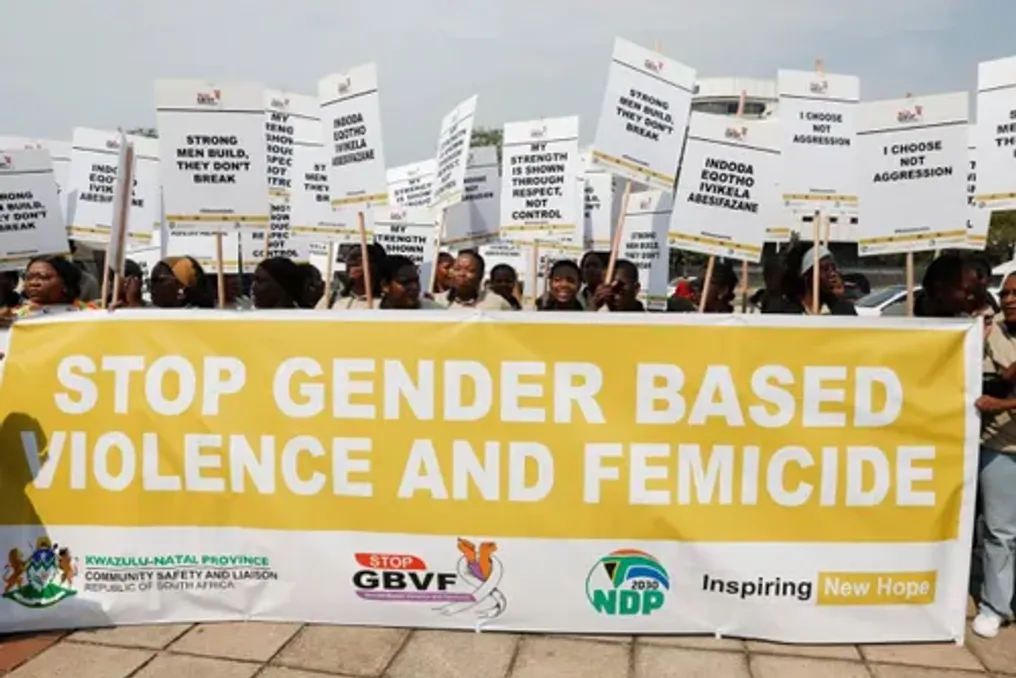
Women in South Africa, despite all the diversity, are tired of living in constant fear. They no longer want their names to become a topic of discussion after they have been raped, beaten, or murdered. They are tired of brief bursts of public outrage, vigils, candle lighting, marches against Gender-Based Violence Against Women and Girls (GBVF), wearing black on Fridays, holding symbolic funerals, temporary cessation of economic activity, and creating purple profiles on social media.

Furthermore, women are extremely irritated by promises that are invariably followed by predictable silence and inaction until another name, another face, or another hashtag appears. These people are not just statistics; they were women such as Elizabeth 'Thunto' Moselakgomo (2026), Delana Kader (2023), Tshegofatso Pule (2020), Uiyene Mrvetyana (2019), Zolile Humalo (2018), Karabo Mokoena (2017), Susan Road (2016), Jade Panayotou (2015), Riva Stingkamp (2013), and Anene Buysen (2013).

These examples represent only a small fraction of women who have experienced GBVF; they are the faces of those whose stories remain untold, whose bodies are unrecognized, and whose tragic fates do not make headlines in social or mainstream media. Meanwhile, the latest SAPS crime statistics (April–June 2026) indicate that 569 women were killed, corresponding to an average of more than six victims daily, and that 1052 women reported attempted murder during the same period.

Every quarter, the Minister of Police publishes reports that highlight the cruelty women face in a country that seems to be at war with them. Recently, the first National Study on Gender-Based Violence in South Africa (GBV) was published, providing baseline national estimates of Violence Against Women (VAW) alongside domestic violence perpetrated by men. The findings of this study were intended to serve as a call to action and an opportunity to adjust and accelerate the response to GBVF.

South Africa has some of the world's leading researchers in all forms of violence and femicide. Nevertheless, despite all this evidence, VAW remains the most pressing social problem facing South Africa in the post-apartheid era. Researchers have studied the factors contributing to GBV for decades, identifying gender inequality, harmful gender norms, masculinity constructs, early exposure to violence in childhood, alcohol use, economic stress, relationship dynamics, as well as the social and institutional environment that facilitates and may impede violence.

This work has allowed the focus of prevention to shift from simply engaging men and boys and raising awareness to changing gender relations, social norms, and, importantly, the systems that support inequality and violence, as well as what can prevent violence. The evidence base should indicate where and how to intervene to stop violence perpetrated by men. This evidence base must also translate into actionable interventions whose effectiveness can be measured by a reduction in the number of men committing violence and women experiencing violence in South Africa.

Our National Strategic Plan on Gender-Based Violence and Femicide recognizes this. Among its six pillars is the prevention and restoration of social cohesion, with an emphasis on evidence-based prevention, changing behavior and social norms, and shifting toxic masculinity. Although documented effective methods for preventing VAW exist, they remain small in scale and localized to specific population groups.

To date, not all implemented 'interventions' targeting men are evidence-based. Most are assessed merely by the number of men present, dialogues conducted, or promises signed, and so on. However, the number of participants only indicates whether we reached them. The number of dialogues held shows that an event took place. Neither, on its own, says whether men's behavior has changed.

As we fight the latest wave of femicides and tend to continue doing what we always have done, we must be careful not to confuse activity with real impact. Despite all the investment and allocation of funds for GBVF since the launch of the GBVF NSP, we must ask difficult but important questions. Failure to do so will lead to our own failure.

A quick review of current national work with men and boys often points to achieved figures or trained individuals, men's marches against GBV, signed pledges, dialogues held, Men's and Boys' Parliaments convened, positive masculinity and behavior change workshops, school programs, marches, and awareness campaigns, as well as the recent use of drama and poetry as educational tools to address GBVF issues. Some of these efforts are important for creating critically necessary initial spaces for conversations that many men and boys have never had, and can be gateways to challenging unquestioned gender and masculine norms. However, they cannot stop GBVF and reduce violence if implemented outside a well-funded, sustainable, scientifically sound, and effective prevention agenda.

If we are serious about making our response to GBVF evidence-based, we must ask about outcomes. Has the registered number of VAW cases decreased? Has the level of knowledge increased, and has this led to measurable changes in behavior? Have attitudes and gender norms changed? Have these changes been sustained? Has the amount of destructive behavior decreased? Have reports of physical and/or sexual violence decreased? Are men committing less violence?

Five years into the implementation of the GBVF NSP, its review points to the same problems: significant preventive activity, but a lack of implementation of a Comprehensive National Prevention Strategy and too many efforts remaining short-term. It is important to note that this is not a story of nothing happening. The review notes progress in broader national response and calls for the next five years to include the evaluation of key prevention programs and interventions aimed, among others, at men and boys.

However, there is no doubt about whose behavior we have modified and controlled for decades. We have turned GBVF prevention into a women's issue. Women already participate in informal behavior change programs every day. It is intensive. It starts with us girls. It happens everywhere. And it never truly ends. Women are advised: 'Don't sit like that, sit like a girl. Don't walk alone. Don't wear mini-skirts. Don't run too early. Don't run too late. Check the trunk and back seat before getting in. Share your location. Sit in the front of the Uber. Watch your drink. Don't wear headphones. Make your Strava private. Text me when you get home. Don't walk alone. Don't be out after dark.' And these are just the obvious things.

Underneath all this lies a hypervigilance that many women internalize from childhood. The threat of violence shapes women's lifestyles even on days when nothing is happening. There is love in these warnings, but there is also something deeply wrong with how necessary they have become.

Of course, practical safety tips have their place. We can personally attest to their value. Give us all the tools that can help us get home safely. But we must clearly understand what these tools do. They help us manage the risk of someone else's violence. This can save lives, but managing the risk of violence is not the same as preventing and stopping its commission.

And too often, when all our careful calculations fail, attention turns back to women. After decades of asking women to anticipate violence, avoid violence, cope with violence, and protect themselves from it, it is time to focus our national efforts on preventing and stopping male violence. Why are we normalizing freedom for everyone except women? When will we confront the real problem? Why are we making the environment comfortable for offenders while restricting the freedom of women and young girls? Stop telling women to go into 'lockdown' while offenders should be isolated. Stop asking women to prevent men's violence!

Popular