
Dubai Schools Tighten Photography Rules, Asking Parents Not to Film Other Students
Read more
Khaleej Times
www.khaleejtimes.com

Dubai Schools Tighten Photography Rules, Asking Parents Not to Film Other Students

Parents in Dubai are being urged to think twice before taking photos or videos on school premises, as private schools are strengthening requirements regarding the filming and distribution of images that may include other students.

A recent circular sent to parents of one Dubai school asks families and visitors to refrain from photographing or recording video where other staff or students might be captured without proper consent.

The circular states: 'In accordance with UAE privacy requirements and recent recommendations that are being reinforced in private schools, we kindly ask parents and visitors to refrain from photographing or recording video on school grounds where other students or staff may be captured without their consent.'

These guidelines apply not only to classrooms but also to corridors, playgrounds, assemblies, as well as drop-off and pick-up zones for children. Parents are also prohibited from sharing photos or videos of other students on social media, WhatsApp groups, or other digital platforms without obtaining consent.

This step reflects a broader effort to protect children's privacy and ensure their safety in an increasingly digital school environment. According to UAE Federal Decree No. 45 of 2021 on personal data protection, personal data generally cannot be processed without consent, except for specific exceptions provided by law. This legislation establishes requirements for the confidentiality, security, and privacy of personal data.

For schools, this complements the regulatory framework of Dubai's private schools, which obligates institutions to protect and preserve students' rights by taking necessary protective measures. Current KHDA protocols also view photography as a privacy issue, asserting that filming students in vulnerable situations violates their right to privacy.

This means that even a seemingly harmless family photo can cause problems if another child is clearly visible in the background, and the image is subsequently distributed outside the family. This issue increases when photos leave a parent's phone and enter WhatsApp groups, social media, or other digital spaces where further control over distribution is difficult.

The circular does not aim to completely prohibit parents from capturing important moments in their own children's lives. Instead, it asks families to adhere to established school agreements at special events, while schools provide clear instructions on when and where photography is permitted. The circular emphasizes: 'Official school photography will continue to follow our established procedures for consent and protection.'

This distinction is significant for parents attending concerts, assemblies, sports days, and other school events: an invitation to the school premises does not automatically mean that any child present can be photographed or filmed. This approach is also consistent with practices already adopted in Dubai schools, where photo and video policies typically require parental consent for the use of children's images and set restrictions regarding school events and social media.

Similar stories

KHDA asserts that schedule changes in Dubai schools must prioritize student well-being
Read more
www.khaleejtimes.com

KHDA asserts that schedule changes in Dubai schools must prioritize student well-being

For parents who navigate Dubai's congested roads daily, the time spent commuting to school can be as significant as the start of the school day. The Knowledge and Human Development Authority (KHDA) states that schools can request schedule changes, but any adjustment must receive regulator approval and consider student well-being.

During the Media Majlis event on Thursday, KHDA CEO Aisha Miran emphasized that the authority does not intend to impose a uniform schedule across Dubai's diverse school sector, given differences in curricula and extracurricular activities. She noted: 'Any changes to a school's schedule must be approved by KHDA. We do not want to dictate a specific time because different curricula have different needs, and schools also have different needs for extracurricular activities. We are saying that if you want to change a school's schedule, ensure you are considering student well-being.'

Nevertheless, for families, the school day does not begin when the child enters the classroom. Long commutes, early departures, and time spent in traffic can significantly increase the overall burden of the school routine. Miran suggested that a long-term solution to travel time should go beyond simply changing school hours and involve planning for Dubai's districts and communities.

She pointed to the Dubai Education Plan as a way to bring schools closer to children's residences, aiming to make active and safe modes of transport more practical. 'But when we talk about travel time, our Dubai Education Plan (E33) must solve this problem. We would like to see our children walking to school, cycling, or using safe scooters, not these electric scooters.'

Miran also added that families using private cars or school buses should expect acceptable commute times and not view the school schedule as the sole solution to road congestion. 'Those who wish to use private transport or a bus must have an acceptable commute time. Ultimately, that is our intention. The Dubai city plan aims for a 20-minute reach, so everything should be perfectly accessible within this 20-minute window.'

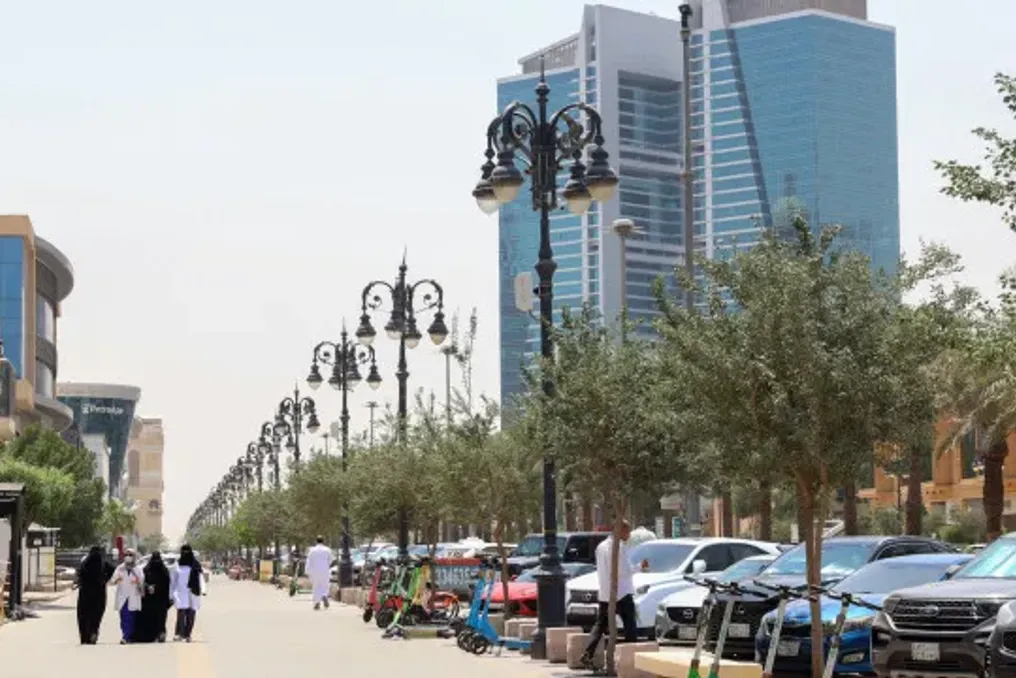
Riyadh schools close for a week following Houthi attacks on Saudi Arabia
Read more
noticiasaominuto.com

Riyadh schools close for a week following Houthi attacks on Saudi Arabia

Saudi authorities announced that schools should remain closed for the entire week, according to messages consulted by the France-Presse agency (AFP), without detailing the reason for this decision.

A Lebanese expatriate residing in the Saudi capital told AFP that it was a sudden decision and that they were unaware of what was happening.

These closures occur after Houthi fighters from Yemen, with Iranian support, launched new attacks against Saudi Arabia on Saturday. The targets of these attacks included Riyadh and Khamis Mushait, a city located in the southwest that houses an important air base.

The Saudi armed forces confirmed that they managed to intercept both drones and ballistic missiles fired from Yemen.

Yemen, which experienced a period of relative calm in recent years, returned to conflict in July, establishing a new area of tension in the Middle East.

The current hostilities involve the Houthis, who control the capital Sanaa and the Yemeni coast on the Red Sea, against the internationally recognized government, which is exiled in Aden (south) and governs much of the south and east of the country, supported by a military coalition led by Saudi Arabia.

On Saturday, Riyadh criticized the alleged failures of the international community in fulfilling its obligations regarding threats from Iran in the Gulf before the United Nations General Assembly.

The Saudi Foreign Minister, Faisal bin Farhane, condemned the 'unjustifiable Iranian aggressions' directed against Saudi Arabia and other nations in the region. He lamented the deficiencies of the international community in responding to threats to global peace and security at a time when the country is under attack by the Houthis.

Faisal bin Farhane also emphasized that 'the stability of this vital region is directly linked to global energy security.'

Saudi Arabia also requested guarantees for freedom of navigation, given that the country's oil exports are being severely impacted by disruptions in the Strait of Hormuz and the Bab el-Mandeb, resulting from the war in the Middle East.

The head of Saudi diplomacy stressed that 'the protection of international navigation and supply chains is a shared responsibility that requires serious international cooperation,' referring specifically to the two straits, the Gulf of Aden, and the Red Sea.

Popular