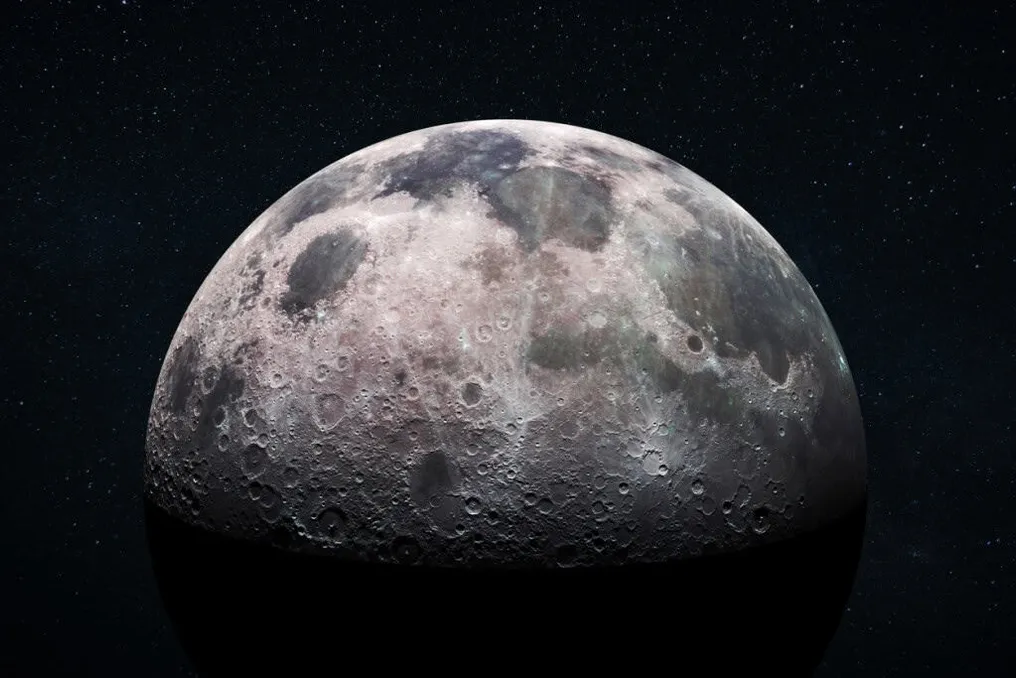
A new space race involves the United States, Russia, and China in the effort to place operational nuclear reactors on the Moon. The National Aeronautics and Space Administration (NASA) plans to have a ready reactor for launch by December 2030. Meanwhile, the partnership between Russia and China aims to launch its own system by 2036.
The urgency is driven by the competition for a permanent presence on the Moon. The US and China intend to establish bases on the satellite, search for resources such as frozen water, and use the Moon as a launchpad for deeper missions in the solar system. In this context, atomic energy is viewed as a key element.
However, some scientists warn that the race may develop too quickly, creating uncontrollable risks. Edwin Lyman, Director of Nuclear Energy Safety at the Union of Concerned Scientists, told The New York Times: 'There will always be competition in the space race, and if you add nuclear energy to that mix, it could take a potentially more dangerous path.'
The Role of Russia and China in the Lunar Project
Russian state agencies have tasked Russia with developing the Selena lunar reactor, which is intended to power lunar stations under Chinese leadership. This device is capable of producing up to 10 kilowatts of electricity and operating autonomously for ten years, utilizing the principles of a previously developed Arctic reactor.
The partnership between Russia and China has a specific characteristic: according to an analysis of documents and research, nuclear energy is the main objective of the lunar project delegated by China to Russia. Russian experience explains this choice, as the country launched over 30 reactors into space, primarily in the 1970s and 1980s, as part of Cold War satellites. Russia is also a major player in civilian nuclear energy.
Furthermore, Russia controls one of the largest sources of fuel considered safest for space reactors—low-enriched uranium. Mikhail Kovalchuk, President of the Kurchatov Institute, involved in the lunar reactor development, noted: 'There are practically no competitors for Russia in the field of space nuclear energy.'
US Experience and Plans
The United States already had experience using a reactor in space: NASA launched a similar device in 1965, but it was shut down after a failure unrelated to another spacecraft. Since then, the US has invested over $20 billion in space nuclear energy programs, yet no reactor has been put into operation.
Now, NASA seeks to accelerate the schedule. The Lunar Reactor 1 project is designed to generate 20 kilowatts of electricity, roughly equivalent to the consumption of 16 American households, and function for five years without human intervention. The agency also plans to use nuclear energy to launch a spacecraft to Mars in December 2028, something that has not been achieved before.
In parallel, the Pentagon intends to develop its own space reactors for use in orbit and on the Moon. The main concern for the US is that the Russian-Chinese reactor might arrive sooner and create an actual exclusion zone around a strategically important area of the lunar surface.
Technical and Geopolitical Obstacles
Despite the plans, schedules have been repeatedly delayed. Experts consider it unlikely that all goals will be met. There is currently no proven lander capable of delivering heavy and potentially radioactive cargo to the uneven lunar surface. Furthermore, a reactor has never been installed in low gravity conditions.
The US and Russia state that their reactors will be sent into space without activation; the fuel will remain 'cold,' meaning a nuclear reaction will not start, which significantly reduces the risk during launch. Nevertheless, specialists argue that accidents remain possible. Leopold Sammerer, head of the UN working group on nuclear energy in space, stated: 'This is a time when there is much risk. We have had many launch failures, so we have a lot of data on what can go wrong.'
One scenario is the reactor falling into the ocean. Water slows down neutrons and can increase the probability of a chain reaction. According to experts, something similar might have happened in Russia in 2019 when a nuclear-powered ballistic missile crashed into the White Sea. According to the US Department of State, a nuclear reaction occurred during the equipment rescue attempt, resulting in the death of at least five workers. Russia denied these claims, stating that the missile was not powered by a reactor.
There is another problem: what happens when the lunar reactor reaches the end of its service life? Decommissioning a reactor on Earth is a complex process that takes years. However, NASA and Russian authorities state that they intend to simply leave the radioactive materials in place on the Moon. Julien de Trullieu de Lanversin, a nuclear physicist from the Hong Kong University of Science and Technology, observed: 'In the race, they do not want to worry about the complex problem that no one has a solution for.'
The risks do not end after the reactor arrives on the lunar surface. On Earth, nuclear reactors are protected by containment structures, and building such a thing on the Moon would be extremely expensive and technically challenging. NASA claims its reactor will be protected, but it is not yet clear how this will be done. Experts also expect that the installations will be surrounded by zones inaccessible to astronauts and equipment due to radiation.
R. Scott Kemp, Professor of Nuclear Science and Engineering at the Massachusetts Institute of Technology (MIT), believes that accidents are more likely on the Moon. He explained: 'Defining an accident is when things don't go according to plan.'
The problem may be even more difficult to contain on the Moon. The absence of wind to disperse particles, but low gravity allows debris to travel long distances after an explosion. An example of such a risk is the return to Earth of the Soviet satellite Kosmos 954 in 1978, powered by nuclear energy. It exited the atmosphere uncontrollably and spread radioactive material over an area of nearly 124.3 thousand square kilometers in northern Canada. After about a year of cleanup, only 0.1% of the satellite's energy source was restored.
Another challenge relates to the type of uranium used. In NASA technical documents and contracts, the agency states its intention to use not high-enriched uranium, which is considered safer for advanced reactors. However, this fuel, known as HALEU, is unavailable in the US. The situation is exacerbated by geopolitics: Russia is the largest producer of this type of uranium, but the US banned imports from Russia in 2024 due to the war in Ukraine.
NASA documents indicate that the agency expects the Department of Energy to reserve low-enriched fuel for space reactors. However, the US government itself faces difficulties in producing a sufficient quantity. Russia and China have not disclosed what fuel they plan to use. The historical background heightens concerns: old Russian space reactors used highly enriched uranium. Congressman Bill Foster, a physicist who opposed the use of highly enriched uranium in space reactors, stated: 'You don't need much more than a mechanical workshop and a little explosives to turn it into a very convincing weapon.'
The lunar race may also stimulate companies developing microreactors—devices capable of generating up to 10 megawatts of electricity. These reactors are too small to meet the energy demands of large data centers but have found applications in the space and military sectors. In August, the Pentagon selected Antares to develop and demonstrate a microreactor for space applications. The company is also among the participants in reactor tests conducted in the summer under the US Department of Energy program. Antares has stated its intention to participate in NASA and Pentagon tenders for lunar reactors. Nevertheless, none of these microreactors have been proven or are ready for installation on the Moon.
Fundamental safety questions remain unanswered, including methods for heat dissipation, protecting equipment from radiation, and maintaining the structural integrity of a compact and light reactor. Kati Huff, Head of Nuclear Engineering and Physics at the University of Wisconsin-Madison (USA), stated: 'Placing a reactor on the Moon is absolutely feasible.' However, the more energy required, the more difficult it is to build the equipment. According to Huff, competition may not be the best way: 'I want to see more international cooperation in space. It is there that scientific collaboration in a team has surpassed our unfriendly international politics.'
} , 2. {