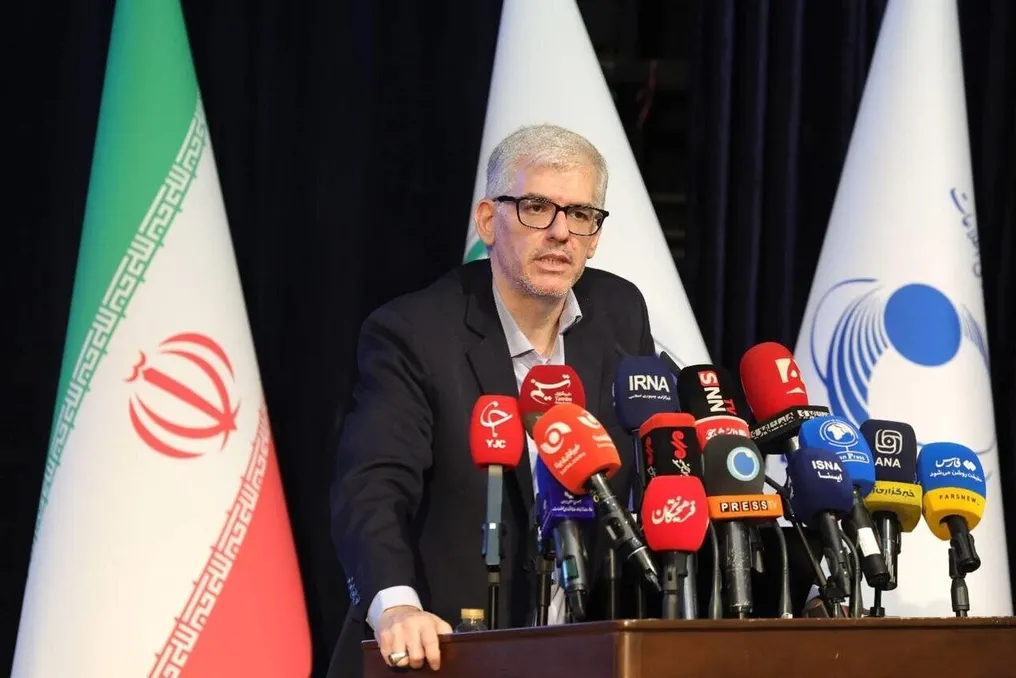
Iran achieves historic success in space industry, expanding capabilities for building its own satellites
Read more
Tehran Times
www.tehrantimes.com

Iran achieves historic success in space industry, expanding capabilities for building its own satellites

Over the past two years, Iran has achieved several significant milestones in its space industry. These successes include the development of domestic satellite systems, increased rocket launch capabilities, and the introduction of commercial use of space technologies, according to the head of the Iranian Space Agency (ISA).

Hassan Salarih presented these achievements during the celebration of Space Week at the Ministry of Information and Communications Technology. He emphasized that the country's strategic priorities remain the expansion of practical applications of space technologies and the formation of a space economy.

Salarih explained that the progress is coordinated by the actions of numerous institutions, including the Ministry of Defense and Armed Forces Logistics, the Ministry of Information and Communications Technology, universities, research centers, and other structures involved in Iran's space program. According to him, the country's space development ecosystem now includes a growing number of private companies, state research centers, the Iranian Space Research Center, and universities, all contributing to the development of space products and services.

These achievements demonstrate the increasing role of domestic expertise in strengthening Iran's space potential.

Domestic Telecommunication and Rocket Capabilities

Among the key milestones, Salarih noted the Nahid-2 telecommunications satellite, which is the first satellite developed in Iran to reach orbit. He reported that the satellite was successfully placed into orbit and most of its tests were successful.

Furthermore, he pointed to the effectiveness of domestic launchers such as Qaem-100 and Simorgh, which serves as proof of advancement in developing systems necessary for placing domestically built satellites into orbit. The mission of the Chamran satellite was also mentioned, which included the development and testing of satellite attitude control algorithms and conducting Iran's first orbital proximity maneuver, according to the ISA head. Such capabilities are critically important for improving spacecraft control and ensuring more complex orbital operations.

Development of High-Resolution Satellites for Remote Sensing

Salarih also highlighted Iran's progress in creating remote sensing satellites with constantly increasing imaging capabilities. He cited the Paya satellite, launched last year, as an illustration of the country's achievements in this field, adding that more advanced generations of satellites are under development.

The Pars-2 satellite, a modernized version of Paya, is complete and awaiting launch. According to Salarih, this satellite provides image accuracy better than three meters, representing a further step in Iran's efforts to strengthen its own Earth observation capabilities. High-precision remote sensing satellites can support a wide range of civilian applications, including monitoring natural resources, agricultural assessment, environmental surveillance, and disaster management.

Private Sector Plays a More Significant Role

Salarih stated that government policy to attract private sector involvement in the space industry has moved from the planning stage to the implementation stage over the past two years. During this period, three satellites developed by private companies have been successfully placed into orbit, underscoring the growing contribution of domestic firms to the country's space program. It is expected that greater private sector participation will expand the industrial base supporting satellite production and related services, as well as create opportunities for knowledge-based companies to transform scientific and technological developments into commercial products. The ISA head also mentioned the Shahid Soleimani satellite constellation, the first of which was presented last year. He described this project as a key initiative being implemented by the Ministry of Information and Communications Technology.

Space Economy Remains a Strategic Priority

Salarih emphasized that the development of Iran's space economy is proceeding as a strategic national goal, focusing on expanding the practical use of space technologies and transforming technological progress into services that bring tangible economic and social benefits. He noted that this process will continue at an accelerating pace through cooperation between science-oriented companies, research institutes, universities, and other stakeholders. Iran's latest achievements, according to the ISA head, reflect efforts to form an increasingly integrated domestic space sector, covering satellite design and manufacturing, launch systems, remote sensing, and commercial application. The strategic priority is not only to increase the country's technical capabilities but also to ensure that space technologies play a more substantial role in economic development and daily life.
Similar stories

Joint infrastructure projects of Iran and Azerbaijan are nearly complete amid growing trade turnover
Read more
www.tehrantimes.com

Joint infrastructure projects of Iran and Azerbaijan are nearly complete amid growing trade turnover

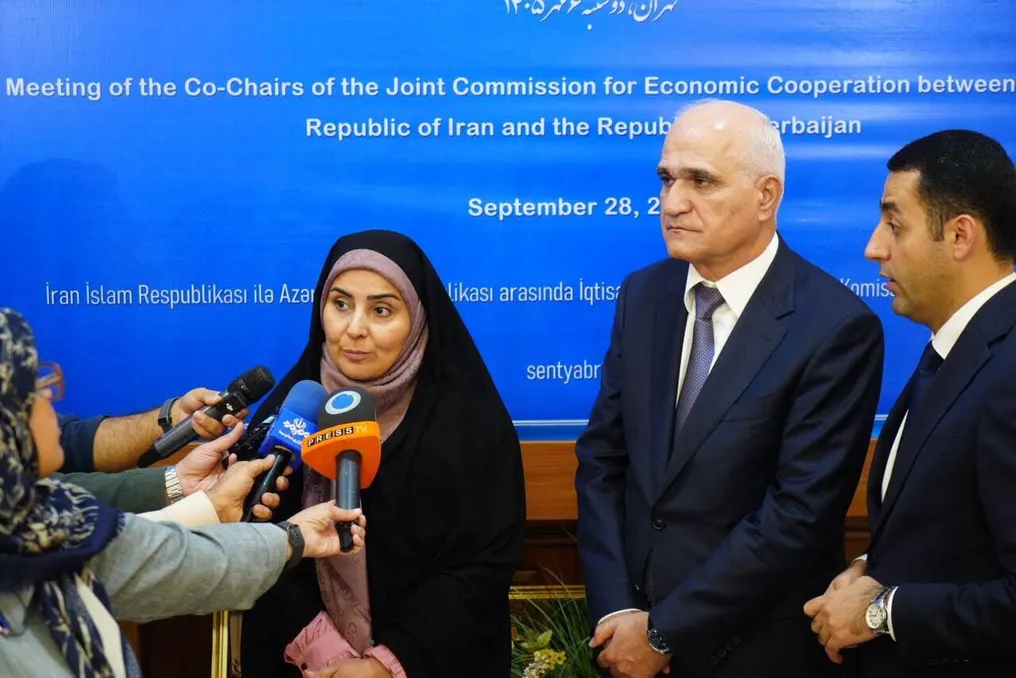
During the meeting of the heads of the Joint Committee for Economic Cooperation between Iran and the Republic of Azerbaijan, Deputy Prime Minister of the Republic of Azerbaijan Shahin Mustafayev emphasized the friendly and fraternal relations between Tehran and Baku. He noted that despite regional tensions, cooperation between the Islamic Republic of Iran and the Republic of Azerbaijan is developing in various fields, and this trend will continue.

The meeting discussed priority issues and prospects for interaction between the two countries, including trade, logistics, transport, and energy aspects. Mustafayev reported an increase in trade volume between Iran and the Republic of Azerbaijan, as well as a growth in cargo transportation within the International North-South Corridor.

The Deputy Prime Minister of Azerbaijan continued that joint projects in all areas of cooperation are moving forward, and the current status of the implementation of these projects was reviewed at the meeting. In particular, he mentioned that the construction of the bridge over the Aras River, the Agband-Kalaleh project, and the railway freight terminal in Astara are almost complete, and they discussed its opening with his Iranian counterpart for prompt commissioning.

The Iranian Minister of Transport and Urban Development, mentioning the growth in trade turnover over the last six months, stated that infrastructure development and the removal of obstacles contribute to maintaining this trend. He also noted that the Jolfa-Kalaleh route expansion project could increase transport capacity and trade volume between the two states.

According to IRNA, Farjane Sadeghi reported at the meeting that she received Shahin Mustafayev, Deputy Prime Minister of the Republic of Azerbaijan and Chairman of the Joint Economic Committee of the two countries. She emphasized that relations between Iran and Azerbaijan are friendly, fraternal, and strategic.

The Minister of Transport and Urban Development also noted that over the past six months, there has been an increase in trade turnover between Iran and the Republic of Azerbaijan, despite problems caused by the war in the region, and that efforts are focused on maintaining this trend by developing infrastructure and removing barriers.

Sadeghi added that the Islamic Republic of Iran is seriously advancing the Jolfa-Kalaleh route expansion project, which will help increase transport potential and trade volume. Previously, in early September, Farjane Sadeghi and Shahin Mustafayev held a phone conversation to review recent developments in bilateral relations and explore ways to expand economic ties, especially in transit, energy, and border infrastructure.

Both sides highly appreciated the growing trend in bilateral relations and stressed the need to continue high-level consultations. The Minister of Transport and Urban Development called for accelerating the establishment of joint committees to monitor and implement decisions made at specialized meetings in the gas, electricity, and transport sectors.

Emphasizing that restoring damaged routes was a priority despite regional difficulties, she noted that the process of completing current infrastructure projects continues uninterrupted. Strengthening relations between Tehran and Baku, according to her, is due to the will of the presidents of the two countries and close interaction of executive officials at various levels.

Shahin Mustafayev also expressed satisfaction with the progress of railway projects during the call, noting that the railway route within Azerbaijan up to the Agband region is completed, and after the completion of the section in Iran, there will be a significant transformation of the region's transit and logistical potential. He highly praised the determination of the Iranian government to revive and activate transit corridors.

In conclusion, the sides exchanged views on recent regional events and stressed the importance of deepening strategic and economic cooperation as the basis for stability and development in the region. As a result of a series of agreements, infrastructure projects, and measures to simplify customs procedures, Iran and the Republic of Azerbaijan are actively expanding bilateral trade and transit cooperation, positioning themselves as strategic partners in the connections between the Caucasus, Central Asia, and the Persian Gulf.

The center of this economic rapprochement is the Bileh Savar border crossing in the northwestern province of Ardabil, Iran—a 24-hour customs point that has become a vital artery for trade. In the last year alone, this crossing registered exports worth $268 million, demonstrating an increasing capacity to handle increased commercial volumes, which is particularly important against the backdrop of external pressure and regional instability.

Popular