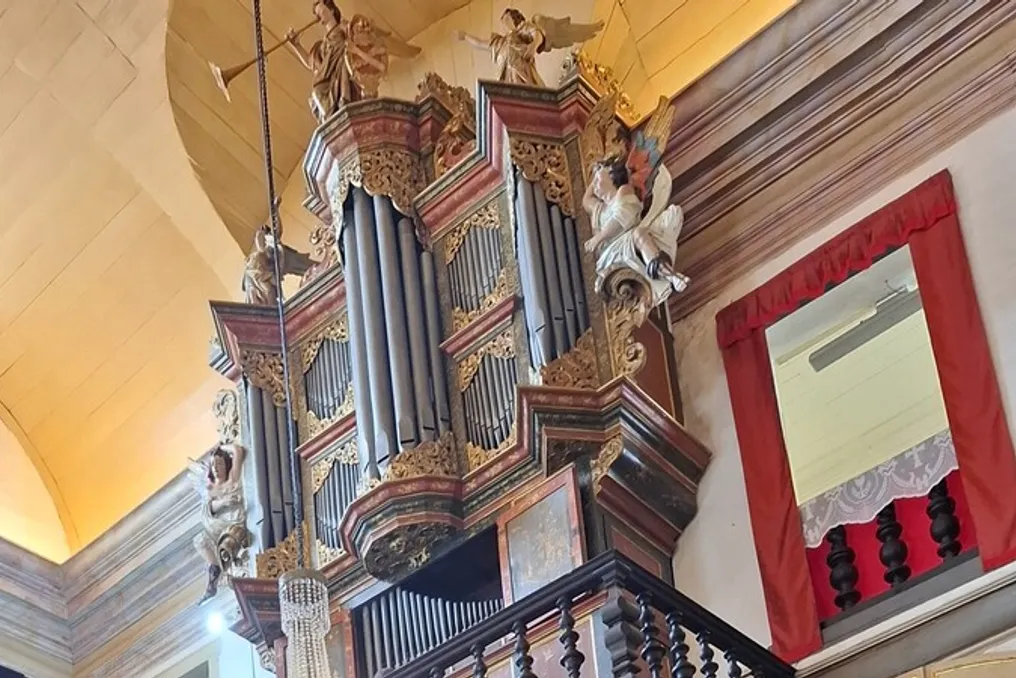
In Minas Gerais, at the Cathedral of Mariana, an organ with nearly 300 years of history remained silent for almost a decade. After an extensive restoration process, which included sending components to Spain, the instrument has started producing sounds again. Since April, it can be heard regularly at events promoted by the city's Archdiocese, recognized as the first capital of Minas Gerais.
This organ, which holds protected heritage status, has become a highlight in the Mariana temple. The basilica, dating back to the 18th century, displays colonial architectural features and Baroque elements from different eras.
Its original construction took place in Germany in the early 1700s, and it is famous for the name of its manufacturer, Arp Schnitger. Initially, the instrument was intended for Portugal, where it became property of the royalty. Later, it was donated to the then Diocese of Mariana.
King Dom João V's wish was not fulfilled during his lifetime, as he died in 1750, three years before the organ's transfer to Brazilian territory. This project was completed by his successor, Dom José I, who organized the transatlantic transport by ship. Upon arrival, the disassembled parts had to travel long distances through the Minas Gerais mountains, transported on mules.
The organ of the Cathedral of Mariana is notable for being the only Arp Schnitger instrument outside of Europe and represents a world rarity. Built around 1701 in Germany, it traveled to Portugal, crossed the ocean in crates, and arrived in Brazil in 1752 as a gift from the Portuguese Crown to the newly founded Diocese of Mariana. It functions as a preserved Baroque sound capsule in the mountains of Minas Gerais.
For almost two centuries, the organ played in religious ceremonies, impressing with its complex structure, composed of over 900 pipes and elaborate ornaments. It is considered the only equipment with such specifications installed in a location outside of Europe.
Over time, lack of proper maintenance led to the instrument's silence, and it stopped functioning in the 1930s. Subsequently, as its historical relevance became known, there were continuous efforts toward listing and restoration, especially starting in the 1970s. The most recent intervention to recover it in Spain aimed to combat damage caused by a termite infestation.
Although it is a fixed element in the Cathedral of Mariana, the organ is only played on specific occasions. Starting in April 2026, interested people wishing to hear the secular instrument can visit the church on the second and fourth Saturdays of each month during concerts. There is an entrance fee of R$ 80, with a half-price option for the elderly, teachers, and students upon presentation of proof. Tickets are available at the Cathedral box office.
To appreciate the organ for free, one must follow the schedule of religious festivities, with Holy Week being a period with the highest probability of performances. More details can be found on the Archdiocese of Mariana's website.