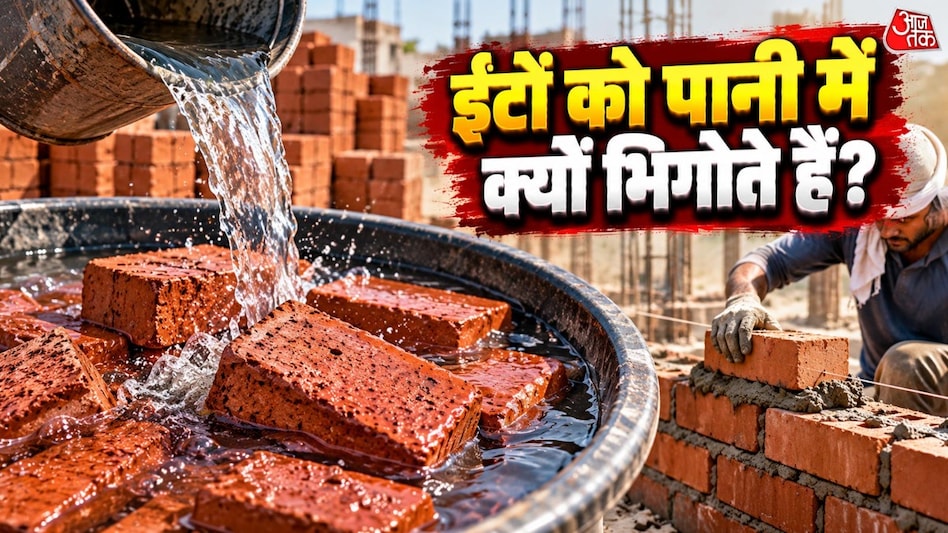
When constructing a new residential building, it is often observed that bricklayers pre-soak bricks before setting them into the wall. In some cases, the bricks may remain in water for several hours. This raises a natural question about the necessity of this process and whether a wall can be built without pre-wetting the bricks. In fact, soaking bricks in water is not just a tradition, but a necessary stage related to the construction process. If dry bricks are used directly with mortar, it can negatively affect the strength of the wall.
Bricks have the ability to absorb water quickly. After firing, numerous small pores and voids remain in the brick. This is why dry bricks begin to actively absorb water upon contact with it. If such dry bricks are placed directly into the mortar (a mixture of cement and sand), they can absorb the moisture contained in the mortar itself.
Mortar requires moisture to achieve strength. The process of hardening and strengthening the mortar occurs through a chemical reaction between cement and water. However, if very dry bricks begin to rapidly draw moisture from the mortar, it can reduce the mixture necessary for setting. As a result, the risk of weakening the bond between the brick and the mortar increases. This is why bricks are soaked in water first.
When the brick is pre-wetted, water fills its internal cavities. When such a brick is then laid in the mortar, it does not absorb moisture from the mixture as intensely. This allows the mortar to remain in the required amount for proper hardening, contributing to the formation of a more reliable connection between the brick and the mortar.
It is not required for every brick to remain in water for a long time. The soaking method can vary depending on the quality of the brick itself and its ability to absorb moisture. Generally, the goal is for the brick to become sufficiently moist, but not so much that it begins to actively draw water from the mortar. At the same time, the surface of the brick should not be covered with excess water, as this can create difficulties when applying the mortar.
This also depends on the type of brick, as different types of bricks have different water permeability. Therefore, on the construction site, the correct method must be determined based on the quality of the brick being used. Thus, noticing the process of soaking bricks during house construction, one should understand that the bricklayer is not just preparing wet bricks, but ensuring conditions for the formation of a correct and strong bond between the brick and the mortar. This seemingly minor procedure can have a great impact on the overall quality and stability of the wall.