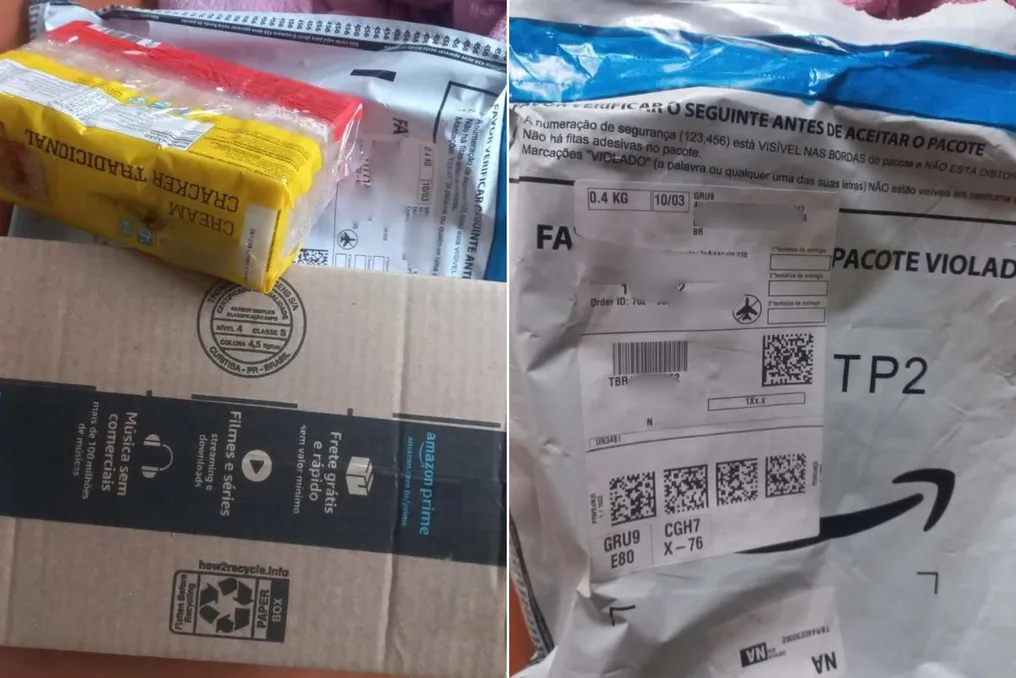
A 43-year-old social worker purchased an iPhone 17, but instead of the phone, she received a package of cream cracker cookies. The resident of Peruíbe, located on the coast of São Paulo, reported the incident to Amazon, which was responsible for the sale and delivery, without success in resolving the problem.
The client, who chose not to be identified, expressed great anguish over the incident, stating: 'I didn't sleep that night, distressed by everything that happened.' The device, a 256 GB model, was bought for R$ 6,332, installmented in 12 times on a credit card through the Amazon app, last Thursday (day 1).
The next day, around 3 PM, in the Residencial Parque Daville neighborhood, she received the sealed and undamaged package. However, upon opening the package, she discovered that she had received cookies instead of the phone.
The social worker followed the recommended procedures to verify the integrity of the packaging and identification codes. Due to concerns about similar situations, she filmed the entire process of receiving and opening the order.
When seeking clarification from g1, which contacted Amazon, there was no response until the last update of the story.
Contact with the company
After noticing the error, the client contacted Amazon through the app and described the situation. According to her, the company claimed that internal records confirmed the correct completion of the delivery and, therefore, refused to issue a refund.
She mentioned sending the video of the package opening immediately but felt she was not believed, even having the impression of being targeted by a scam or treated like a criminal. The client stated that she opted to pay a higher amount for the iPhone due to the fear of facing problems with other purchases.
Later, after new attempts to contact them, Amazon began treating the case as a return request. However, the client contested this procedure, since she never received the product, making it impossible to return the item.
To date, the social worker has not obtained a final solution and has no forecast for receiving the refund or the device.
Given the lack of resolution, she sought other means of service, registering complaints with consumer defense agencies and on Reclame Aqui, in addition to filing a police report with the Electronic Police Station.
Procon-SP
Procon-SP issued a note stating that it understands that when a consumer buys an item directly from a store on a marketplace, both the store and the marketplace itself have the obligation to ensure the fulfillment of the offer.
The agency declared that the consumer must contact both suppliers to obtain a product equivalent to the one offered or choose to cancel the purchase with a full refund, according to their will. It was added that if the problem persists, the consumer can file a complaint on the Procon website of their municipality or state.
What to do in these cases?
In May, in a similar case where a young woman received condensed milk instead of an iPhone, lawyers Thyago Garcia and Matheus Tamada advised g1 on the necessary actions to protect consumer rights in these circumstances.
Garcia advises that online purchases should be made on established and reliable platforms, also warning against direct payments to the seller outside the platform environment. Tamada recommends that, upon receiving a product different from what was purchased, the consumer preserves all evidence, including photos, videos, invoice, and tracking data, and registers the complaint on the intermediary platform.
Garcia detailed that situations where a low-value item replaces a higher-cost item can, in certain instances, constitute what is called 'moral damage in re ipsa,' meaning the moral damage is presumed by the fact itself. He added that in these scenarios, jurisprudence accepts compensation without the need for specific proof of moral prejudice, given the evident frustration, psychological distress, and feeling of humiliation experienced by the consumer.