
Scientific explanation for the bright blue color of the Blue-footed Booby's legs
Read more
Aaj Tak
www.aajtak.in

Scientific explanation for the bright blue color of the Blue-footed Booby's legs

In the warm regions of the Eastern Pacific Ocean lives a seabird with bright blue feet, known as the Blue-footed Booby (Sula nebouxii). This bird primarily lives near the sea and feeds on fish and squid. The blue color of its feet is not just a distinguishing feature but is also related to its diet and overall physical condition.

The Blue-footed Booby is famous for its ability to make fast dives into the sea. The bird watches fish while flying over the water, then plunges rapidly. It can jump into the water from a height of about 80 feet (approximately 24 meters) and dive to a depth of up to 65 feet (about 20 meters) to catch prey.

The blue coloration of the Blue-footed Booby's feet is due to a special structure of the skin and pigments obtained from food. A special collagen structure in the feet contributes to the formation of the blue color, while carotenoids obtained from food make this blue shade brighter. Since the bird does not produce carotenoids on its own, it needs to obtain them externally, with fresh fish being the most important source for this. Consequently, the state of the diet is reflected in the color of the feet.

A study showed that if a male Blue-footed Booby lacks food, the blue color of its feet can fade in just 48 hours. After fresh fish was offered to him again, the color of his feet recovered. This indicates that the color of the feet can serve as an indicator of the bird's physical condition.

The blue feet serve not only a decorative function. During the mating season, males display their feet to females. They attract females by raising their feet and moving in a specific way. According to scientists, the brighter the blue color of the feet, the better the male's physical condition. Thus, the female can assess the male's current condition by the color of his feet.

In one study, scientists lightened the feet of some males. As a result, some females reduced the size of the second egg. This study suggests that females may assess the male's condition by the color of his feet and make reproductive decisions based on this assessment.

The Blue-footed Booby can reach a length of about 81 centimeters, and its weight is approximately between 1.5 and 2.2 kilograms. Its wingspan can reach 158 centimeters. The upper part of the bird's body is brown, and the lower part is white, while the feet remain bright blue. Young Blue-footed Boobies usually have brown feet, which gradually turn blue over time.

The Blue-footed Booby is found in regions of the Eastern Pacific Ocean, including the Gulf of California area in Mexico and Peru in South America. The Galapagos Islands are also an important territory for this bird. The bird breeds on islands and rocky areas near the sea. The female usually lays one to three eggs at a time.

The main feature of the Blue-footed Booby is its bright blue feet, which serve not only for identification. The color of the feet is linked to the bird's nutrition and physical condition, allowing scientists to connect this trait with its behavior and reproductive processes.
Similar stories

Beautiful blue bird egg found in Brazil attracts attention with its unusual appearance
Read more
g1.globo.com

Beautiful blue bird egg found in Brazil attracts attention with its unusual appearance

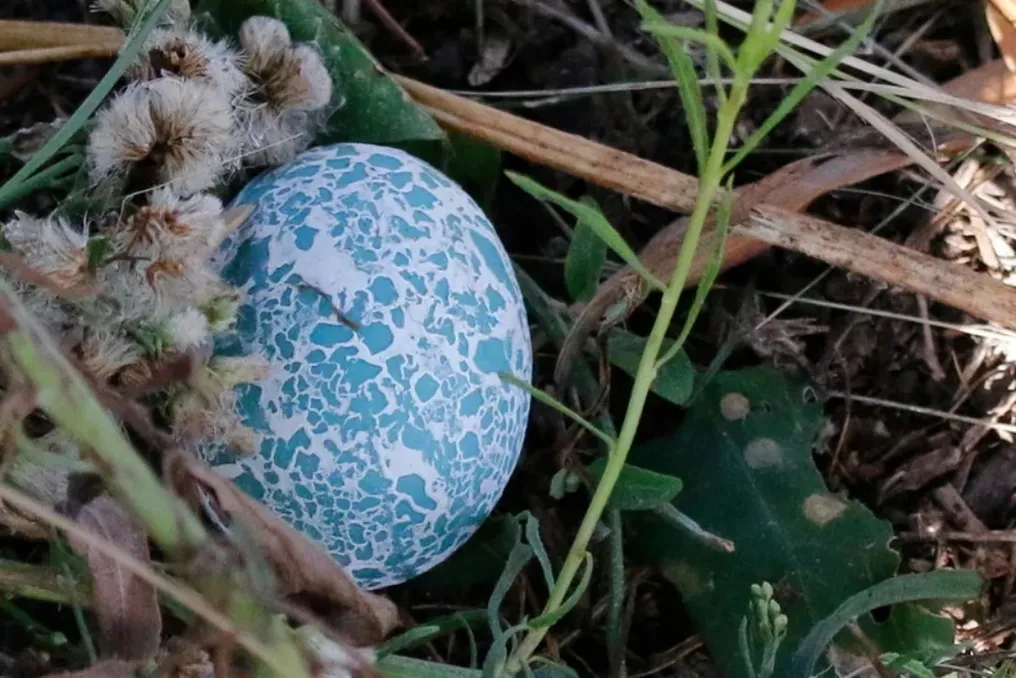
An unusual blue-and-white egg from the anu-branco bird (Guira guira), which attracted attention due to its unique look, has gone viral on social media in Brazil. Its appearance resembles hand painting, and the combination of colors and shell texture sparks curiosity.

Despite its apparent complexity, both colors are not part of the shell in the conventional sense. According to Miguel Angelo Marini, an expert on bird eggs and a lecturer at the Department of Zoology at the University of Brasília (UnB), the initial color of the egg is blue. The white layer is formed by a type of calcium carbonate called waterite, which the female deposits over the shell.

This composition serves as a shock absorber, protecting the egg from cracks that occur upon impact inside the nest. The professor explains that 'this white substance that forms spots on the shell is a type of calcium carbonate that is rarely found in nature, but which the female is capable of depositing on the eggshell.'

Over time, especially during incubation, this outer layer wears away, making the blue color more evident. Because of this, eggs of this species can display various patterns depending on the stage of observation.

Another form of protection

Unlike the coloration of other species' eggs, the white layer of the anu-branco egg does not serve for camouflage. This species has a system of group reproduction, where several females can lay eggs in one nest. In the specialist's opinion, this dynamic generates competition: if one female discovers an egg in a spot where she plans to lay hers, she may push it out of the nest.

In such a scenario, calcium carbonate helps cushion the impact upon falling and reduces damage when eggs fall or collide with each other. Behavior also helps explain why anu-branco eggs can sometimes be found outside nests, usually on the ground. The species is capable of building both individual and communal nests, and disputes between females are part of the reproductive process.

Why are bird eggs so different?

The anu-branco egg is far from the only one with an unusual appearance. There is a huge diversity of colors, spots, shapes, and textures among bird eggs. According to Marini, for most species, colors and patterns are created by pigments deposited during the formation of the egg in the female's reproductive tract.

These characteristics primarily help with camouflage, making it difficult for predators to find the eggs in the nest. He notes: 'The appearance of eggshells varies greatly between species, from almost white eggs to almost black eggs.'

Therefore, species that lay eggs in open areas may have patterns that help them blend into the environment. Birds that build nests inside cavities where eggs are hidden from light often do not need such a strategy and may have white, unblemished eggs. Thus, color is not just an aesthetic issue; it can be linked to various reproductive and survival strategies that birds have developed throughout evolution.

Popular