Despite the third round of price increases this year, consumer home appliance manufacturers expect sales to grow by double digits during the festive period. This growth is driven by premiumization trends, demand for replacing old devices, as well as the availability of easy financing and improved consumer sentiment.
The latest price increase, the third of the year, occurred just before the peak holiday season. Reasons for the rise in costs include the increased cost of copper, aluminum, steel, and raw material derivatives, as well as rising freight expenses and currency fluctuations, forcing companies to adjust prices.
The industry started the festive season on a positive note due to strong sales during the Onam festival in the south. This positive momentum is expected to continue through Navratri and Diwali, supported by premiumization, demand for equipment replacement, and the ease of obtaining consumer credit.
Industry experts note that consumers are increasingly opting for larger and more feature-rich appliances, including energy-efficient and smart-connected products. This, it is predicted, will support price growth even if higher prices exert some pressure on sales volumes.
Some companies believe that the impact of price increases will be minimal, as dealers and distributors have already purchased stock at old prices under advance purchase programs in August and September.
Forecasts from leading manufacturers
N. S. Satish, CEO of Haier Appliances India, told PTI that double-digit growth, despite price increases, is quite likely. Haier India expects sales growth of 30–35% in value during the festive season, with unit sales growth likely around 20%.
Satish clarified that while Haier forecasts a 30–35% growth, he estimates the entire industry's growth at 10–15%. He added that premiumization and easy access to financing will support demand, regardless of price increases.
According to Satish, buyers who have already decided to purchase appliances will either choose a slightly smaller model within their budget or use EMI financing to upgrade to a more expensive model.
He emphasized: "The trend of premiumization is happening, and with the availability of easy financing... we will ensure a trend of accessibility and modernization in the premium segment."
Haier raised prices by approximately 5% on room air conditioners starting October 1st, and by 2–3% on other product categories such as LED televisions and washing machines.
Sanjay Chitkara, Deputy Director of Sales and Marketing at LG Electronics India Co., expressed 'great optimism' about the upcoming festive season, which begins with Navratri in mid-October. He noted that pre-orders during Sharadha were encouraging, and festivals are increasingly becoming an occasion to buy new homes or renovate existing ones.
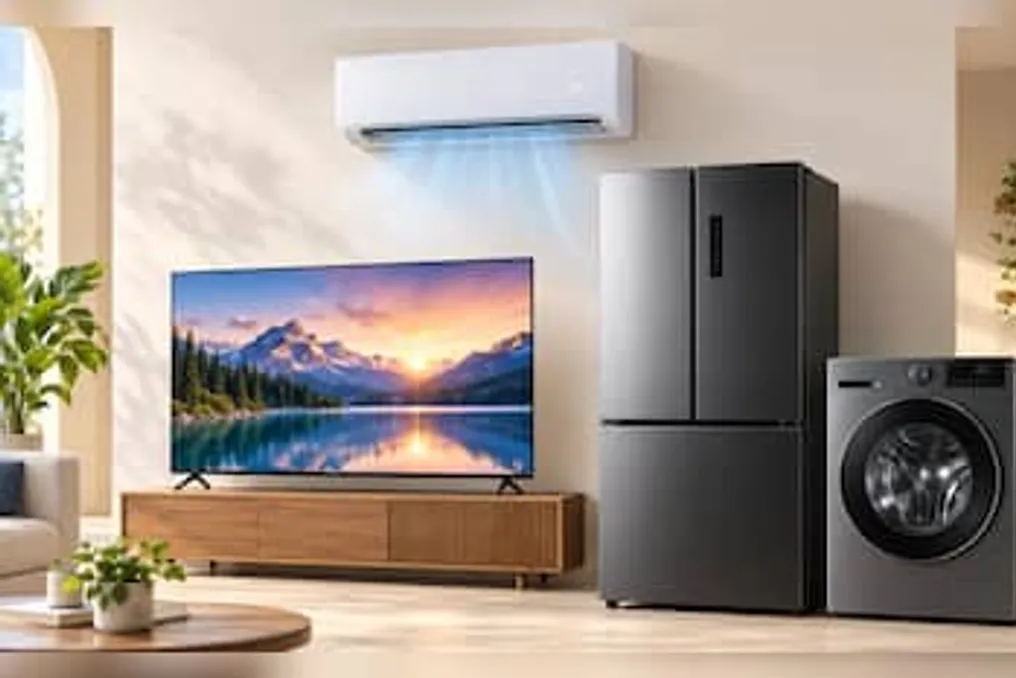
Chitkara reported that consumers are upgrading not only refrigerators, washing machines, TVs, and air conditioners but are also exploring categories such as dishwashers, microwave ovens, audio products, and water purifiers.
Improved availability following VAT rationalization, as well as special festive EMI schemes, are expected to support demand. Furthermore, the Essential series from LG is gaining popularity among first-time buyers in second and third-tier markets.
Manufacturer optimism remains high despite recent price hikes, as they anticipate that premiumization and replacement demand will offset the partial negative impact of higher prices on sales volumes. The industry is also showing healthy demand in key consumer electronics categories ahead of the festive season.
Sunil Nayar, Managing Director of Sony India, forecasts an overall value growth of 15–20% during the festive season. He noted that the strong season is expected due to premium products, new launches, and consumer offers.
Sony anticipates over 30% growth in its visualization business segment, with TV demand being driven by premium BRAVIA models and larger screen sizes. The company also forecasts strong growth in the audio segment, especially in headphones, soundbars, and party speakers, supported by new launches and festive promotions.
Kamal Nandi, Head of Home Appliances at Godrej Enterprises Group, believes that the festive period remains an important window for purchasing refrigerators, washing machines, and air conditioners. He stated that despite the inflationary environment, there was a sales impulse during Onam, and he is optimistic about demand growth in other regions.
He expects that the combination of improved consumer sentiment, premiumization, and the desire of consumers to upgrade will support festive demand. Godrej Appliances also raised prices on room air conditioners from October 1st but believes consumers can still purchase goods at old prices during the festive season because stock purchased before the price hike remains in distribution channels.
Nandi previously pointed out that there are stocks that will last from one to one and a half months, and that Diwali will largely be covered by old-price stock; new prices will take effect after Diwali.
According to industry reports, the festive period covering Onam, Dussehra, and Diwali typically accounts for 30–40% of home appliance manufacturers' annual sales. According to a joint report by Boston Consulting Group (BCG) and Confederation of Indian Industry (CII), the Indian consumer durables market is expected to grow by 8–10% annually, reaching 3–3.25 lakh crore by 2030.