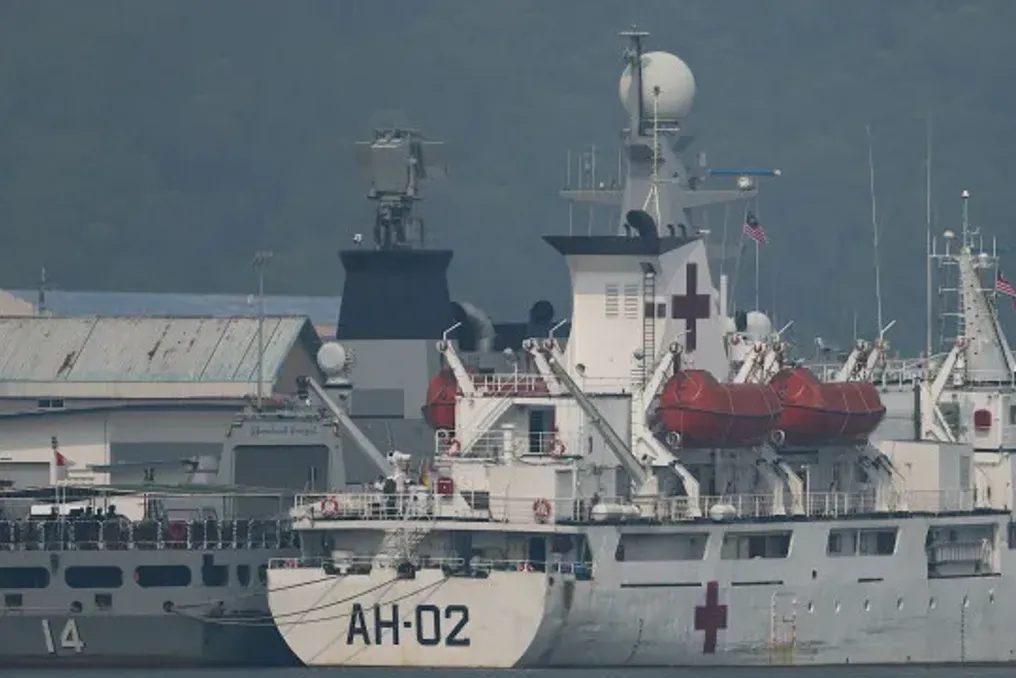
Three vessels transporting displaced people arrived at the Burmese naval base in Thanlyin shortly before 07:30 (02:00 Lisbon time), according to a Navy official who requested anonymity as he was not authorized to speak with the press.
This contingent of 1,476 individuals is part of a total of 5,000 Burmese citizens who agreed to a 'voluntary repatriation' program from detention centers, at a time when Malaysia is registering an increase in hostility directed at exiles.
Journalists from the France-Presse (AFP) agency observed that hundreds of people gathered at sunrise to meet their relatives near the naval base, with vehicles such as cars, buses, and taxis already available for transport.
Kyaw Myint, 55, told AFP that he came to pick up his three grandchildren, who had been detained in Malaysia for a year and a half. He expressed fear that they might be forcibly recruited by either the army or ethnic armed groups.
According to the Malaysian press, the repatriated group consists of 27 children, 79 women, and 1,370 men.
Human rights associations point out that the poor detention conditions faced by Burmese people may have been the factor that led them to accept the return program. These associations also warn about the risk posed by returning to Myanmar, a country plagued by civil war since the military coup in 2021.
The United Nations High Commissioner for Refugees (UNHCR) expressed concern over this return, reinforcing that, under international law, no one should be returned to a country where there is a risk of persecution, torture, serious harm, or other threats to life, liberty, and security.
Malaysian authorities did not specify how many Rohingya were among the repatriated. However, the UN indicates that this Muslim minority represents the majority of Burmese refugees and asylum seekers present in Malaysia.
Hundreds of thousands of Rohingya fled Myanmar after a violent military action in 2017, an event currently under investigation for genocide by the International Court of Justice.