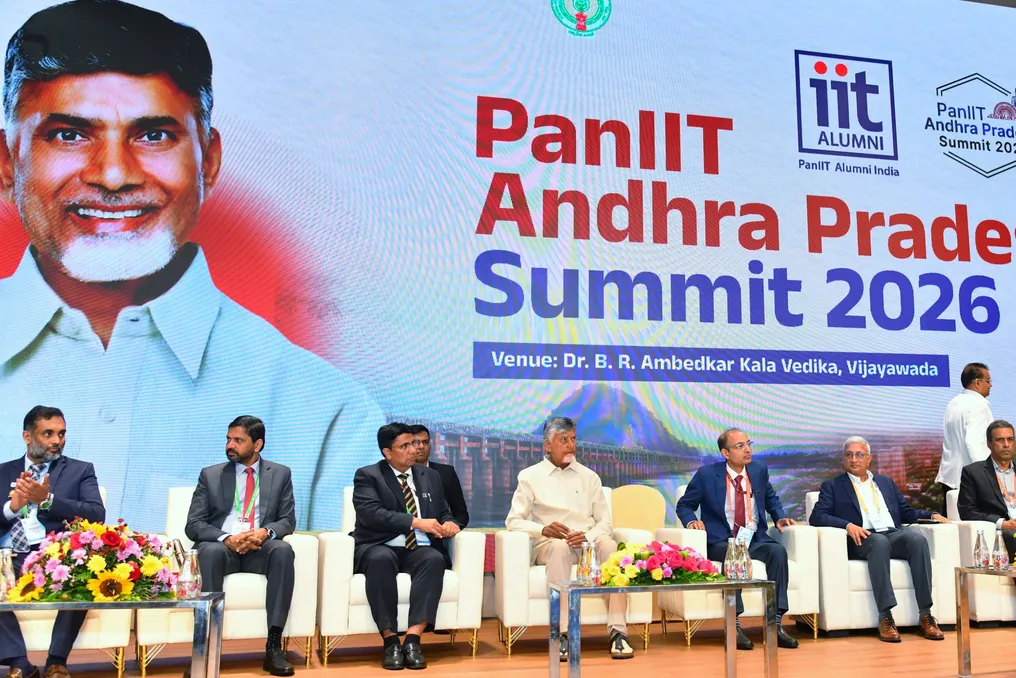
PanIIT and Andhra Pradesh government plan to create a deep technology fund worth 500 crore rupees
Read more
YourStory [india, en]
yourstory.com

PanIIT and Andhra Pradesh government plan to create a deep technology fund worth 500 crore rupees

Alumni of PanIIT India, in collaboration with the Government of Andhra Pradesh, intend to establish a venture fund focused on deep technology companies with a capital of 500 crore rupees. This initiative is part of broader efforts to attract capital, research activities, and manufacturing capacity to the state.

The proposed PanIIT Amaravati Venture Fund will attract funds from IIT alumni, industry representatives, and institutional investors. According to plans presented at the PanIIT Summit in Andhra Pradesh in Vijayawada on Saturday, the first round of fund closure is expected by July 1, 2027.

The primary goal of the fund is to support at least 25 deep technology startups in Andhra Pradesh by 2030. Although the exact structure of the fund, including the financial commitments of PanIIT, the Andhra Pradesh government, and private investors, was not immediately clear, it was noted that at least 50% of the companies the fund invests in must have their primary R&D or manufacturing facilities in Andhra Pradesh.

This localization requirement is intended to ensure that the fund does more than just invest in companies headquartered elsewhere, linking a significant portion of its portfolio to research or production activities within the state.

Addressing the group of venture capital investors at the summit, Chief Minister of Andhra Pradesh N Chandrababu Naidu made a direct appeal to investors to bring both capital and expertise. Naidu stated: 'You bring the money, you bring the mentors. I will ensure alignment with your contribution.'

The precise mechanism by which the state will match private contributions was not immediately clarified, nor whether this commitment would go directly into the PanIIT Amaravati Venture Fund.

The proposed fund aims to address two challenges frequently faced by deep technology startups: access to long-term capital and access to experienced operators and industry networks. Deep tech companies typically require longer product development cycles and larger capital expenditures compared to software-focused startups, especially in areas such as semiconductors, quantum technologies, aerospace, defense, healthcare, and advanced manufacturing.

This venture fund fits into the broader concept outlined in the Andhra PanIIT Declaration, which seeks to establish long-term institutional links between the IIT ecosystem, industry, and the Andhra Pradesh government. Proposed measures include the creation of a permanent PanIIT Amaravati Council, which should serve as a coordinating platform for deep technology, research, and innovation initiatives in the state.

The framework also includes a technology transfer pipeline to identify research from IITs that can be commercialized in Andhra Pradesh, as well as a global network of 100 IIT mentors from 10 industry departments in the state's universities and institutions.

IIT Mentor Network

The Amaravati Council is conceived as a means to connect IIT alumni, startups, universities, industry, and policymakers, providing a more permanent structure for initiatives arising from the summit. The broader concept is also aimed at deepening collaboration between academia and industry, supporting startup creation, and streamlining the transition of research developed in the IIT ecosystem to commercial implementation.

Furthermore, it sets a goal to incubate at least 50 startups in Andhra Pradesh by 2030. PanIIT plans to create a mentor network parallel to the fund. The proposed Global IIT Mentor Network of 100 individuals should connect founders with IIT alumni who can provide guidance on product development, market entry strategy, scaling, and execution.

According to the plans presented at the summit, an initial cohort of 25 deep technology startups should be matched with mentors. The mentor network is intended to complement the proposed venture fund by providing operational experience and industry connections alongside capital.

Amaravati Declaration

Collectively, the fund, the mentor network, and the Amaravati Declaration represent an attempt to link venture capital with IIT research and alumni expertise, using Andhra Pradesh as a base for creating startups, R&D, and manufacturing.

Similar stories

Karnataka Government Launches Startup Support Program with Grants Up to 25 Lakhs for Pilot Projects
Read more
yourstory.com

Karnataka Government Launches Startup Support Program with Grants Up to 25 Lakhs for Pilot Projects

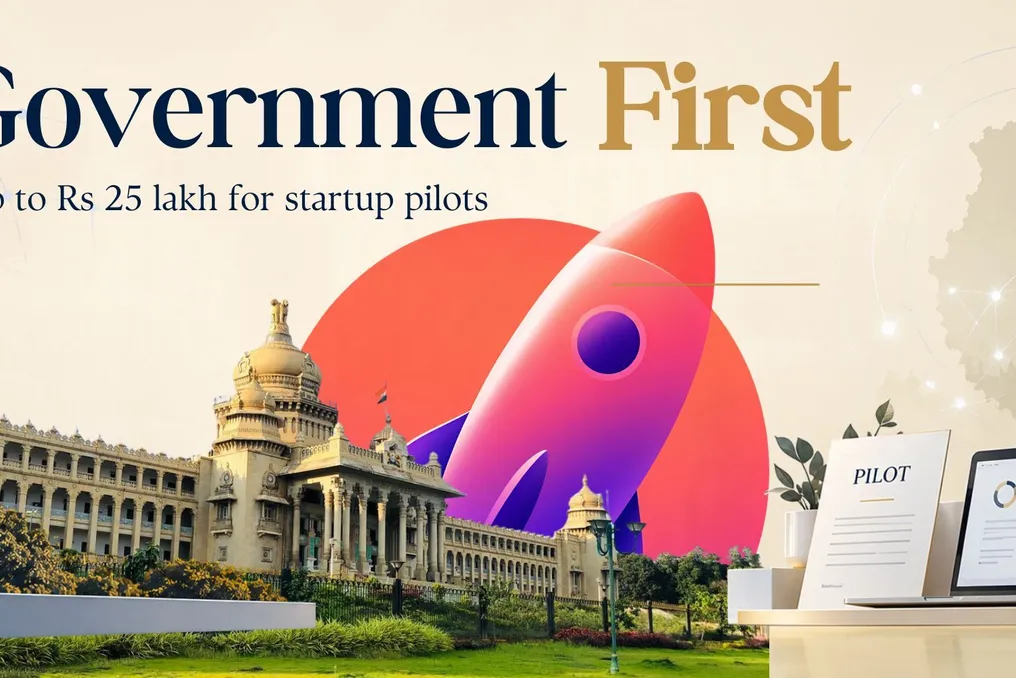
The Karnataka government has introduced a new initiative called 'Government First,' which allows startups to test, validate, and potentially sell their solutions to government agencies. Under this program, each startup can receive up to 25 lakh rupees for pilot implementation.

Over three years, support will be provided to no more than 100 startups, with a total allocation of 25 crore rupees. The 'Government First' program is approved under the Karnataka Startup Policy for the period 2025–2030 and will be implemented by the Karnataka Innovation and Technology Society (KITS).

Karnataka's goal is to transform government departments from mere purchasers into early adopters of new technologies. Startups gain the opportunity to deploy their products in real-world settings, while departments can evaluate the solutions before deciding on wider adoption.

Government agencies can independently identify specific problems and invite startups to develop corresponding solutions. Alternatively, startups can proactively approach departments with products or ideas that meet governmental requirements.

There is also a third pathway that involves testing selected solutions directly within active government environments. Applications will be reviewed in quarterly cycles, and all submissions in each cycle will be evaluated jointly. Selected solutions will be assessed based on criteria such as innovation, technical feasibility, scalability, and alignment with public sector use cases.

After the pilot project begins, the relevant department will ensure access to necessary infrastructure and support. It will also monitor the implementation, provide domain-specific guidance, and evaluate the solution's performance in real operating conditions. Evaluation will cover performance, usability, cost-effectiveness, scalability, and measurable impact.

Solutions demonstrating expected results may transition to government procurement and broader application. For products ready for immediate deployment, the guidelines also allow for consideration of direct procurement.

Startups registered in Karnataka are eligible to participate if they have not reached 10 years of age and their annual turnover does not exceed 200 crore rupees in any financial year since registration. Their products, processes, or services must demonstrate innovation or scalability and comply with applicable technical, regulatory, and industry requirements. Furthermore, the solutions must have a Technology Readiness Level (TRL) of at least 7, indicating validation in an operational environment and readiness for real-world testing.

The program covers physical goods, specialized services, and comprehensive solutions. Areas listed in the guidelines include IT, artificial intelligence, data analytics, consulting, design, logistics, hardware, and other technological solutions for solving governmental challenges.

Out of the total fund of 25 crore rupees, 23.75 crore rupees is allocated to startup support, and 1.25 crore rupees is designated for administrative and operational expenses. Each selected startup can receive up to 25 lakh rupees for pilot implementation and validation. Payment terms are also tied to execution: startups will receive 25% after issuing a work order, and the remaining 75% will be paid upon submission of a user completion certificate. Intellectual property remains with the startup unless otherwise agreed upon.

Proposals will be reviewed by committees composed of subject matter experts and government representatives. Their evaluation will include technical feasibility, innovation, product readiness, scalability, integration capability, and socio-economic impact. A successful solution may also extend beyond the initial deployment; if necessary, products can be adopted by multiple departments, and larger governmental tasks can be addressed by combining solutions from different startups.

Karnataka also plans to publish key program information through a public dashboard, including work orders, implementation details, and case studies. An annual report will track engaged startups, work order costs, and program outcomes. For startups, the 'Government First' program creates a pathway beyond grant funding: government problem, startup solution, live pilot, validation, procurement, wider adoption. This enables young companies to establish their technology in a real government setting while providing departments with a structured way to assess new solutions before scaling them.

Peak XV selects 18 startups for the 12th Surge cohort, focusing on AI and deep technologies
Read more
yourstory.com

Peak XV selects 18 startups for the 12th Surge cohort, focusing on AI and deep technologies

The investment firm Peak XV has selected 18 startups to participate in the 12th cohort of Surge, its early-stage startup accelerator program. This cohort covers areas such as artificial intelligence (AI), robotics, space technology, consumer internet, healthcare, financial services, and music.

Through the Surge program, Peak XV invests up to $5 million in one startup and provides comprehensive support in areas including talent acquisition, product development, engineering, go-to-market strategy, communications, policy, and global expansion.

Since its launch in 2019, the Surge program has supported over 180 startups from 18 nationalities, with the top 10 portfolio companies collectively generating over a billion dollars in annual revenue.

The current cohort reflects three rising trends in early-stage technology: reshaping the consumer experience to meet evolving user expectations; the evolution of AI from a mere feature to a core product architecture; and increasing investment in technologies that solve real infrastructure problems.

Among the consumer startups are Ditto, which aims to take dating beyond swipe-based interactions; Wingit, a beauty platform targeting premium Indian consumers; and GameStock, which applies gaming mechanics to investing.

In the healthcare sector, August AI is featured, combining AI with physician-led primary healthcare and reaching nine million users in 160 countries, alongside Hoola Health, which is developing a pediatric healthcare ecosystem. Additionally, Riffle creates a browser-based platform for music creation and collaboration.

Several startups are focused on building AI-driven products and infrastructure. Alma develops tools for personal computing in an AI-centric world, while Kello builds a platform for human intelligence analysis. Rosella uses AI in commercial insurance brokerage, Kindling creates an operating system for startup storytelling and communication, and Reinforce Labs develops tools for assessing and securing corporate AI systems.

Meanwhile, hiloop creates infrastructure that helps companies train, test, and improve open-source AI models at scale.

The cohort also includes startups focused on physical world infrastructure. Puralink develops autonomous robots for inspecting underground pipelines, and ULOOK creates satellite systems for radio frequency sounding and spectrum analysis.

Rajan Anand, Managing Director of Peak XV and Surge, noted: 'What stands out in Surge 12 is that these founders are building from scratch.' He added: 'We are seeing the emergence of new behavioral models in how people create, shop, date, invest, and receive medical care, alongside fundamental changes in how companies hire staff, insure themselves, and operate. AI is increasingly becoming the product architecture, rather than the product itself.'

The cohort includes both returning founders and seasoned executives. Kello's co-founder, Mona Gandhi, was the first female engineer at Airbnb and previously founded Upraised, while Subramanya Jingade, co-founder, was previously involved in creating AmbitionBox.

Reinforce Labs founder Anish Das Sharma holds a Ph.D. from Stanford University, previously created a company acquired by Airbnb, and later led AI and machine learning teams at Google. Alma's founders, Nishit Shadagopan and Vinod Ganesan, previously worked at Microsoft Research before becoming lead engineers at Sarvam AI. GameStock founder Antoine Mystico is a serial entrepreneur and former professional baseball player, and ULOOK's founders have collaborated on more than a dozen satellite missions. Hoola Health founder Diksha Senguttuvan grew up in a family that ran hospitals, and Puralink founder Harrison Crowe-Maxwell turned university research on robotic pipe inspection into a patented company technology.

Popular