Vastu Tips: Four Places in the House Where You Should Not Store Money and Jewelry to Avoid Financial Losses
Read more
Aaj Tak
www.aajtak.in

Vastu Tips: Four Places in the House Where You Should Not Store Money and Jewelry to Avoid Financial Losses

According to the principles of Vastu Shastra, wealth and precious items are viewed not merely as material assets but as an embodiment of Goddess Lakshmi. People often hide their savings or jewelry in secluded places in the house, aiming to protect them from theft or the evil eye. However, they sometimes unknowingly choose locations that are considered extremely inauspicious and forbidden from a Vastu perspective. Storing money in unsuitable places obstructs the flow of positive energy, which leads to a gradual decline in prosperity.

Below are the places where, according to Vastu, money or valuables should categorically not be hidden.

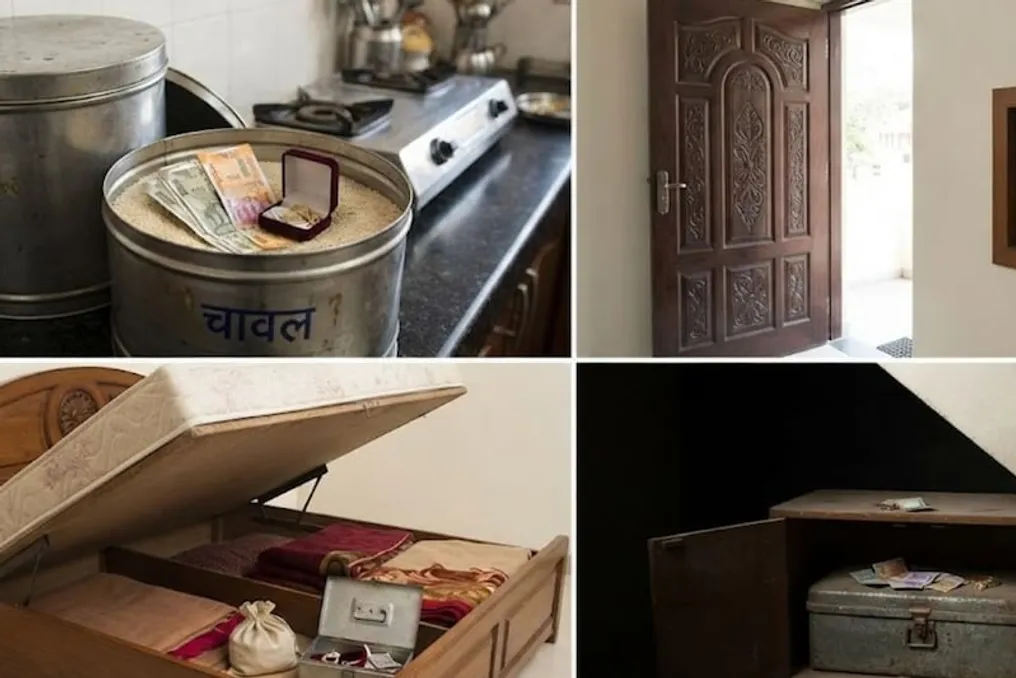
People often consider the kitchen a safe place and hide cash or jewelry under large containers of rice, flour, or beans. Vastu Shastra asserts that the kitchen contains elements of fire and water. Furthermore, hiding money in grain containers negatively affects the energy of both the wealth and the food, provoking an increase in unnecessary expenses and potentially leading to financial difficulties.

Some people hide money in hidden niches or cabinets located very close to the main entrance of the house. According to Vastu, the main portal is the key center for the inflow of energy. Placing money directly in front of or too close to the entrance disrupts the influx of positive energy into the dwelling.

Out of habit, people often hide money and valuables under mattresses or in bed compartments for emergency use or security purposes. From a Vastu standpoint, the bed is intended for rest and maintaining health. Storing money or valuable items underneath it causes increased mental tension and sleep-related problems.

Due to lack of space or the desire to protect against the evil eye, money is sometimes hidden in empty spots or hiding places under the stairs in some homes. Vastu Shastra associates this area with strong pressure and constant movement of people. Money placed in such a location will never multiply; on the contrary, the person may fall into debt and face serious obstacles in career advancement.
Similar stories

Five Vastu Mistakes in Small Apartments That Can Cause Financial Difficulties, and How to Fix Them
Read more
www.aajtak.in

Five Vastu Mistakes in Small Apartments That Can Cause Financial Difficulties, and How to Fix Them

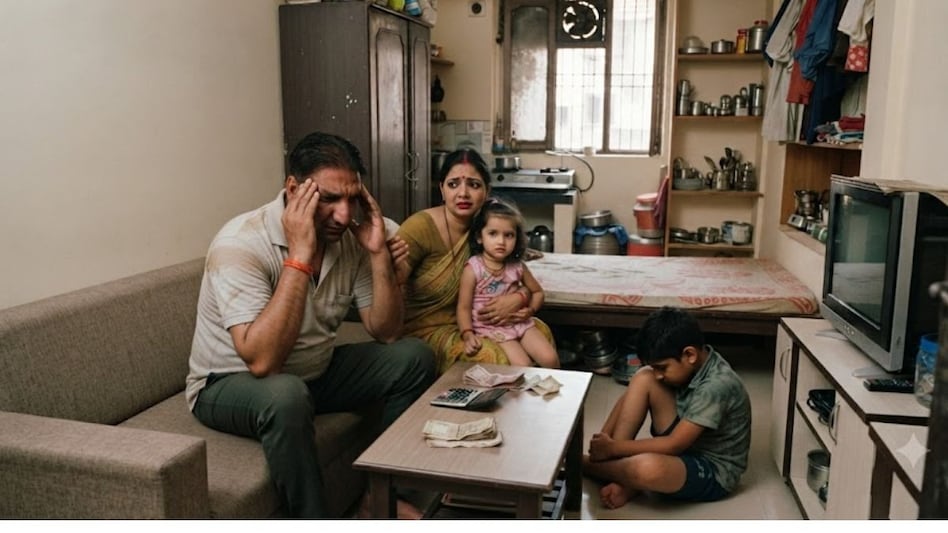
In modern cities where space is limited, living in small apartments, such as 1BHKs, has become common. In small dwellings, it becomes a difficult task to arrange all belongings correctly. Often, due to limited space, furniture, items, and other things are placed in locations that do not comply with Vastu principles. However, fixing the situation does not require major renovations or serious changes to the house; it is enough to pay attention to some minor details to improve the overall atmosphere and order in the home.

Do not store unnecessary items near the main entrance

According to Vastu, the main entrance is a very important part of the house. In small apartments, shoes, delivery boxes, or other clutter often accumulate near the door, making the passage narrow and disorganized. It is necessary to maintain cleanliness around the main entrance. For shoes, a small and organized rack should be used, and useless items should not be allowed to pile up by the door. It is also considered good practice to ensure adequate lighting near the entrance.

Keep the Ishan Kona sector clear

The Northeast, known as Ishan Kona, holds great significance in Vastu. Due to lack of space in small homes, people tend to place heavy wardrobes, storage containers, or too many things in this area. If possible, Ishan Kona should be kept light and clean. Heavy furniture should be avoided in this zone. If natural light and air are present in this sector, they should not be completely blocked by curtains or objects.

Do not block access to light and air in the house

To save space in small apartments, furniture is often placed in front of windows. However, this can impede the entry of natural light and air. According to Vastu, open space and illumination are considered important for creating a positive atmosphere. Therefore, too many items should not be placed in front of the windows. A good alternative is to open the windows for a while in the morning.

Do not accumulate excessive belongings

The main problem in small homes is clutter. When unnecessary junk accumulates in a limited space, the room starts to feel even smaller. Items that have not been used for a long time should be separated. Storing broken items, faulty electronics, and useless boxes should be avoided. Furniture should also be such that it maintains clear passage space in the room.

Pay attention to these points in the kitchen

Changing the direction of the kitchen, especially in a flat, is impossible. In such cases, paying attention to its cleanliness and organization can be a simple solution. Extra items should not be left near the gas stove and sink. It is important to ensure good ventilation in the kitchen by properly using an extractor hood or chimney. Dirty dishes should not be left for long. The kitchen surface must remain clean.

Reduce the number of items in the bedroom

Placing too much furniture in a small bedroom reduces the sense of space. Enough space should be left for walking around the bed, and the room should not be overloaded with excessive decorative elements. Although the Southwest is considered a suitable direction for the master bedroom in Vastu, changing the room's direction in an already built flat is impossible. In this situation, the easiest thing is to keep the room clean, organized, and calm.

Immediately remove broken and damaged items

Items such as leaking taps, dripping water, broken glass, faulty switches, or long-stored objects cannot be ignored. In Vastu, such things are associated with negativity. From a practical point of view, broken items and leaks can affect the cleanliness and condition of the house. Therefore, they should be repaired or removed as soon as possible if they are no longer needed.

Major renovation is not necessary to improve Vastu in a small home

If the house is small or the flat layout is already determined, there is no need to knock down walls to eliminate every Vastu flaw. The correct placement of items, maintaining cleanliness, ensuring adequate light and air, and free passage throughout the house can be a simple start.

Tips for storing things in a small house: using 8 hidden spaces to create coziness
Read more
www.aajtak.in

Tips for storing things in a small house: using 8 hidden spaces to create coziness

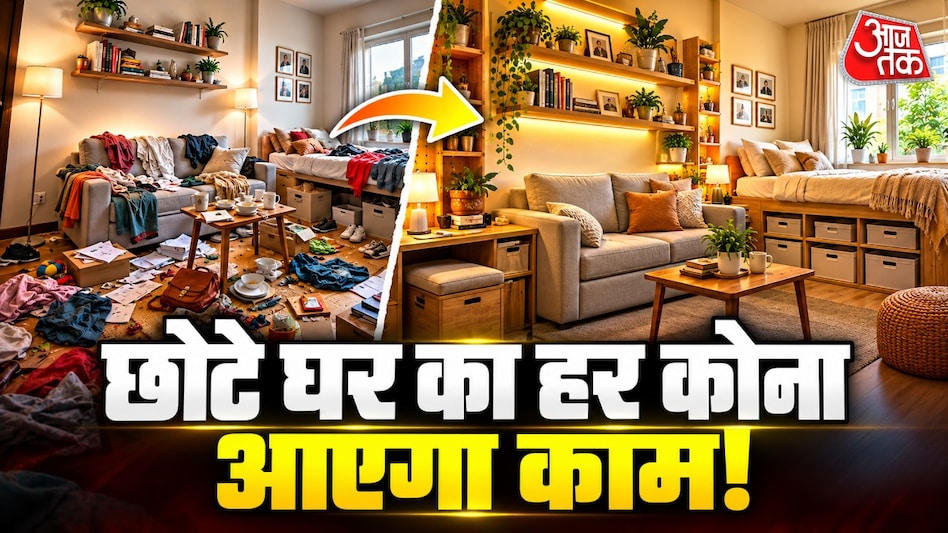
In small dwellings, the problem of clutter often arises, especially in 1BHK apartments where most items remain on the floor, which spoils the appearance and reduces the aesthetic appeal of the home. Although many strive for cleanliness and beauty, scattered items create a feeling of messiness. However, even in limited space, proper organization allows a small room to be clean and attractive. The main difficulty lies in the inefficient use of available areas, although every home has hidden storage zones.

How to organize space in a small house

There are several ways to effectively use hidden spaces in a home. For example, the space under the bed is often left empty or allowed to accumulate dust. Even if the bed does not have built-in drawers or a hydraulic mechanism, special solutions can be used: rolling drawers, dense fabric boxes, or vacuum bags. These places are convenient for storing seasonal clothing, spare blankets, suitcases, or heavy items that are needed in winter but take up space in summer.

The space behind doors is also an excellent hidden storage area. By using hooks or organizers that attach to the door, you can place bags, jackets, belts, shoes, or even cleaning supplies. This helps keep the floor clean and prevents all items from being displayed when entering the house.

Niche under the stairs

If a house or duplex has internal stairs, the area underneath them is often unused, where people tend to pile up junk. Instead, this area can be effectively utilized by installing custom cabinets, shoe racks, or a small bookshelf. To further conceal this area, a curtain or a sliding door can be hung.

There is usually free space between the upper shelf of the cabinet and the ceiling, about one or two feet. Here, decorative or style-appropriate boxes and baskets can be placed for storing extra blankets and throws, which remain inconspicuous and look neat. Travel bags, extra curtains, or holiday decorations can also be stored here.

For small homes, smart furniture solutions such as sofas or ottomans with built-in storage are ideal. Furthermore, instead of placing items on the floor, vertical floating shelves should be attached to the walls. Using vertical space frees up the floor and visually expands the room.

Upper part of kitchen cabinets

The interior parts of kitchen cabinets and the space under the sink are often unused and look untidy. These areas can be equipped with small shelves or holders. Here, you can organize the storage of cutting boards, detergents, sponges, foil, and small spice packets, while keeping it out of sight, thus maintaining kitchen cleanliness.

Corner areas of the house often remain empty and can be used to display decorative items. In these corners, a corner bookshelf for books, souvenirs, or small plants can be placed. If there is a little space behind windows and curtains, narrow shelves can be installed for storing small household items.

The attic space, colloquially called a 'tand' or 'loft', is usually used for storage. Items that are rarely used can be placed there. This not only keeps the items safe but also prevents them from taking up valuable space in living rooms.

Popular