Tourist influx to the mountains leads to infrastructure overload and traffic jams in Nainital, Shimla, and Badrinath
Read more
Aaj Tak
www.aajtak.in

Tourist influx to the mountains leads to infrastructure overload and traffic jams in Nainital, Shimla, and Badrinath

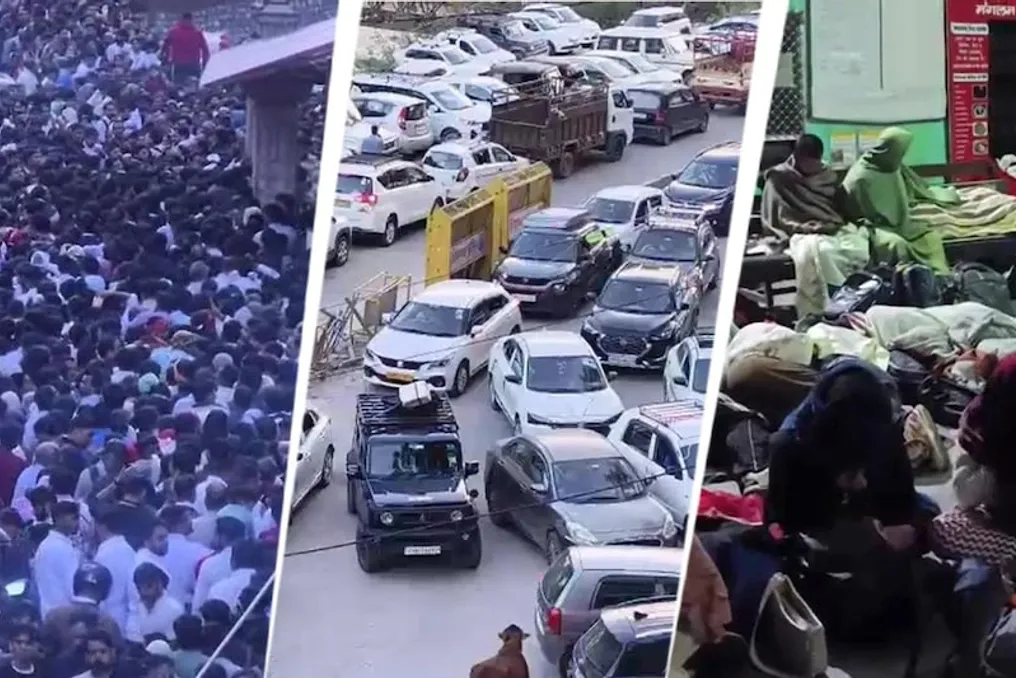
During the long weekend associated with Gandhi Jayanti, as well as on weekends, a huge flow of tourists poured into the mountain regions, leading to serious organizational problems in several tourist towns. The situation in Nainital became critical: hotels, guesthouses, and homestays were fully occupied. Tourists wandered late into the night searching for accommodation, and those who could not find a place to stay had to spend the night at the bus station.

Long queues of vehicles formed on the routes from Shimla to Manali and Badrinath. The influx of about 12 thousand tourists to Nainital during the long weekend put significant pressure on the city's infrastructure. From early morning, the number of cars on the roads increased, and traffic jams formed over many kilometers from Bhawali to Kainti-Dham, Garampani, and Hairna.

Hotels, homestays, and guesthouses in Nainital were almost completely full. Around one o'clock at night, many tourists were seen on Mall Road looking for rooms with their luggage. Even after multiple attempts, if accommodation was not found, some visitors had to spend the night directly at the bus station. On Haldwani Road, Bhawali Road, and Kaladungi Road, movement was slow, and on Mall Road, Ju Road, and Sherwani Marg, the situation resembled a traffic jam. Nevertheless, high visitor flow was observed at popular tourist attractions such as Naini Lake, the zoo, Snow View, and Himalayan viewpoints.

A large number of tourists also arrived in Shimla, the capital of Himachal Pradesh, during the long weekend. The influx of tourists from Haryana, Punjab, Chandigarh, and Delhi increased pressure on the city's road network. Long queues were observed on many stretches from Taradevi to Shimla. The situation was so tense that covering a distance of three kilometers took people up to an hour. The city's main parking lots were overcrowded, making it difficult for tourists to find a place to park their cars.

According to Chandra Shekhar, the Traffic Police Superintendent of Shimla, more than 80 thousand vehicles circulate in the city weekly. In the last 24 hours alone, more than 17 thousand vehicles entered the city, of which more than 7 thousand belonged to tourists. An additional number of police officers was deployed to manage traffic.

Traffic problems also complicated the journey of pilgrims on the route to Badrinath. Long queues of transport formed within a radius of 7 to 9 kilometers from Joshimath to Vishnuprayag. Pilgrims heading to Badrinath Dham and Hemkund Sahib, as well as local residents and schoolchildren, were stuck in traffic. Travelers from Joshimath to Marwari now require 2 to 3 hours to cover a distance that previously took about half an hour. Many passengers note that they have to spend a long time on the road, which creates difficulties for women and the elderly in their vehicles. One of the main reasons cited for the congestion in this area is the untimely completion of road widening works.

The impact of the long weekend was also strongly felt on National Highway-5 between Kalka and Shimla. On Friday, queues of vehicles stood for several kilometers. A journey that usually takes three and a half to four hours stretched into many hours. The traffic jams caused inconvenience not only for tourists but also for local residents and emergency service vehicles.

The number of tourists also increased in Manali due to the holidays. Visitors arrive from different parts of the country. The rise in the number of tourist vehicles on the city's main streets affected traffic speed. The appeal of the high-altitude areas increased after the recent snowfall. Although the long weekend boosted tourism in the mountain regions, bringing relief to hotel, restaurant, and other business owners, the shortage of rooms in Nainital and the long traffic jams in Shimla and Badrinath highlighted the problem of growing tourist pressure on limited mountain infrastructure.
Similar stories

Severe traffic jam in Nainital due to large influx of tourists; traffic regulation plan proved ineffective
Read more
www.aajtak.in

Severe traffic jam in Nainital due to large influx of tourists; traffic regulation plan proved ineffective

In the major tourist center of Uttarakhand—Nainital—a huge flow of visitors was observed during the holidays for Gandhi Jayanti and long weekends. Although Nainital is usually lively during holidays, this time it witnessed not only a mass influx of tourists but also serious traffic congestion.

As early as seven in the morning, the speed of movement on the roads began to decrease, and soon long queues of vehicles formed on many main routes.

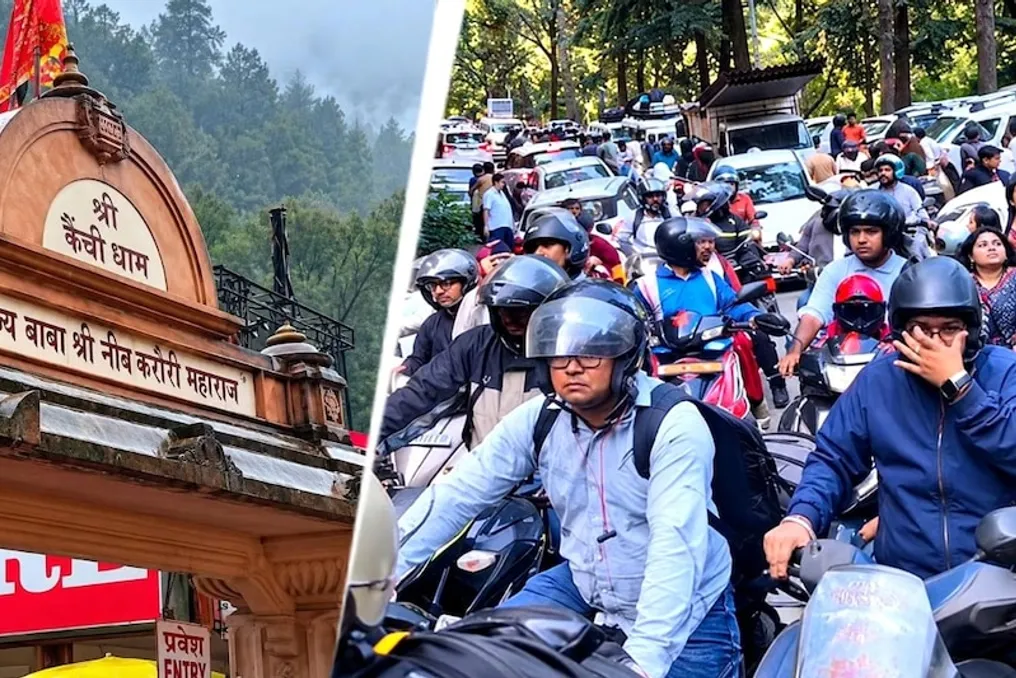
As the number of tourists grew, the pressure on Nainital's transport system and surrounding areas constantly increased. A long queue of vehicles formed on the route from Bhawali to Kainti Dham. A similar situation was observed on streets leading to Garhmupani and Hairna. Due to the large number of cars, buses, and two-wheeled vehicles, movement became extremely slow, and many cars remained stationary for long periods.

The influx of pilgrims heading to Kainti Dham and tourists vacationing in Nainital intensified the transport load in the Bhawali area. After the formation of a long queue between Bhawali and Kainti Dham, the congestion spread to further sections, causing problems for passengers heading to Garhmupani and Hairna. The main problem for stranded tourists was the loss of time. Many arrived in Nainital with their families for vacation, but a significant part of the trip was spent in traffic jams. Some passengers traveling from Haldurni and Katgodam missed their trains, disrupting their entire travel plan. Considering that mountain roads are inherently narrow, the simultaneous arrival of a large number of private cars makes maintaining normal traffic a difficult task.

The administration and police had implemented a special traffic plan from October 2nd to 4th to account for the potential surge in visitors. According to this scheme, external vehicles were supposed to stop at designated parking lots, from where a shuttle service would go to Kainti Dham. Furthermore, a system was organized to direct heavy transport along alternative routes. The goal of this plan was to reduce the load on the main tourist routes of the city and its surroundings. Initially, attempts to control traffic through parking and shuttles were successful, but as the number of tourists increased, the pressure on this system grew. Parking spaces in the Kainti Dham and Bhawali areas began to run out. The increase in vehicles in designated spots negatively affected the operation of the parking system, and many tourists started driving their own cars onto the main roads, which further worsened the already slow movement.

Despite the implementation of the special plan, the formation of long queues called into question the capability and effectiveness of the existing measures. However, based on available information, it is unclear exactly which provisions of the plan faced the greatest difficulties during the congestion.

The congestion, which arose around Bhawali and Kainti Dham, spread to Nainital city itself. After noon, the pressure on the roads of Haldurni, Bhawali, and Kaladungi increased. On Haldurni, cars moved very slowly from Hanuman Garhi to the Rusi bypass. The situation was not normal within the city limits either: long queues were observed on Marlow Road, Ju Road, and Sharwani Marg. The increase in tourist flow towards major attractions created difficulties for local residents. Residents of Nainital found it difficult to leave home for daily chores. Access to markets, offices, and other necessary places required significantly more time than usual. While the large number of tourists benefited the tourism business, the problem of urban traffic complicated life for local residents.

Despite the hours-long traffic jams, the enthusiasm of the tourists did not wane. Significant crowds were observed at popular spots such as Nainital Lake, Nainital Zoo, Snow View, and Himalayan viewing points. Tourists rested by the lake with their families, took walks, and enjoyed the picturesque mountain views. Thanks to the long weekend, a large number of people traveled to the mountainous tourist destinations of Uttarakhand. Nainital's beautiful valleys, cool climate, lake, and nearby religious sites attracted tourists. Kainti Dham also remained an important attraction for both pilgrims and tourists. Visiting the Baba Neem Karoli temple attracted people, which further increased the transport load in the Bhawali area. The combination of religious and natural tourism became one of the main reasons for the growth in visitor numbers in the Nainital region.

Popular