
Hyundai unveils new 2027 Tucson model with updated design and powertrains
Read more
Aaj Tak
www.aajtak.in

Hyundai unveils new 2027 Tucson model with updated design and powertrains

Hyundai has introduced its new SUV model, the Hyundai Tucson 2027, which is the fourth generation and was presented internationally by the company. This vehicle features a completely new design, as well as updated powertrains and interior changes.

The new Tucson was demonstrated in New York. Sales of this model will begin in South Korea at the end of this year. Afterward, the company plans to launch it in the North American and European markets, where it will appear in 2027.

Compared to the old version, the Hyundai Tucson 2027 is larger. Its enlarged version with a long wheelbase measures 4700 mm in length, 1905 mm in width, and 1685 mm in height. These dimensions exceed those of the current Tucson by 60 mm in length, 40 mm in width, and 20 mm in height. Additionally, the wheelbase has increased by 30 mm, reaching 2785 mm.

The increase in dimensions allows for more cabin space. Regarding the interior, the Hyundai Tucson features a clean dashboard with a dual-tier instrument panel and physical controls for frequently used functions. The car will be equipped with a central touchscreen display of 17 or 12.9 inches, as well as a 9.9-inch display.

The Hyundai Tucson is available with gasoline, hybrid, and plug-in hybrid powertrains. The version with a 1.6-liter turbocharged gasoline engine and an electric motor offers 245 hp. The plug-in hybrid version, equipped with a 1.6-liter turbocharged gasoline engine and a 17.1 kWh battery, will have a power output of 292 hp.

Hyundai states that in fully electric mode, the vehicle can travel a distance of 81 kilometers and will also be equipped with an onboard charger with a capacity of 7.2 kW. The plug-in hybrid version of the Tucson will only be available in certain markets.

Regarding the Indian market, Hyundai discontinued sales of this model in November 2025. There is currently no information on whether the new generation of Tucson will be introduced in India. Previously, the price of the existing Tucson started from 27.32 lakh rupees including all charges.

Similar stories

JSW Dulux plans to split shares into 10 parts; record date set
Read more
www.aajtak.in

JSW Dulux plans to split shares into 10 parts; record date set

One of the companies in the paint industry is planning a corporate action that involves splitting its shares into ten parts. This was announced in August. The company will transform one share with a nominal value of 10 rupees into ten shares with a nominal value of 1 rupee. The record date for this event has been set for October 22, 2026.

As part of the share split, existing company stakes are divided into smaller pieces. This leads to an increase in the number of shares held by investors, although the cost of a single share decreases proportionally. Meanwhile, the total investment value of the investors remains unchanged.

The main goal of conducting such a split is to make the shares more accessible. Shares with a very high price may be unaffordable for small investors. After the split, the shares become cheaper, which potentially helps attract a larger number of new market participants.

The company conducting the share split is called JSW Dulux. The value of its shares is 3,011.10 rupees. If the share price remains at this level until October 22, the cost of one share after the split will be 300 rupees, as one share will turn into ten parts.

In December 2025, JSW acquired a stake in Akzo Nobel Coatings International B.V., becoming the new parent and holding company. Currently, JSW Paints owns 61.20 percent of JSW Dulux shares.

Energy Minister orders scaling up mobile dispatch centers across the country
Read more
www.tehrantimes.com

Energy Minister orders scaling up mobile dispatch centers across the country

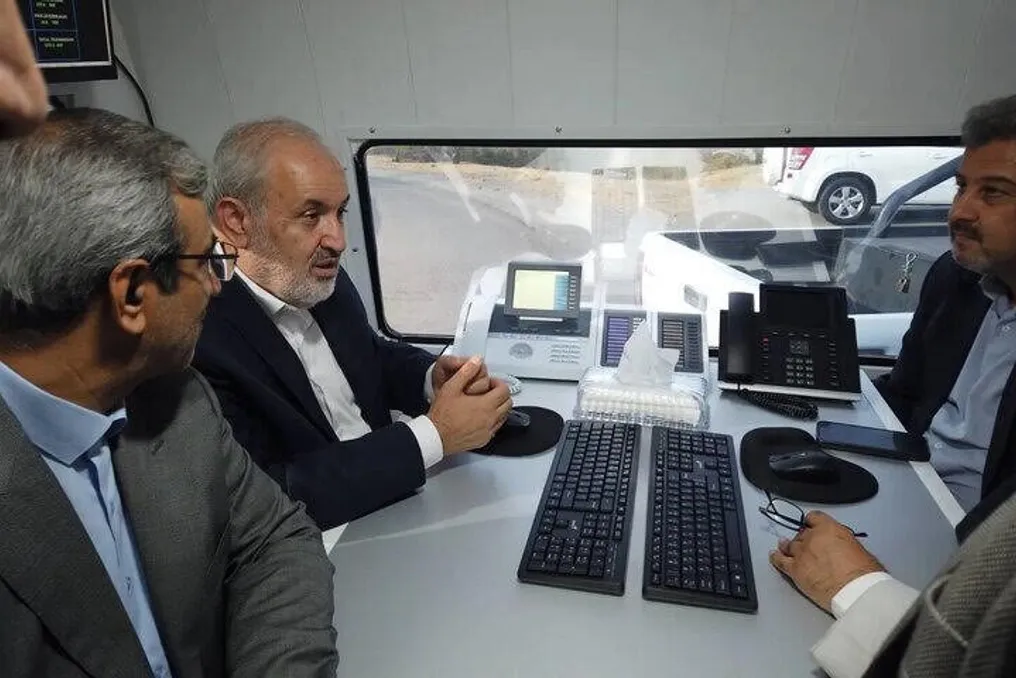
Following the launch of the first mobile dispatch center in the Khorasan Razavi province, the Energy Minister issued an order mandating the implementation of this model nationwide. The Deputy for Electricity and Energy has been tasked with developing the necessary directives to execute this plan.

According to Mehr News Agency, citing the Ministry of Energy's information portal, Abbas Aliyabadi instructed the expansion of this model across the entire country during his visit to the first mobile dispatch center in Khorasan Razavi. He also appointed Mostafa Rajabi Mashhadi, the Deputy for Electricity and Energy of the Ministry of Energy, to be responsible for its implementation.

This center was designed and built to ensure monitoring and management of the energy system during emergencies and in locations where access to stationary dispatch centers is difficult.

The report states that the country's first mobile dispatch system was developed and constructed by experts from the Khorasan Regional Electric Company and possesses the capability for rapid deployment and online network monitoring. In its initial operational activity, the system established a connection with the National Dispatch Center.

During his visit, the Energy Minister emphasized the importance of applying new technologies for managing emergency conditions in the grid and asked the Deputy for Electricity and Energy to prepare the framework for spreading this model to other regional electric companies by drafting the required directives.

Mostafa Rajabi Mashhadi, the Deputy for Electricity and Energy of the Ministry of Energy, also discussed the capabilities of this system, noting that mobile dispatching allows for real-time network control and issuing maneuvering commands independent of fixed nodes.

He added that by utilizing this technology, operational control and management can be carried out at various points in the network, reducing limitations caused by the geographical location of permanent centers.

Rajabi Mashhadi specified that, in accordance with the Energy Minister's order, the necessary instructions will be issued to disseminate this model to regional electric companies so that this function can be used to enhance the resilience of the energy system during emergencies.

Thanks to its secure and independent communication infrastructure, this center can be placed in critical points of the network and manage energy system stabilization operations.

Popular