There are few species of mammals that reproduce by laying eggs, and these are restricted to the Oceania region. These animals are known as monotremes and challenge the usual understanding of mammalian reproduction, which typically gives birth to live young.
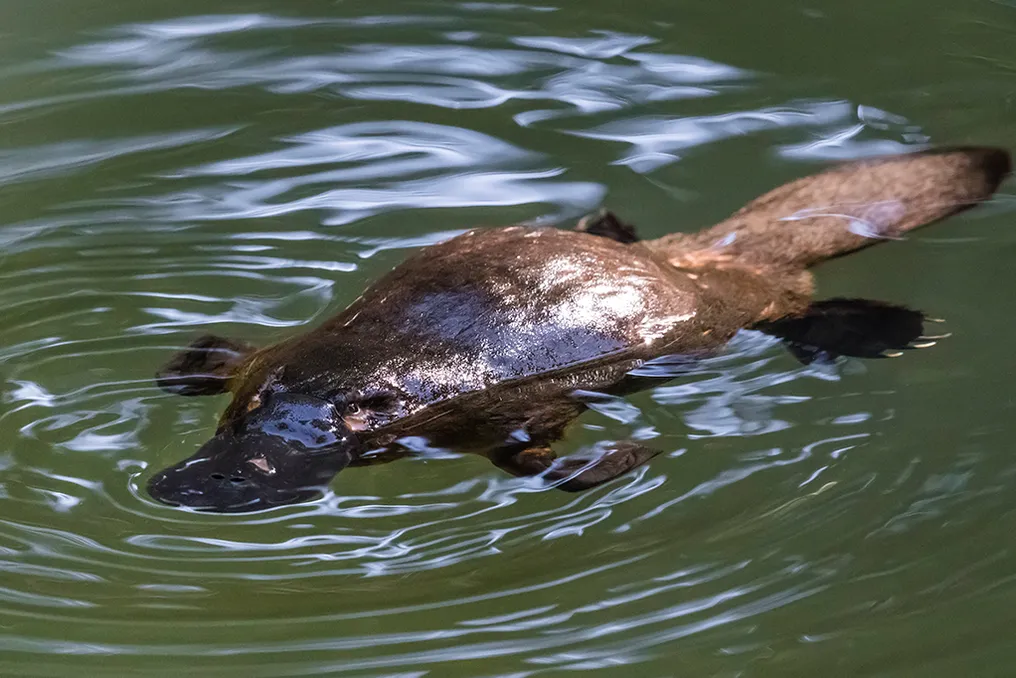
The platypus is cited as one of the most prominent examples of an egg-laying mammal. During spring, the female platypus lays between two and three eggs. After approximately fourteen days of incubation, the young hatch and consume milk secreted by rudimentary mammary glands, as the animal does not have nipples.
It is relevant to note that the female of this animal has two uteri, but only one of them becomes active during the reproductive process. These species are found exclusively in Australia, New Zealand, and Tasmania, according to veterinarian Luciano Freitas Felício, who works at the University of São Paulo.
The theory suggests that the order of monotremes may have evolved from a reptile lineage different from that which gave rise to other mammals. The order Monotremata is subdivided into two distinct families: Ornithorhynchidae and Tachyglossidae, the latter being the family that includes echidnas.
Echidnas are spiny animals, capable of reaching a weight of up to ten kilograms and a length of one hundred centimeters. They usually feed on ants and have a unique reproductive cycle. Unlike platypuses, the echidna deposits only one egg at a time. After hatching, the young is not yet fully developed and remains for about two months inside the mother's abdominal pouch, a period essential for the development of its spines, before becoming autonomous.