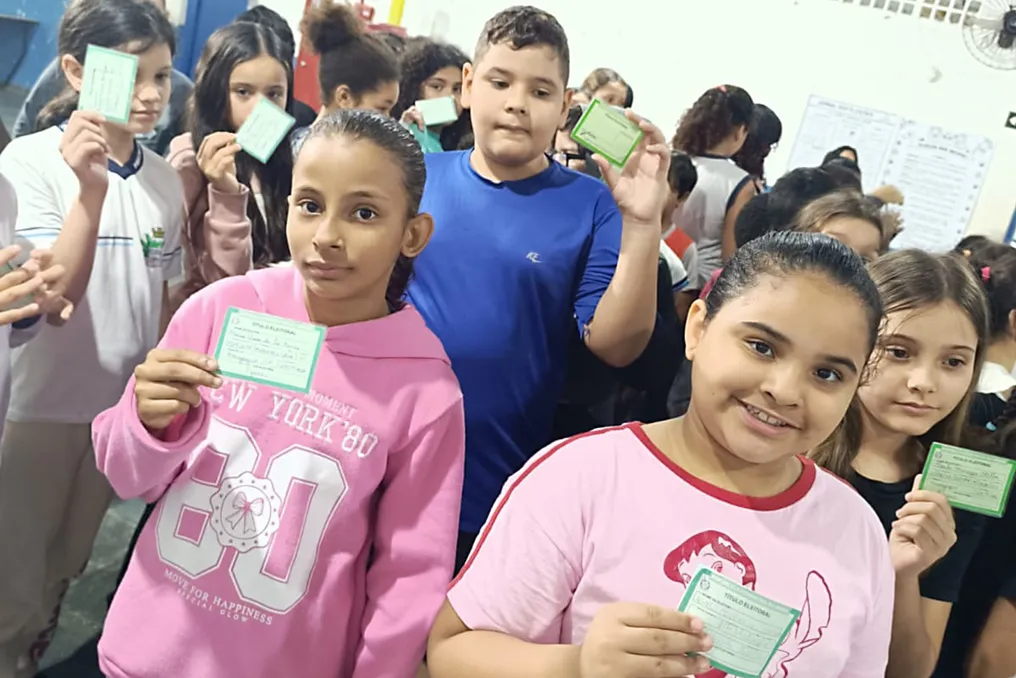
Students from the municipal school Sítio do Pica Pau Amarelo, located in Mongaguá, on the coast of São Paulo, participated for the first time in an electoral process. Through a project called 'Election of the Animals,' the children had the chance to learn how to exercise their citizenship and cast their first voter ID.
Considering that the school will officially function as an electoral zone during elections, the pedagogical team chose to convert this real situation into a valuable teaching opportunity. The students participated in a child-themed election based on animals, aiming to introduce the concepts of democracy and the exercise of citizenship.
The activity planned for the youth included the issuance of voter IDs, with individualized identification and personalization, as well as the use of an electronic voting machine and a structure set up by the institution's teachers and staff. During the simulation, the children experienced the entire voting ritual, from initial identification to the act of choosing in the ballot box, assimilating the importance of expressing their choices and accepting collective decisions cordially.
The students gathered in a hall where there was a designated table for vote counting. The voting took place in two different classes, ensuring everyone participated in the simulated experience.
Information about the 2026 Elections
The first round of the elections is scheduled for October 4, 2026. Each voter must register six votes to select a president, governor, two senators, federal deputy, and state or district deputy (if applicable in the Federal District). It is strictly forbidden to bring mobile phones to the ballot box during voting, although it is permitted to write down candidate numbers on paper for reference.