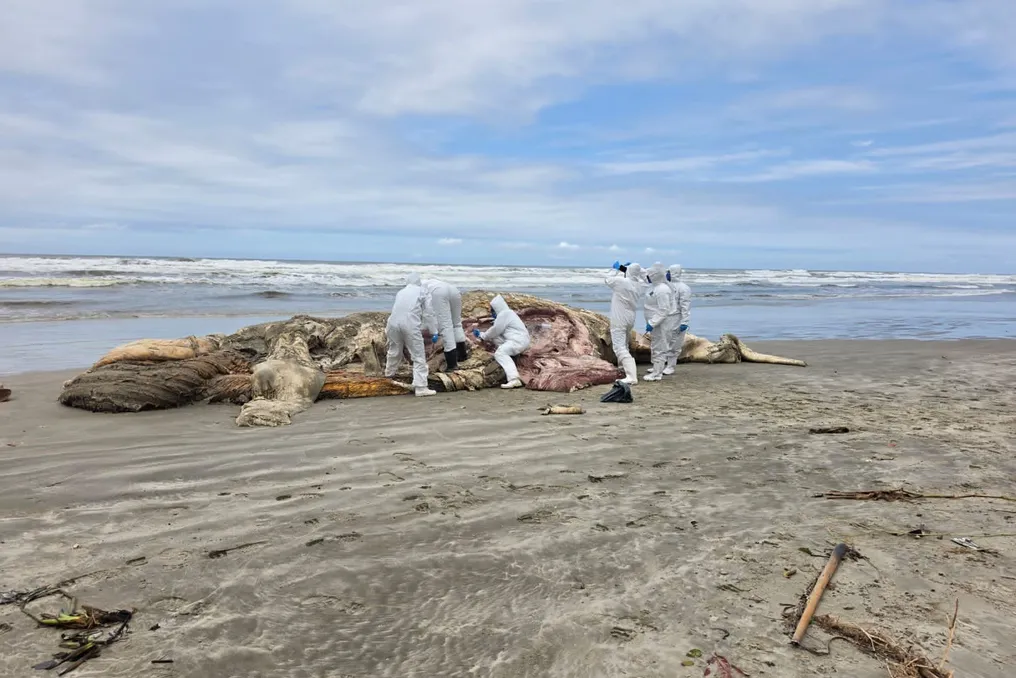
Humpback whale found dead on Mongaguá beach, São Paulo coast
Read more
Grupo Globo
g1.globo.com

Humpback whale found dead on Mongaguá beach, São Paulo coast

A humpback whale was found dead after washing ashore on the beach in Centro de Mongaguá, in the coastal region of São Paulo. Teams from the Biopesca Institute were mobilized to the site to perform an autopsy on the animal, although the exact cause of death has not yet been determined.

According to information provided by the Municipality of Mongaguá and the Environmental Guard (GEPAM), it is a juvenile male of the humpback species, which showed an advanced stage of decomposition. There is no official confirmation regarding its weight or dimensions.

Urban Maintenance Service teams were called to provide assistance, along with the Biopesca Institute, which began analyzing the carcass around 11:30 AM. Environmental guard Renato Ribeiro told g1 that he received the call from fishermen about the incident around 7:20 AM. He clarified that due to the rising tide, the autopsy could not be safely conducted at the site until the water level dropped. Later, the carcass will be removed by the municipal team and sent to a landfill.

Risks of Approach

The technical recommendation establishes that, in situations involving dead animals on the sand, it is essential to maintain distance, avoid any approach, and immediately notify the competent authorities to ensure the isolation of the area.

Biologist Eric Comin warned that interaction between beachgoers and marine carcasses represents significant dangers. The primary risks associated with a stranding include public health, physical safety, and the environment. The specialist explained that deceased animals can transmit highly contagious bacteria, viruses, and fungi to humans.

Additionally, the strong characteristic odor signals the release of toxic gases, capable of causing symptoms such as dizziness, nausea, and headache. There is also the risk of the animal's body rupturing due to the accumulation of these gases. Another point raised by the biologist is that the smell of meat and blood can attract predators, such as sharks. Furthermore, the fluids and fat released contaminate the water surrounding the animal's body.

About Humpbacks

According to the biologist, during this time of year, humpback whales are in a migration phase. This journey begins in the cold waters of Antarctica, where the animals spend the summer feeding and accumulating energy reserves. They then head to the Brazilian coast, which offers more suitable conditions for reproduction and nursing of the young.

Comin emphasized that this route constitutes one of the largest mammal migrations on the planet. Some of these whales travel thousands of kilometers in search of calmer and warmer environments. During this displacement, they are commonly seen on the São Paulo coast. Adult males can reach between 13 and 16 meters in length and weigh up to 50 tons. After completing the reproductive cycle, the humpbacks return to Antarctica, at which point the calves are more developed and begin to learn to feed before undertaking the long journey back.
Similar stories

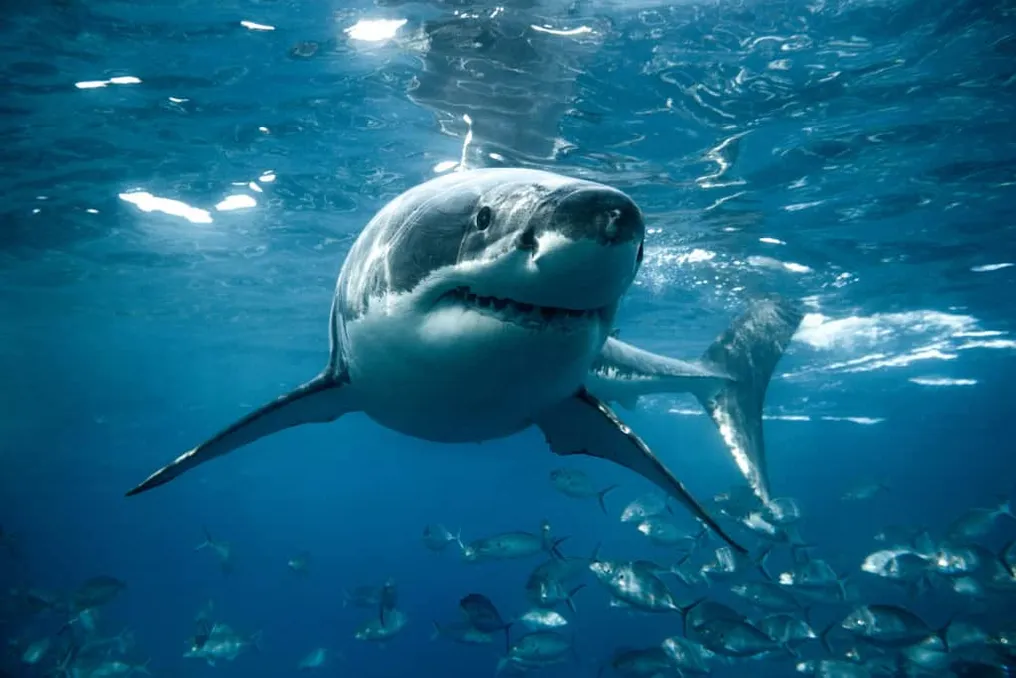
Scientists record unprecedented white shark attack on rare dolphin in Brazilian beach
Read more
olhardigital.com.br

Scientists record unprecedented white shark attack on rare dolphin in Brazilian beach

Researchers documented for the first time a hunting incident involving a white shark and a toninha, a dolphin considered rare, that occurred on the Brazilian coast. The toninha specimen was found dead on a Brazilian beach, showing three bite marks.

The investigation of the injuries confirmed that the attack took place while the animal was still alive. This record establishes an unprecedented interaction between the two species and provides new data on the presence of the white shark in Brazilian waters.

The toninha (Pontoporia blainvillei) is typically found on the southern coast of Brazil, but it also occurs in Uruguay and Argentina. This species is classified as one of the most threatened among dolphins in the Southwest Atlantic. Although it lives in the sea, it is technically a river dolphin, being the only species of this group that inhabits the marine environment; its closest relative is the pink river dolphin, found in the Amazon.

The toninha can be distinguished from other dolphins by its appearance, notably because its snout represents approximately 15% of the total body length, which is the largest proportion of this type among dolphins.

Finding a dead individual of a rare species like the toninha provides a valuable opportunity to study unknown aspects of its ecology. This opportunity arose when an adult toninha was found stranded on the Brazilian coast, exhibiting the three bite marks.

To determine the predator, scientists examined the dimensions of the marks, the morphology of the bite, the size and shape of the teeth, as well as the direction of the scars. The information was processed using the TPSdig software, a tool used to estimate the measurements of the potential predator.

One of the bites, located on the dorsal fin, showed characteristics consistent with a white shark. The analysis indicated that the animal responsible for the attack had an estimated length between 3.6 and 3.8 meters and a weight ranging from 400 to 490 kilograms. The presence of hemorrhage at the wound reinforced that the toninha was alive at the time of the attack.

This event constitutes the first documented hunting record between white shark and toninha in this region. The discovery also suggests that white sharks may be present and interacting with this species in Brazilian waters, despite being locally considered rare.

The finding adds knowledge about the ecological relationship between the two animals. While the toninha is listed among the most threatened dolphins in the Southwest Atlantic, white sharks also face a decline in population. Researchers emphasize the importance of understanding the role of these species in the ecosystem, and the study based on the carcass of this single dolphin aids in deepening this knowledge.

Mass death of young whales in Argentina: Scientists suspect bacterial infection
Read more
www.aajtak.in

Mass death of young whales in Argentina: Scientists suspect bacterial infection

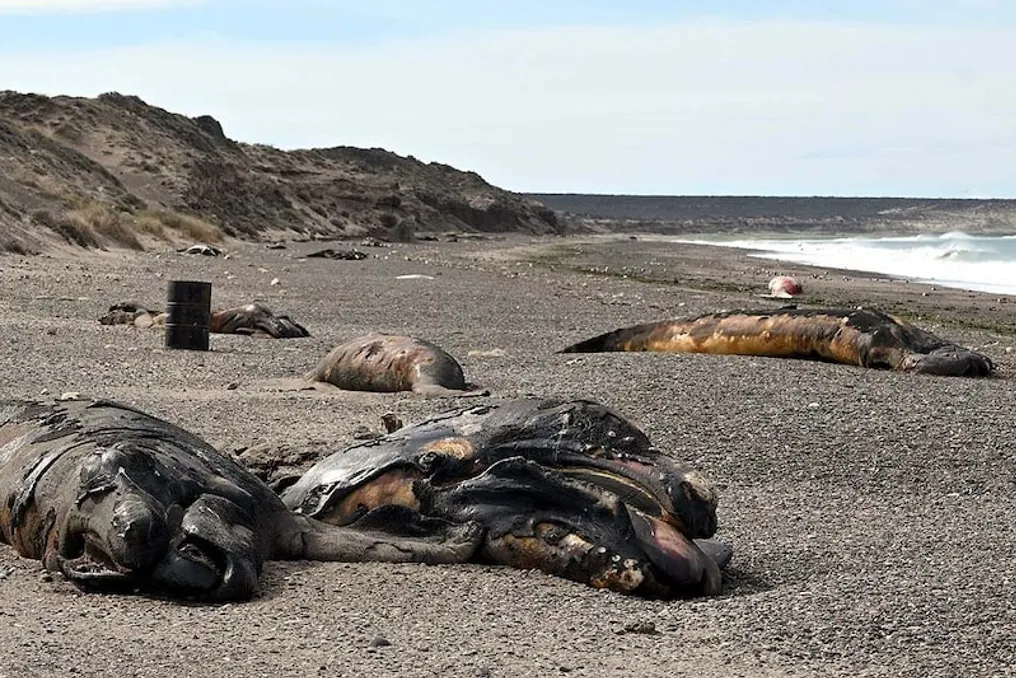
In the southern part of Argentina, Patagonia, a significant number of deaths among young Southern Right Whales have been observed. Since June, the corpses of these whales have been regularly found on the coast of the Chubut province. Scientists hypothesize that a bacterial infection may be the cause of these deaths, although final confirmation has not been obtained, and the investigation is ongoing.

This year, approximately 1375 Southern Right Whales were registered in the region, about 400 of which were calves. According to scientists, the mortality rate among young whales is elevated this season. The Chubut government is cooperating with scientific and research groups to determine the causes of these deaths. Preliminary studies point to common marine bacteria as a possible cause.

The appearance of dead young whales on the coast of Chubut has continued since June. Dead Southern Right Whale calves were also found this week. Local scientists are keeping track of all these cases and, where possible, taking samples from the deceased whales for analysis.

According to researcher Mariano Coscarella from the Marine Mammal Laboratory, the mortality rate among young whales is particularly high this season. Scientists suspect a disease called Erispiles, which is a serious bacterial ailment caused by bacteria that can be found in the bodies of marine animals and in the environment.

According to information from the Chubut government, initial data links the possible cause to a common marine bacterium. However, it has not yet been proven that this specific bacterium caused the death of all the whales. Scientists are also trying to establish how the infection could have entered the young whales' bodies and what its connection to their death is. To do this, samples from the dead whales, as well as environmental and seawater conditions, are being studied.

Currently, scientists tend to consider this situation natural, but the role of human activity has not been completely ruled out. Nevertheless, the Chubut administration reports that there is currently no information directly linking these deaths to human activity.

Scientists emphasize that understanding this phenomenon requires more than just counting the number of dead whales; it is also necessary to consider the number of births, the number of fatalities, and mortality statistics from different years.

Puerto Madryn and the adjacent Valdés Peninsula are part of a vast breeding area for Southern Right Whales. These whales can reach lengths of up to 17 meters, and their average weight is about 40 tons. In 2025, a record number of 2110 Southern Right Whales was registered in the area, about 800 of which were calves. This year, 1375 whales were counted, including about 400 calves.

An increase in the death rate of young whales has also been recorded in the Valdés Peninsula previously. In 2012, 113 dead calves were registered there, which was one of the highest mortality rates for this species. The current calf mortality rate continues to worry scientists, although further research is required for a full understanding of the situation.

In the opinion of scientists, the current cases are alarming but are not yet considered a major long-term threat to the entire Southern Right Whale population. Local authorities note that the average age of these whales is about 60 years.

Scientists are currently analyzing samples from the dead whales and the marine environment. It will only become clear after these studies are completed how responsible the bacterial infection is for the death of young whales and whether there is any other cause.

Popular