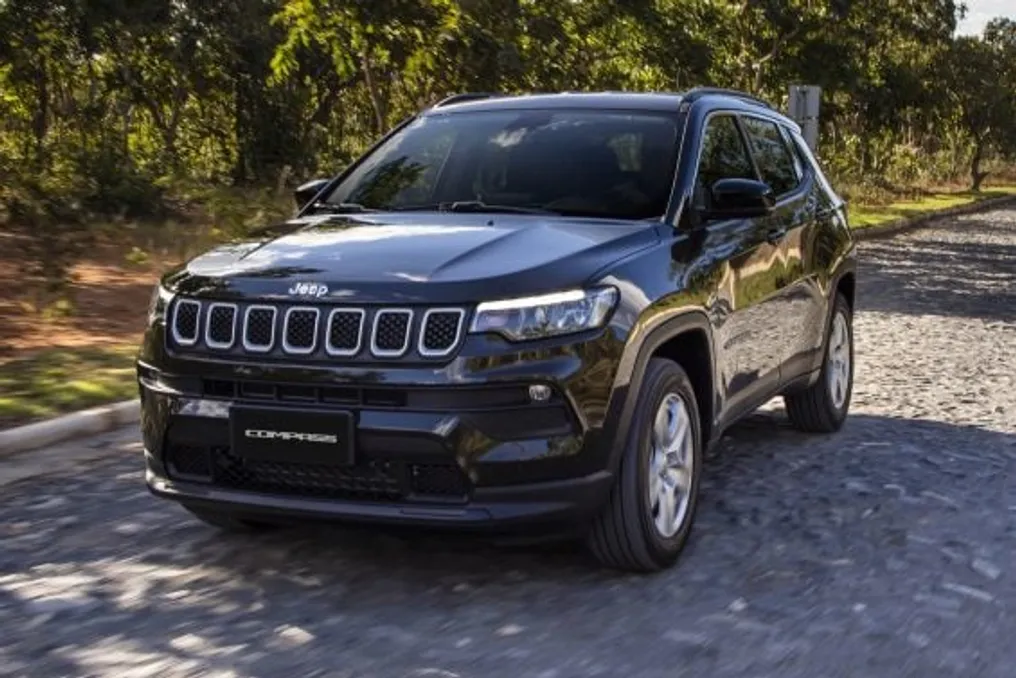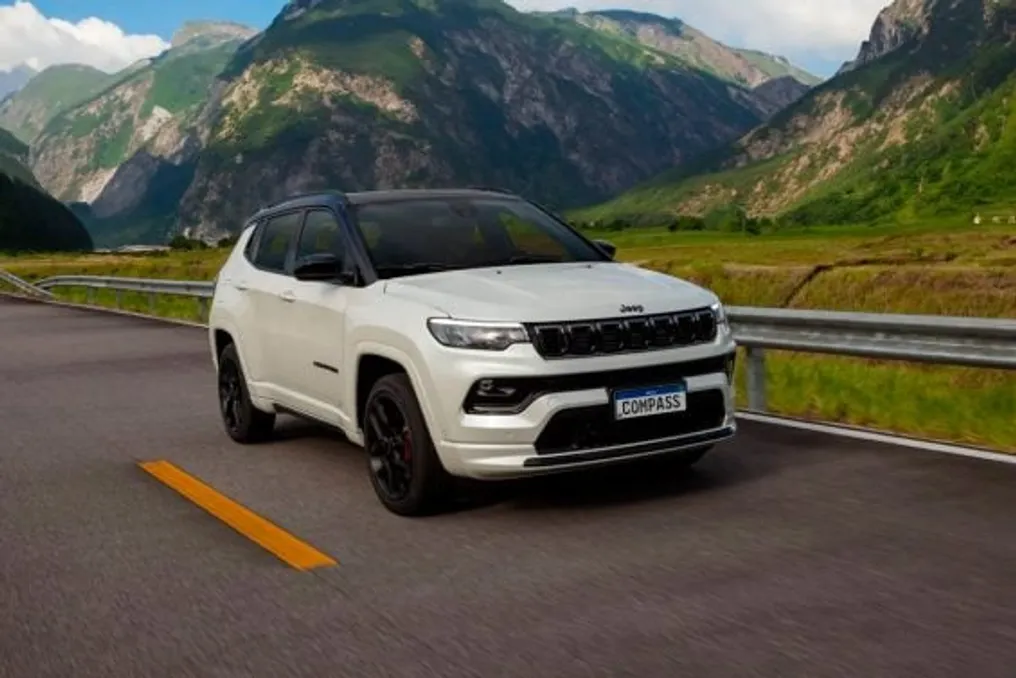
The Jeep Compass is a vehicle that has impacted the automotive market since its launch, remaining a sales success despite intense competition in the mid-size SUV segment. This content focuses on the Jeep Compass equipped with the 1.3 turbo flex engine, highlighting that, being semi-new and under warranty, this mid-size SUV offers a good level of equipment and adequate performance for both city and highway driving.
The second generation of the Jeep Compass was introduced to the Brazilian market in September 2016, initially offering aspirated flex and turbodiesel engine options, along with an inaugural special edition called the Opening Edition. In the following year, the flex versions began including the start/stop system, and the model received two special editions: Sport and Night Eagle. In 2019, an entry-level option simply named S was launched.
A more significant change occurred in 2021, when the Compass, already in the 2022 line, underwent a deep aesthetic overhaul, abandoning the aspirated engine and adopting the 1.3 turbo flex. At that time, the limited 80 Years edition was also presented to celebrate Jeep's anniversary. In 2022, the brand expanded its offering and presented a technological showcase for the mid-size SUV line with the Compass 4xe, which was Jeep's first plug-in hybrid in the country, but registered low performance, selling fewer than 250 units in three years.
In the 2025 line, the SUV's warranty was extended from three to five years. Simultaneously, the power of the Jeep Compass's 1.3 turbo flex engine was adjusted to comply with Proconve emission regulations. More recently, the Jeep Compass incorporated the Hurricane engine, with 272 hp, while the turbodiesel engine was discontinued in the SUV line in 2025.
The success of the Compass and its attractive profit margins motivated competitors to react. Despite the existence of mid-size SUVs in the country, none possessed sufficiently competitive positioning or pricing to challenge the Jeep. Rival brands opted to invest in more accessible projects with national production. Toyota initiated this movement in 2021 with the manufacturing of the Corolla Cross in Brazil, relegating the RAV4 to a hybrid and niche product. Volkswagen followed this trend in 2022, importing the Taos from Argentina (currently renewed and coming from Mexico) to compete directly with the Compass, while the Tiguan remained in a higher category.
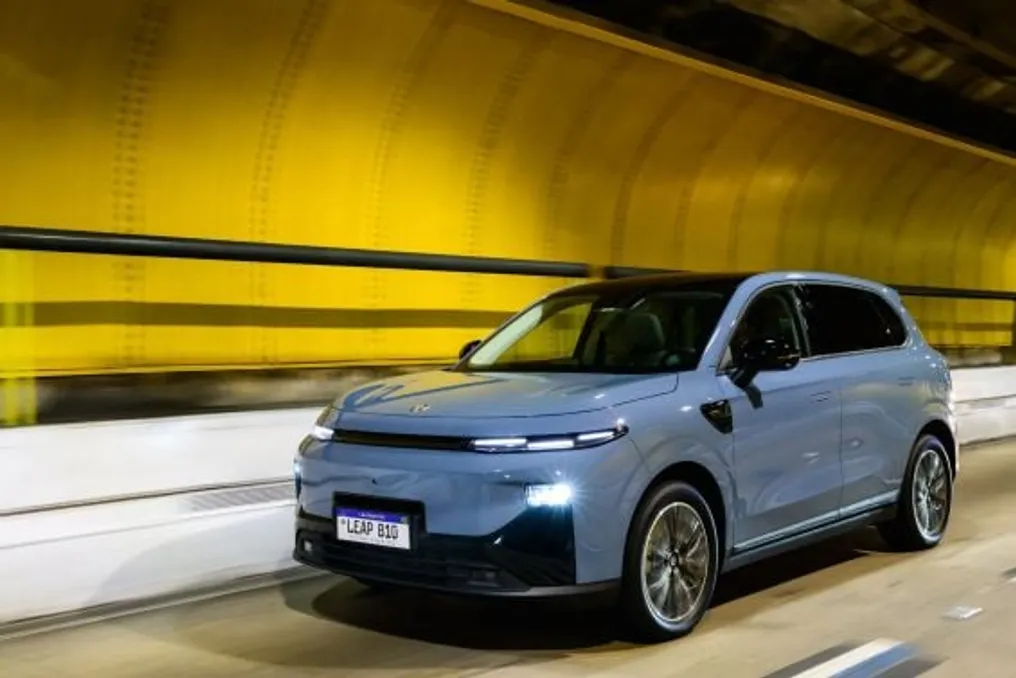
Other competitors came from Mexico, such as the Honda ZR-V and the Chevrolet Equinox, but these had little capacity to compete in terms of sales. The most significant offensive came from China, starting with the Caoa Chery Tiggo 7, due to its aggressive cost-benefit ratio. Subsequently, hybrid models emerged, including GWM Haval H6, BYD Song Pro, GAC GS4, and Geely EX5 EM-i. In the electric mid-size SUV segment, there are the Leapmotor C10, MG Motors S5, and BYD Yuan Pro, as well as the GAC GS3, a purely combustion Chinese model.
The model faced challenges with the massive entry of Chinese vehicles. Compared to its history, even costing more than compact SUVs, the Compass led the category at various times during the turn of the decade. In 2019 and 2021, the Compass achieved second place overall among sport utility vehicles, trailing only the Renegade, its factory counterpart. During this period, the SUV exceeded the mark of 70 thousand annual units, and Jeep held a 7.5% market share. However, the scenario changed; in 2024, 50 thousand units were sold, and in 2025, although it recovered to 60 thousand registrations, Jeep's market share dropped to 4.7%.
Despite market variations, the SUV's commercial performance remains notable. In ten years of production in Pernambuco, the Compass accumulated over 600 thousand manufactured units and 570 thousand registrations. It is important to note that the Compass had a first generation commercialized in Brazil, imported starting in 2012. This initial SUV had an unattractive design, high price, and was equipped with a 156 hp 2.0 gasoline engine coupled with a CVT transmission, which did not please the public and resulted in modest performance during its four years on the market.
The introduction of the 1.3 16V turbo flex engine revitalized the Jeep Compass, which previously used the 2.0 16V flex aspirated engine, a source of many customer complaints. Even with the current power reduction, the mechanical assembly is considered sufficient for the SUV. The 176 hp—9 hp less than before—from the T270 engine of the GSE family ensure good acceleration, although the 0 to 100 km/h time is around 10 seconds, considering the weight over 1.5 tons. Acceleration is aided by the 27.5 kgfm of torque, available early at 1,750 rpm. An area for improvement is the six-speed Aisin automatic transmission, which is considered outdated and maintains gears adequately at medium RPMs.
Fuel consumption is not excessive for an SUV with these characteristics, such as unfavorable aerodynamics and high weight. In the city, it achieves 7.3 km/l with ethanol and 10.1 km/l with gasoline. On the highway, the figures are 8.6 km/l and 12.1 km/l, respectively.
The SUV will be the next Stellantis model produced at the Goiana Automotive Plant in Pernambuco to receive electrification. However, it is important to note that, like the Renegade and Commander, the Jeep Compass's 1.3 turbo flex setup will receive a mild hybrid system. This system uses a 48V lithium-ion battery to power a small electric motor that acts as a generator. It does not drive the wheels directly, but according to Stellantis, it provides up to 6.6 kgfm of additional torque to the 1.3 engine during acceleration, recovery, and starting. A full hybrid system is planned only for the next generation of the Compass, expected in 2028.
One of the great attractions of the Jeep Compass is its spacious interior, a factor contributing to its popularity in the segment. Compared to top-of-the-line compact SUVs, the Compass offers a considerably superior environment. In the front, the driver enjoys the elevated position characteristic of Jeep models, along with good leg and shoulder room. Visibility is wide, the seats offer appropriate density, and the finish has significantly improved since the 2022 line. The rear seat accommodates two adults and one child, but tall people may lack knee space. The trunk, however, compensates with 410 liters, a volume slightly smaller than that of the compact VW Nivus.
The multi-link rear suspension, with a softer calibration, prioritizes comfort and absorbs road imperfections well, although there may be some body roll in certain situations. The sound insulation performs well. Considering the 2025 Jeep Compass Longitude with the 1.3 turbo flex engine, it is a spacious and well-equipped semi-new SUV, still covered by five years of warranty. According to KBB Brazil, the average prices are R$ 156,006 (Dealership) and R$ 143,526 (Private).
This version of the Compass is equipped with advanced driver assistance systems (ADAS), such as adaptive cruise control, autonomous emergency braking, lane departure warning with correction and centering, and fatigue detection. In terms of safety, it features six airbags, hill start assist, disc brakes on all four wheels, rearview camera, LED headlights, and tire pressure monitoring. The multimedia center has a 10.1-inch screen with wireless Android Auto and Apple CarPlay connectivity. Additionally, the 2025 Jeep Compass Longitude 1.3 includes a digital instrument cluster, electronic parking brake with Auto Hold, dual-zone automatic air conditioning with rear seat vents, leather upholstery, light and rain sensors, and keyless entry. The maintenance plan for this model with the 1.3 engine offers five years of warranty, with scheduled services every 12,000 km or one year.