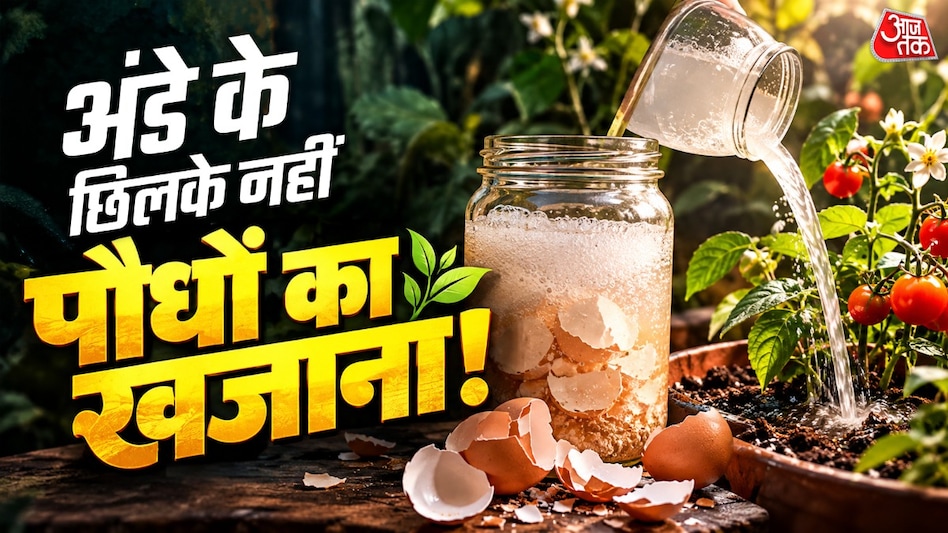
After preparing any egg dishes, the shells are often thrown into the trash, which is a significant waste. These waste materials can be used to create an organic, calcium-rich fertilizer that is beneficial for plants. Since eggshells contain calcium, they are used in gardening, especially to stimulate the growth of flowers and fruits.
However, simply crushing the shells and adding them to the soil is not enough for plants to become lush and bear abundant fruit. Due to their hardness, the shells require time to break down and release nutrients into the soil. Therefore, there is a method of preparing a liquid form using vinegar.
The main component of eggshells is calcium carbonate, which contains a significant amount of calcium necessary for plant development. Calcium deficiency can negatively affect the growth of new leaves and branches. This is why shells are used in gardening. Instead of just crushing and putting them in the ground, they can be mixed with vinegar to create a liquid fertilizer, allowing the calcium to enter solution.
To create liquid fertilizer from eggshells, they are soaked in vinegar. A reaction occurs between the vinegar and the shells, evidenced by the formation of bubbles and foam. This indicates the gradual dissolution of the shells in the vinegar. Over time, the shells soften and begin to decompose, releasing some calcium into the vinegar liquid. The resulting solution is then diluted with water for use on plants.
Creating this fertilizer does not require many ingredients: clean and dry shells from about 5-6 eggs and vinegar are sufficient. The first step is to lightly crack or crush the eggshells, then place them in a glass jar. After that, add enough vinegar so that the shells are completely submerged in it.
Bubbles and foam will start forming immediately after adding the vinegar, which is a natural reaction. The mixture should be left for about 48 hours. During this time, the shells will gradually soften, and their calcium will begin to enter the solution.
After about two days, the shells will be soft enough. Then, this mixture must be carefully strained through a sieve to separate the remaining shells and obtain only the liquid part. This resulting liquid solution cannot be applied directly to plants; it must first be diluted with water before use.
Before applying the solution to the soil, it should be diluted. It is recommended to add about 5 milliliters of this solution per 1 liter of water. Consequently, 20 milliliters of the solution will be needed for 4 liters of water. After thorough mixing, the solution is applied to the soil around the plants.
This fertilized solution is suitable for mature, already flowering, and fruiting plants. Care should be taken not to use this solution on very young seedlings. It is better to start with a small amount to assess the plant's reaction. It is also recommended to apply the solution in the evening, not under direct sunlight, and direct it into the soil rather than onto the leaves to ensure root access.
The liquid fertilizer can be used for plants that have started to flower or set fruit, such as tomatoes, peppers, eggplants, and other vegetable crops. However, it should be understood that applying this solution alone does not guarantee that flowers will not drop or that the harvest will be abundant; adequate lighting, watering, quality soil, and other necessary nutrients are also required for good growth.
The finished solution should be stored in a clean, sealed container. Before use, it must be checked for any unpleasant odor or mold. Since vinegar is an acidic substance, the solution should always be used in a diluted form. Thus, you can prepare liquid fertilizer from eggshells yourself with minimal cost.