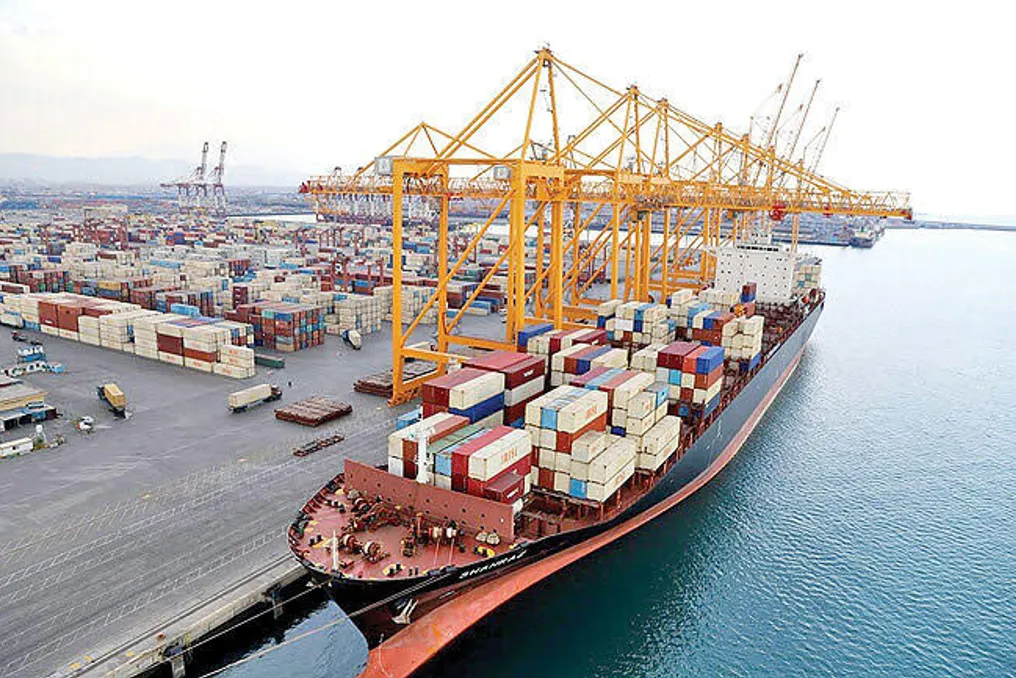
The head of Iran's Port and Maritime Organization (PMO) announced the organization's plan to utilize the country's unused port capacities, develop maritime diplomacy, and engage the capabilities of the Islamic Republic of Iran's embassies to expand maritime trade and transport.
According to an IRNA report on Saturday, Mohammad Shakibi-Nasab, during a private meeting with Hamid Ghanbari, Deputy for Economic Diplomacy at the Ministry of Foreign Affairs, and through a virtual connection with Iranian ambassadors and heads of diplomatic missions abroad, emphasized the importance of strengthening maritime diplomacy and leveraging embassy potential to develop maritime trade and transportation.
Referring to the nominal capacity of the country's ports, which amounts to about 302 million tons, he noted that despite this potential, approximately 50–55 percent of port capacity remained unused in recent years. He stressed that by directing Iranian port capacities towards target countries, conditions must be created for broader utilization of this potential.
The Head of PMO added that achieving desired results is impossible without synergy between domestic structures and partner countries, as infrastructure development without diplomacy, and vice versa, will not lead to success.
He also identified banking operations, insurance issues, and investments as important challenges in maritime trade, stating that the embassies of the Islamic Republic of Iran can effectively contribute to presenting investment opportunities and showcasing the country's potential in the North-South and East-West corridors.
Shakibi-Nasab mentioned the initiation of measures to develop smart ports and selected Bandar Bushehr as the organization's pilot project in this area, insisting on the necessity of utilizing the experience of other countries and knowledge transfer in the port sector.
In conclusion, he called for continued joint meetings with the ambassadors of the Islamic Republic of Iran and monitoring the implementation of adopted resolutions and proposals to further stimulate maritime transport.
Furthermore, the Deputy for Economic Diplomacy at the Ministry of Foreign Affairs announced the development of a joint cooperation pact between himself and the PMO, aimed at transforming economic and maritime diplomacy opportunities into concrete and trackable projects.
Ghanbari, speaking about the need to strengthen coordination between economic diplomacy bodies, announced the preparation of such a pact. He specified that the goal of this pact is to create a clear framework for interaction and division of responsibilities between the two departments. He emphasized that common goals and opportunities must go beyond verbal discussions and be formalized as specific, phased, and monitored projects.
Ghanbari also noted that this pact must precisely define the responsibility of the Deputy for Economic Diplomacy of the Ministry of Foreign Affairs, the PMO, and the missions of the Islamic Republic of Iran abroad in each project and what measures they should take.
The Deputy for Economic Diplomacy of the Ministry of Foreign Affairs, regarding the development of the mechanism and control system for this cooperation, reported that the design of this structure is almost complete. He explained that the initial basis for drafting the pact will be the results of meetings and joint protocols, after which programs will be implemented in a project format.
He continued, noting that the recent meeting proceeded more smoothly and consistently than the first, but additional meetings are necessary for a full update of information and consensus between the two parties.
Ghanbari stressed that creating this pact will help clarify the path of joint cooperation and ensure the possibility of more accurate project monitoring and progress assessment, expecting that within the next two months, the framework for cooperation and the plan for implementing joint projects will become clearer.
At this meeting, the ambassadors of the Islamic Republic of Iran abroad also presented their opinions and proposals for solutions to develop economic and commercial relations with target countries, emphasizing the strengthening of economic cooperation through activating the potential of both countries' private sectors, identifying new investment opportunities, and developing trade interaction.
The ambassadors of the Islamic Republic of Iran also, referencing existing opportunities in the countries of their missions, stressed the need for the targeted use of Iran's mission potential to facilitate communication between economic entities, present investment opportunities, and create conditions for a more effective presence of the Iranian private sector in foreign markets.