Students at Santuval Academy in Abuja previously attended classes on finance, accounting, and investment in rented classrooms. Teachers had to plan educational materials according to the class schedule, and the academy incurred costs for maintaining these premises.
Idris Abba, a certified accountant and teacher at this academy, struggled with maintaining such order, while students had varying expectations regarding the format and location of learning.
He noted: 'We had problems in the center because we rent classrooms, and we found that the generation of students we teach does not like sitting in one place for too long.'
Furthermore, the school spent significant time creating lecture plans and educational resources. Abba began looking for technologies that could ease this burden.
In 2025, he found Distinction AI—an educational technology platform developed by Distinction Labs, a subsidiary of the Nigerian ed-tech company FlexiSAF Edusoft Limited, which provides comprehensive educational solutions for schools and institutions.
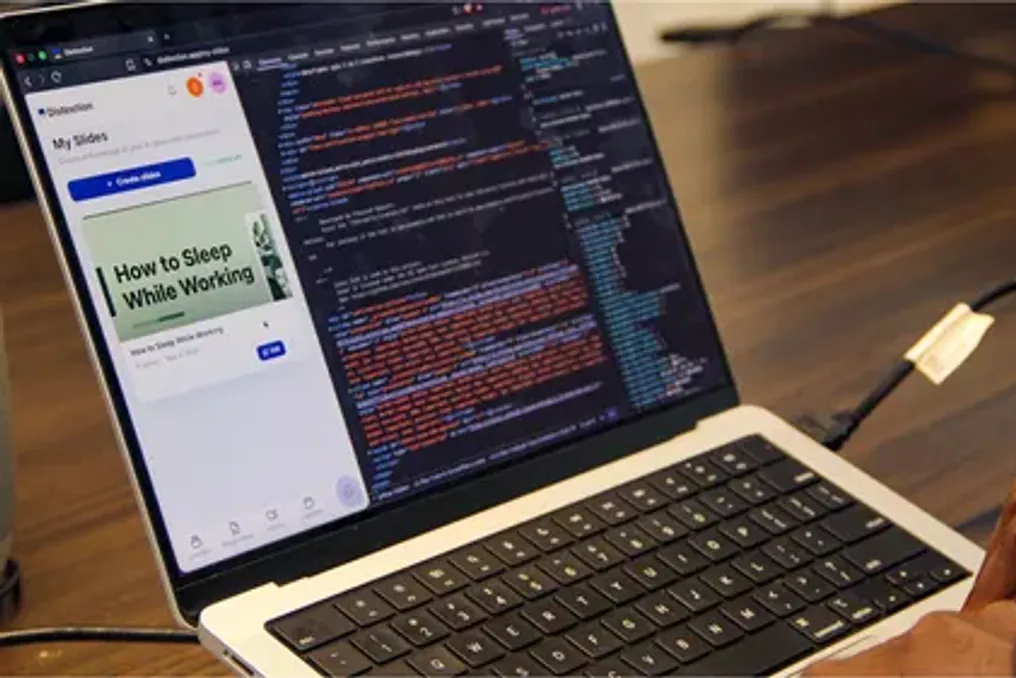
Distinction AI is a platform that uses artificial intelligence to assist teachers, tutors, and other educators in creating online courses and learning materials. The platform allows users to generate and manage course content, such as lecture slides and videos, as well as assignments and exams. It also enables instructors to offer their courses to students online, including paid courses.
Abba ultimately transitioned his academy's classes to an online format. He believes that one of the most significant changes was the time required for developing educational materials. 'Lecture slides used to require a minimum of three days to generate, but with Distinction, you can create them in a couple of minutes.'
Currently, Abba creates courses on the platform and tracks his students' assignments. He claims that the AI assistant is capable of grading work and providing feedback to students.
For him, this transformation is less about replacing teaching and more about finding ways to manage the work surrounding the learning process. His experience reflects a problem faced by many educators who have to balance teaching with material preparation, setting and grading assessments, research, and student engagement.
Umar Adam Ibrahim, a computer scientist, AI researcher, and lecturer at Nile University in Nigeria, stated that teachers can spend a lot of time on administrative and educational preparation. 'A teacher really doesn't have time for research, for interacting with students, for mentoring, or even for community service. The ability to create a slide using AI, the ability to upload your monetizable course content, is a plus for the teacher,' he explained.
Umar added that AI potentially can promote more personalized approaches to learning. 'From the student's perspective, the ability to receive a personalized learning structure based on speed and learning ability is also an advantage for the student.'
The platform originated from an internal problem at FlexiSAF, where employees spent a lot of time developing courses and educational materials for new hires. Later, the team explored how the same method could help educators and students outside the company.
Identifying Problems and Building Solutions
Hamid Bashir, a petroleum chemist and engineer whose career started in the oil and gas industry before moving into educational technology, leads the development of Distinction AI products.
Bashir graduated from the American University of Nigeria and later obtained a degree in process systems. He started working in the oil and gas industry but later switched to educational technology. 'I started my journey in the oil and gas sector, but over time I realized that to make a big impact, we need to be in the education sector to provide solutions for schools, institutions, students, teachers, lecturers, and others,' he said.
His interest in education was shaped by his own academic experience. In overcrowded courses, he struggled to receive individual attention from instructors and often had to seek additional learning materials elsewhere.
'When I was studying... there were too many of you, you were overcrowded, you couldn't understand or follow. Then you start looking for resources and study guides to supplement all that learning.'
Bashir believes the problem was not with the professors themselves, but with the number of students they had to teach. Distinction AI was created in 2024 and now helps teachers, tutors, trainers, and other educators create and deliver educational materials online.
'Before building solutions, you identify problems, and then you build solutions for those problems,' Bashir stated. This innovation allows users to create courses using assets such as slides and videos, and course creators can sell their courses to students.
The Need for Safeguards
Since its creation, Distinction AI has helped over 10,000 instructors create 20,000 courses on the marketplace. Currently, there are over 160,000 enrolled students on the site who have spent more than two million hours learning.
However, the use of artificial intelligence in education has limitations. Bashir added that the team noticed instances where the algorithm provided incorrect answers, especially when generating practical questions. 'So, when we dealt with practical questions, we had many marks, so we added a way for students to flag such things.'
The team then implemented a quality assurance process where generated questions were reviewed before being provided to students. 'We needed a quality assurance team, a quality control team, that reviewed every question after it was generated by AI to ensure it met our desired standard.'
Umar believes that as more educational institutions adopt AI tools, such precautions become increasingly vital. He suggests that universities should review how student information, grades, and learning materials are handled. 'We need to protect the student's privacy, the student's grade, the teacher's questions, so there is a need for safeguards that define or verify if all these elements are in place.'
He also believes that Nigerian educational bodies and universities need clearer policies on AI usage. 'Regarding policy, of course, there is a need for the NUC (National Universities Commission), the Ministry of Education, and all related higher education bodies to develop a policy concerning AI and higher education, and this must cover AI usage and accountability.'
Examples from Nigeria demonstrate that AI can be effective when it works alongside teachers, not replacing them. According to a 2025 World Bank study in Edo State, students who received AI tutoring with instructor guidance for six weeks achieved learning outcomes equivalent to 1.5–2 years of traditional education.