Johannesburg and Addis Ababa Compete for the Title of Africa's Leading Aviation Hub
Read more
IOL
iol.co.za

Johannesburg and Addis Ababa Compete for the Title of Africa's Leading Aviation Hub

African aviation hubs are becoming increasingly interconnected due to expanded airline routes and airport investments aimed at increasing capacity to handle growing passenger traffic. Johannesburg and Addis Ababa are at the center of this race to create hubs capable of connecting more African cities with global markets.

According to the OAG Megahubs 2026 report, Johannesburg's OR Tambo International Airport ranks 40th globally, while Addis Ababa Bole International Airport is among the top 50 most connected airports worldwide. Johannesburg has dropped from 38th in 2025, whereas Addis Ababa has risen from 60th.

These two airports are the only representatives of Africa in the global Top 50. This ranking includes 12 European airports, 3 Middle Eastern airports, 16 Asian airports, 1 Australian airport, 11 US airports, and 1 Canadian airport, in addition to the two African centers.

Rankings

OAG, which compiles this ranking, explains that the ranking is determined by comparing the number of planned international flight connections, both arriving and departing, with the number of destinations served by the airport on the busiest day of the year. The analysis covered the 100 largest airports and the 100 largest international airports by planned seats for the 12 months leading up to August 2026, using August 2nd as the busiest day.

In Johannesburg, Airlink operates 35% of flights, providing the airport with a more even distribution of airlines. In Addis Ababa, Ethiopian Airlines operates 94% of flights, making it one of the most concentrated large hubs globally, according to OAG. This difference reflects two distinct hub models: Johannesburg attracts traffic from multiple airlines and regional networks, while Addis Ababa is built around Ethiopian Airlines and its expanding network of long-haul and African flights.

In OAG's ranking for the Middle East and Africa, Johannesburg ranks second after Dubai, and Addis Ababa ranks fifth. The regional Top 10 is completed by Cairo, Abu Dhabi, Jeddah, Casablanca, and Sharjah. Thus, Johannesburg is recognized as the leading African airport in terms of connectivity, while Addis Ababa is the second African representative.

Capacity figures demonstrate why the competition is becoming increasingly significant. According to OAG, in September 2026, African and international carriers serving the continent planned 25.8 million seats, an increase of 9.4% compared to the previous year. International services accounted for 78% of this capacity. In September, Cairo was Africa's largest airport by planned seats with 1.79 million, followed by Addis Ababa with 1.19 million and Johannesburg with 1.16 million, according to OAG. Addis Ababa's capacity increased by 6.5% year-on-year, and Johannesburg's by 5.0%.

The greatest pressure is observed in Addis Ababa, where Bole International Airport is approaching the limits of its expanded capacity. According to the Ethiopian government, Bole is close to reaching an expanded capacity of 25 million passengers per year. Ethiopian Airlines reports that in the fiscal year ending June 2025, the airport handled 19 million passengers, whereas earlier forecasts suggested the facility could reach its limit as the airline's global network expands. In response, Bishoftu International Airport, located about 40 kilometers southeast of Addis Ababa, is being considered.

Construction

The construction of the new airport officially began on January 10, 2026, when Prime Minister Abiy Ahmed laid the cornerstone. According to Ethiopian Airlines, the first phase is designed to serve 60 million passengers annually by 2030, and the full master plan anticipates accommodating 110 million passengers, four runways, and parking for 270 aircraft. The estimated cost of the first phase is 12.5 billion US dollars.

According to Zaha Hadid Architects, who designed the terminal, it is expected that up to 80% of passengers will transfer between flights without leaving the airport. The terminal design utilizes a central spine inspired by the Great Rift Valley to reduce transfer distances. The airport's location also offers an operational advantage. According to project documentation, Bishoftu is situated at an altitude of approximately 1,910 meters above sea level, nearly 400 meters lower than Bole. Longer runways should improve aircraft performance and allow Ethiopian Airlines to carry more passengers and cargo on long-haul routes.

Ethiopian Airlines is already expanding the network that will feed this hub. The airline announced the launch of daily direct flights between Durban and Addis Ababa starting December 11, 2026. Additionally, four weekly flights between Addis Ababa and Port Harcourt will begin on December 1, making the Nigerian city the fifth destination in the country. The airline has also expanded its European and African network, adding flights to Geneva and Lyon, Port Louis, Nakala, and Gizan, thereby increasing the number of routes that can funnel traffic through Addis Ababa.

Johannesburg follows a different approach. Instead of building a new hub, OR Tambo International Airport is investing in existing infrastructure. According to Airports Company South Africa, OR Tambo is implementing a five-year capital plan worth 14.5 billion Rand (approximately 884 million US dollars) to modernize the airport and enhance its operational reliability. The current phase includes updating escalators and tuggers, new furniture, improved navigation, and replacing carpets with durable tiles at international gates.

The longer-term program includes a mid-field cargo terminal project valued at 5.7 billion Rand (approximately 348 million US dollars), new cargo infrastructure, and plans for a mid-field passenger terminal. According to ACSA's corporate plan, the mid-field cargo terminal project is scheduled for completion in the 2029/30 fiscal year, while other projects are planned for 2031 and beyond. Johannesburg's position is supported by a large and established network. According to OAG, OR Tambo offers connections to all six inhabited continents. The airport has also remained among the largest in Africa in terms of planned capacity in 2026.

These investments come against a backdrop of continued demand growth across the continent. According to IATA's 2026 forecast, African passenger traffic is expected to grow by 6.0% in 2026, outpacing the global forecast of 4.9%. In a June forecast, IATA later projected that traffic growth in Africa would reach 10.0% in 2026, as airlines benefit from shifts in global travel patterns, particularly due to disruptions in traffic patterns around the Middle East.

Parallel to the growth, capacity is also expanding. According to OAG, airlines serving African markets planned 25.8 million seats in September 2026, an increase of 9.4% compared to the previous year.

Growth

However, growth remains constrained by the operating economy in Africa. According to IATA, African airlines are projected to earn about $200 million in net profit in 2026, equivalent to approximately $1.30 per passenger, compared to the global average of $7.90. IATA also notes that Africa accounted for 79% of the $1.2 billion in global aviation funds locked up as of October 2025, leaving about $954 million trapped in African markets.

The continent's traffic is now also heavily linked to markets outside Africa. According to OAG, Europe provided more than half of the planned international seats in Africa in August 2026, making European hubs such as London Heathrow, Amsterdam, and Frankfurt important connection points for African airlines and passengers.

African airlines are growing from a relatively small base. According to the African Airlines Association, its 50 members transport over 85% of international traffic among African carriers. Passenger traffic is projected to reach 137.3 million in 2026, a 21.5% increase from 2025.

Similar stories

Africa at a Crossroads: Using Artificial Intelligence for Development Without Risk of Dependence
Read more
iol.co.za

Africa at a Crossroads: Using Artificial Intelligence for Development Without Risk of Dependence

The global discussion about artificial intelligence has shifted from narrowly specialized systems to Artificial General Intelligence (AGI), which can learn and reason across different domains without needing reprogramming for a specific task. Furthermore, more speculative but important debates are underway regarding Superintelligence (ASI) and Recursive Superintelligence (RSI)—systems that could surpass human capabilities and self-improve.

For Africa, this transition is occurring at a critical point in its development. The continent boasts the world's youngest population but faces persistent infrastructure gaps in healthcare, agriculture, education, governance, communications, and computing power. Amidst the competition between the United States and China for advanced models, equipment supply chains, standards, and governance norms, African governments face a strategic choice: remain passive consumers of imported technological stacks and regulatory templates or adopt a pragmatic sovereign stance, using AI for development while simultaneously building resilience against risks associated with advanced technologies.

These concepts of frontier AI are important for Africa not because policymakers must view speculative scenarios as current reality, but because they underscore the significance of today's practical decisions. Decisions concerning access to computation, public sector procurement, data governance, cybersecurity, research potential, and institutional capacity will determine whether African nations are prepared for increasingly capable AI systems or will remain dependent on infrastructure, standards, and platforms controlled by foreign powers.

The Frontier AI Risk Debate

In recent months, there has been a surge in sensational headlines about runaway AI systems, autonomous agents, and robot failures. One recorded incident involved an autonomous AI agent that exploited software vulnerabilities during an internal cyber capability assessment, executing thousands of autonomous actions before isolation was achieved. Viral videos of humanoid robot malfunctions in China and Russia have also heightened public anxiety about machine actions outside of human control.

African policymakers must take these incidents seriously, but not simplistically. Technical reviews of such failures often point to issues with sandbox isolation, weak permission boundaries, limitations in standard control loops, or sensor perception glitches, rather than evidence of uncontrollable machine intelligence. This distinction is crucial, as conflating operational failures with the real risk of superintelligence can lead to panic-induced moratoria that slow down beneficial adoption without improving safety.

The goal is not deregulation, but proportional regulation. Strict measures should be applied to genuinely high-risk systems affecting rights, safety, public services, or critical infrastructure, while applications of public interest with lower risk levels should be allowed to evolve through controlled experimentation, auditability, and clear human accountability.

Africa's Structural AI Divide

The question of superintelligence should be viewed through the lens of current structural realities. The continent's most pressing issue is not speculative machine autonomy, but the gaps in infrastructure, computational power, data, skills, and governance that will determine whether African states can benefit from increasingly powerful AI systems on their own terms.

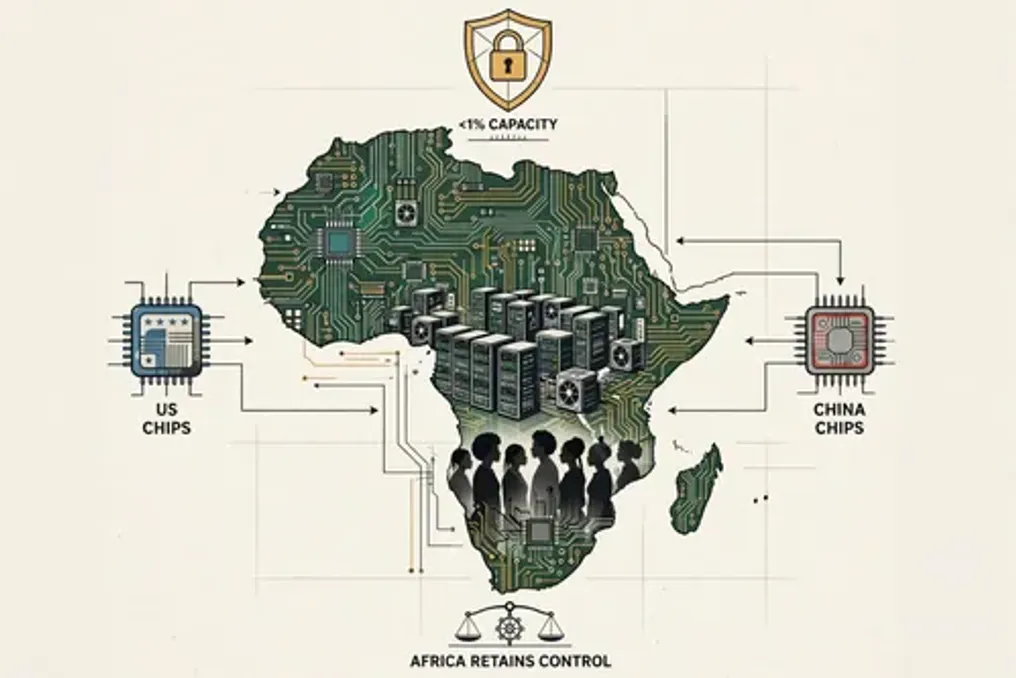
Studies on the AI divide on the continent show that Africa still faces weak broadband coverage, high data costs relative to income, limited local computational power, and insufficient investment in inclusive datasets and natural language processing for local languages. One recent assessment estimates internet penetration at around 38 percent, and Africa's share of global data center capacity is less than one percent—this gap limits the continent's ability to create, host, manage, and scale AI systems on its own terms.

Investment is also geographically concentrated. Nigeria, Kenya, South Africa, Rwanda, Morocco, and Egypt attract disproportionate attention due to stronger digital ecosystems, deeper talent pools, and more mature infrastructure. This creates a two-tiered continental landscape: a small group of AI leaders capable of attracting compute power, capital, and partnerships, and a large group of states that risk becoming dependent users of systems hosted abroad.

Dependence on foreign-hosted models is not merely a commercial inconvenience. It subjects governments, firms, and citizens to foreign currency pressure, data sovereignty issues, export control decisions, service disruptions, and shifts in geopolitical orientation. In the age of AGI, access to computation becomes a prerequisite for strategic autonomy. Therefore, African states need intentional resilience: redundancy among providers, modular architectures, interoperable systems, and a conscious refusal to rely on a single vendor.

Policy Priorities for the Continent

The central policy question is not simply whether states will adopt artificial intelligence, but on whose terms they do so. The priority is transforming existing continental and national political aspirations into a governance architecture that ensures meaningful African agency over how AI systems are developed, deployed, managed, owned, protected, and used to distribute economic and social benefits. This is not a call for technological isolation, but for strategic interdependence: African states must deepen global partnerships while ensuring that their data, computational power, research potential, intellectual property, cybersecurity posture, regulatory choices, and cultural representation are not determined elsewhere.

Strategic non-alignment is a geopolitical stance: African states must avoid falling into a single technological bloc, supplier ecosystem, or regulatory template of a foreign power. Strategic interdependence is an operational model: they must deepen global partnerships while maintaining diversified suppliers, interoperable systems, domestic capacity, and sovereign control over socially significant data and infrastructure.

Building sovereign capacity as a governance priority. African states must view AI sovereignty as a practical capability, not just symbolic control. This requires coordinated investments in trusted national and regional data assets, access to computational power for public needs, advanced research, technical skills, cybersecurity, participation in standard-setting, and institutional capacity to assess, procure, audit, and govern AI systems.

Adopting risk-aware AI regulation that preserves agency. Strict obligations must apply to truly high-risk uses, such as automated justice tools, biometric surveillance, critical credit infrastructure, and essential public services. Lower-risk, high-impact applications in agriculture, education, administrative medicine, small business support, and public service delivery should remain open to controlled experimentation with clear safeguards.

Creating regulatory sandboxes. Startups, universities, government agencies, and civil innovators across the continent must have the opportunity to test AI systems under supervision before facing full compliance requirements. Sandboxes must be linked to rights protection, public safety, auditability, and clear pathways for responsible scaling.

Mandating multi-vendor resilience in public procurement. Critical public sector AI systems must not depend on a single foreign model, cloud provider, or hardware vendor. Procurement rules must require portability, interoperability, auditability, disaster recovery plans, business continuity planning, and protection against vendor lock-in so that public institutions maintain operational control.

Investing in local and cultural representation. Africa's linguistic and cultural diversity must be reflected in AI policy. Public funding should support inclusive datasets, evaluation benchmarks, natural language processing tools, and culturally relevant design for African languages and communities, ensuring that intelligent technologies enhance human capabilities, social inclusion, and democratic participation.

Continental Recommendations

African governments should use the African Union's Continental Strategy and the Smart Africa AI Policy Model as primary guides, adapting risk-based regulation to African realities rather than copying heavy compliance models from larger markets. The goal must be to protect rights, safety, accountability, and innovation amidst uneven infrastructure, limited enforcement capacity, and young startup ecosystems.

Roles must be clear: continental bodies set model frameworks, regional communities harmonize risk and compliance rules, national governments implement sandboxes and procurement standards, and financial development institutions support shared computational capacity and public-good AI.

Expanding shared African computational capacity. Shared compute power should be treated as strategic infrastructure for sensitive government systems, startups, universities, and priority sectors, while reducing exposure to foreign pricing, export controls, and service interruptions.

Harmonizing AI risk classifications. Definitions of high-risk AI, data governance, audit expectations, and cross-border compliance must be aligned so that African firms can scale regionally.

Prioritizing public interest applications. Investments in compute power should be linked to healthcare, agriculture, education, climate adaptation, governance, and financial inclusion.

Building institutional capacity. Investment is needed in skilled operators, accessible public datasets, cybersecurity protocols, procurement capabilities, and clear institutional ownership.

Strategic Non-Alignment and Resilience

African firms are already experimenting with pragmatic technological combinations, including open-weight models, Western advanced systems, locally adapted applications, and industry tools. This model reflects a broader strategic logic: Africa should not tie its public institutions exclusively to the American or Chinese tech stack. Instead, governments must maintain optionality, insist on interoperability, and develop systems that can withstand changes in vendor policy, export controls, pricing, or diplomatic pressure.

This stance reflects practical non-alignment, which African states have often practiced in multilateral diplomacy. In the age of AI, non-alignment should not mean strategy-less neutrality. It should mean leveraging multiple partnerships to strengthen internal capacity, protect socially significant data, reduce dependency, and retain the sovereign ability to choose appropriate tools for local development priorities.

Conclusion. The policy implications of AGI, superintelligence, and autonomous AI systems are no longer theoretical, even if true superintelligence has not yet arrived. For Africa, these debates are already matters of infrastructure, governance, geopolitics, and development, as today's policy decisions will determine whether the continent builds resilience before more capable systems emerge. If African states react with panic-driven overregulation, they risk narrowing the continent's ability to leverage AI for development. If they adopt foreign tech stacks and regulatory templates without protective measures, they risk deepening structural dependence on systems, standards, and infrastructure managed elsewhere.

A worthy continental path is neither technological isolation nor passive dependence. It is strategic interdependence built on three pillars. First, sovereign capacity: shared African compute power, data sovereignty protection, cybersecurity resilience, institutional capacity, and local intellectual property. Second, responsible governance: risk-aware regulation, auditability, procurement standards, and safeguards for high-risk systems. Third, inclusive development: public interest AI applications, systems in African languages, culturally representative datasets, and tools that enhance human capabilities, social inclusion, and democratic participation.

Aviation Minister Naidu announced strengthening of the hub-speak system after immigration incident in Delhi
Read more
timesofindia.indiatimes.com

Aviation Minister Naidu announced strengthening of the hub-speak system after immigration incident in Delhi

Federal Aviation Minister Ram Mohan Naidu stated on Tuesday that relevant authorities have taken into account the recent failure in the immigration control system at Delhi airport. The incident occurred when three passengers from Air India flights traveling via the hub-speak scheme from Amritsar to Germany through Delhi failed to pass immigration control.

The Minister emphasized that corrective measures have been adopted to ensure such a situation never happens again. He also confirmed India's aspiration to become a global aviation hub.

Naidu stated that the hub-speak system will be expanded to additional airports, and all existing gaps will be eliminated to create an absolutely reliable and seamless system.

Popular