Delhi High Court rejects JEE student's petition: No provisions for compassionate discounts on rules for IIT admission
Read more
Aaj Tak
www.aajtak.in

Delhi High Court rejects JEE student's petition: No provisions for compassionate discounts on rules for IIT admission

A student attempting to gain admission to IIT failed to secure support from the Delhi High Court. The court dismissed her petition, ruling that decisions regarding IIT admission cannot be based on sympathy or personal difficulties, nor can it order the acceptance of a candidate who deviates from established rules and standards.

The case concerned the evaluation of JEE Main 2025 results and eligibility requirements for JEE Advanced 2026. The petitioner, Ashi Agrawal, alleged errors in the evaluation of certain JEE Main questions. She argued that if the grading errors were corrected, she could have achieved the necessary scores for JEE Advanced and qualified for admission to IIT.

According to the report, Ashi Agrawal objected to the grading of five questions in JEE Main 2025, three of which were in physics and two in chemistry. The student claimed that due to grading errors, she suffered a loss of 20 marks, in addition to a penalty system involving negative marking for five questions. She insisted that with correct grading, she would have qualified for the JEE Advanced screening. Furthermore, she disputed the denial of entry to the second session of JEE Main 2025, asserting that she arrived at the examination center earlier than the stipulated time but was not allowed to take the test.

The situation did not end there. During a previous hearing, the NTA presented audit logs related to the exam to the court. The student raised objections to these logs, including comments regarding the exam date, timestamps, question identifiers, and answer options. It was stated that one question had different options listed in the audit log and the answer sheet. In May 2026, following the student's allegations, the Delhi High Court directed the chairman of JEE Advanced 2026 to make a decision. However, she was subsequently denied entry to the JEE Advanced exam held on May 17, 2026. Her complaint was rejected on May 18.

The Delhi High Court noted that many issues concerning audit logs, percentiles, and examination center admission are factual disputes. Verification of these may require technical expertise, which the court cannot conduct within an appeal unless a clear error or arbitrariness is proven. The court also considered that for admission to IIT, the student would have had to accept a series of potential events: first, an error in the initial evaluation must be proven; then, scores and percentiles must be changed; only after that would she qualify for JEE Advanced, and only then could she be admitted to IIT. The court ruled that such a chain of potential events cannot serve as grounds for IIT admission.

The court also reviewed the eligibility criteria for JEE Advanced 2026. According to the report, this exam required the candidate to complete their final year (12th grade) for the first time in 2025 or 2026. Ashi Agrawal completed her 12th grade in 2024, meaning she did not meet this criterion. The court emphasized that eligibility rules apply equally to all candidates, and in this case, there were no grounds for exceptions to the rules.

The student also demanded the creation of an additional, or supernumerary, seat for admission to IIT Delhi. The court denied this request as well. In the court's view, admission to IIT operates within an established merit-based system where requirements, cut-offs, attempts, and seat capacities are predetermined. The court believes that creating a separate seat for one candidate and reopening the entire admission process does not constitute a standard form of relief. Considering all these aspects, the court rejected Ashi Agrawal's petition.
Similar stories

IIT-B Director Signs 18-Point Charter Including Student Demands for Resignation and Action Against Professor
Read more
www.aajtak.in

IIT-B Director Signs 18-Point Charter Including Student Demands for Resignation and Action Against Professor

The conflict between students and the administration at IIT-Bombay reached a significant stage late Sunday evening. The administration agreed to accept and continue working on the students' proposal, which contains 18 demands, following prolonged protests.

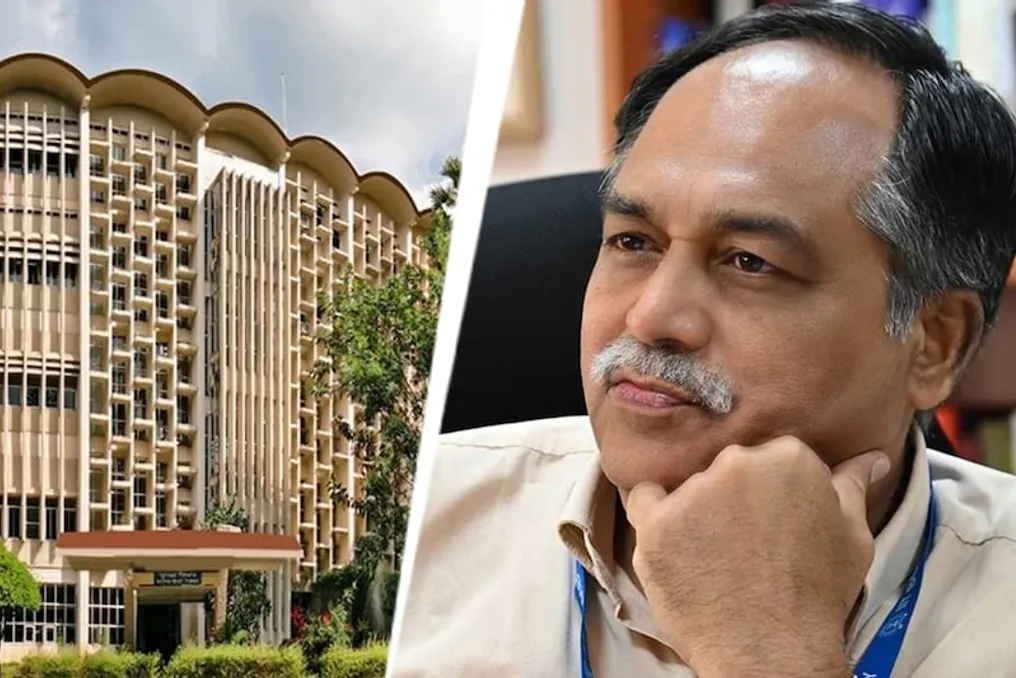
After extended negotiations with students who had been camped at the main entrance for three days, Director Professor Shirish Kedare signed the document. This agreement was reached after the suicide of 20-year-old student Sahil Wakode on September 18, after which students demanded accountability and action from the administration.

Among the main demands put forward by the protesting students is the necessity of taking action against Professor Suryanarayan Dulla. He was present as an observer during the exam that preceded Sahil Wakode's death. During a meeting with the students, Director Shirish Kedare stated that the institute would take action in accordance with established rules and procedures. Another institute employee also hinted that this matter would be resolved through proper procedure, clarifying that signing the charter does not mean immediate acceptance of every individual claim.

Prior to this event, there were three hours of negotiations between activists and senior representatives of the IIT-Bombay administration. This proposal includes a demand to investigate Wakode's death, as well as demands for broad changes in the institute's academic, disciplinary, and student welfare systems.

Videos circulating on social media allegedly showing the resignation of the IIT-Bombay director, but there is no official confirmation of this information at the moment.

It is important to note that the 18-point charter is not limited only to the demand for Professor Dulla's removal. Students have put forward many other demands. Key requests include: conducting an independent investigation into the entire case related to Sahil Wakode's death; publishing an interim investigation report by September 30 and a final report by October 15; holding an open session in the presence of the director, dean of student affairs, and other high-ranking officials; and issuing public apologies for defamation against Sahil Wakode.

This 18-point charter covers various student requests, including changes to the functioning of IIT-Bombay. These changes include developing a code of conduct for faculty, training staff and personnel to understand student mental health and adopt more empathetic behavior, improving individual counseling opportunities for students, changing the procedure of the disciplinary committee, and increasing student participation in important institutional decisions.

Students also demanded the creation of a special group to study mental health issues and develop prevention measures. This group should include students, faculty members, mental health specialists, and external experts. Furthermore, they sought improvements in medical care and mental health, including a demand for 24-hour psychiatric presence at the institute's hospital. They insisted on receiving a written plan of these improvements by September 26. Another request was that no action should be taken against students participating in peaceful demonstrations. Another student demand was that if these improvements are not implemented within a month, the director must resign.

Popular