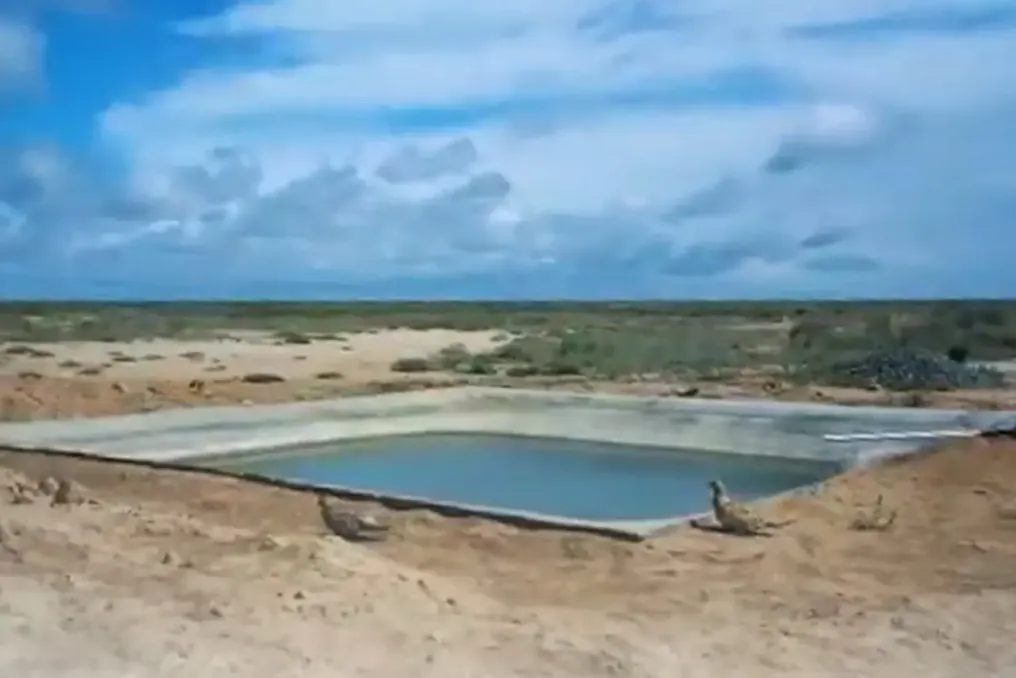
Five autonomous watering systems have been installed for wild animals in the 'Saiga' nature reserve in Karakalpakstan, Uzbekistan. This initiative is part of the 'Arals Sea Wetlands' project.
The project is carried out by the National Committee on Ecology and Climate Change in cooperation with the United Nations Development Programme (UNDP) and the Global Environment Facility (GEF).
The watering points are located in the desert zone of Ustyurt, where access to water resources is limited. These systems are designed to provide additional water sources for saiga antelope and other local fauna.
The autonomous installations run on solar energy and do not require constant connection to centralized electricity or water supply networks. Each system is equipped with a three cubic meter reservoir, a pump, sensors, and meters, allowing for automatic water delivery.
In parallel, ten cameras and ten camera traps were installed in the reserve. This equipment is intended for round-the-clock monitoring of animals, recording their movements, and tracking their use of the new watering points.
The collected data will be used for further control of wildlife populations. The availability of additional water sources is especially important for saiga living in the natural environment of Ustyurt.
The autonomous watering systems aim to create more favorable conditions for wildlife, while the monitoring systems will provide specialists with information about the condition and movement of local fauna. The installation of these systems is one of the practical measures aimed at preserving the biodiversity of Ustyurt. The combination of infrastructure for wild animals with modern monitoring equipment allows for both ensuring access to water and controlling natural processes.