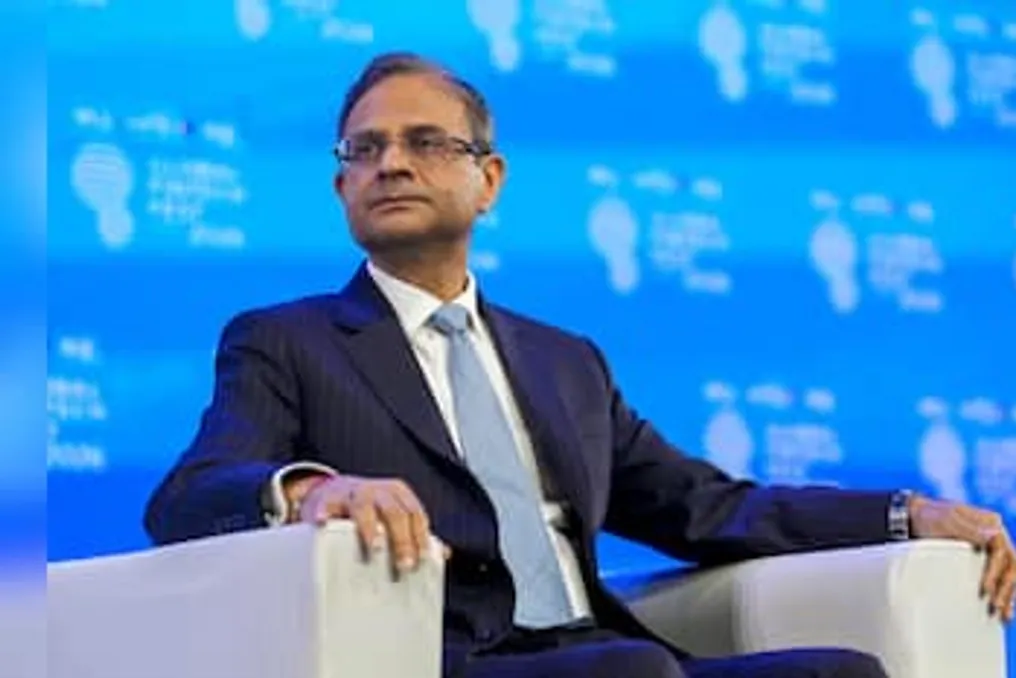
During his address at KEC 2026, RBI Governor Sanjay Malhotra outlined five priorities for policymakers and urged vigilance regarding emerging systemic risks, which are becoming increasingly interconnected and cross-border.
Sanjay Malhotra, Governor of the Reserve Bank, stated on Saturday that the current stability of the financial system should not be viewed as a guarantee against future vulnerabilities, emphasizing the need for continuous monitoring to ensure financial stability.
Speaking at the Kautilya Economic Conclave, he presented five areas of focus for politicians, stressing that the focus of financial stability should shift not to preventing shocks, but to strengthening the financial system's ability to withstand and contain their consequences.
He noted: 'Today's stability does not necessarily imply immunity tomorrow, and we strive to remain vigilant about emerging vulnerabilities and continue to keep our financial system strong and resilient,' he added, mentioning the reliability of the financial system supported by healthy bank and NBFC balance sheets.
According to him, shocks, whether domestic or external, are inevitable, and the main goal is to create a financial system capable of providing financial services even under severe stress.
Malhotra also pointed to a new generation of systemic risks that are becoming increasingly exogenous, cross-border, and interconnected. He suggested that the next financial crisis might originate not in a bank or even the financial sector, but from a geopolitical event, cyberattack, or technological failure, affecting the financial system through multiple channels.
The Governor stressed the importance of better understanding network dependencies and contagion channels, insisting that scenario analysis must become the cornerstone of risk management.
Furthermore, the RBI Governor called for improving monitoring and assessment frameworks by using more detailed and granular data. He noted that information on Non-Banking Financial Institutions (NBFI), interconnected exposures, technological developments, and cross-border positions can remain fragmented, and the quality of this data will increasingly determine the quality of risk assessment in an interconnected financial system.
He also stated that stability must be 'systemic,' as a strong banking system, while necessary, is insufficient. Stability is required across all sectors: in NBFI, financial markets, payment systems, technology infrastructure providers, critical third parties, and cross-border financial networks.
Regarding financial innovations, Malhotra reported that technologies such as artificial intelligence and tokenization, as well as new forms of financial intermediation, can significantly enhance efficiency; however, innovations must not undermine the foundations of trust in the financial system. He specifically highlighted fundamental properties that must be preserved: institutional reliability, finality of settlements, unity of money, and financial integrity.
He concluded that the task is to build a financial system capable of withstanding both predictable and unforeseen shocks. This will require resilient institutions, improved data, deeper markets, robust safeguards, effective resolution mechanisms, as well as regulation and supervision that are proactive and farsighted while remaining proportionate. 'If we succeed, financial stability will largely go unnoticed, and in central banking, invisibility is perhaps the most valuable and significant measure of success,' he added.