The Meaning of the 'W/L' Sign on Railway Tracks and Its Role in Safety
Read more
Aaj Tak
www.aajtak.in

The Meaning of the 'W/L' Sign on Railway Tracks and Its Role in Safety

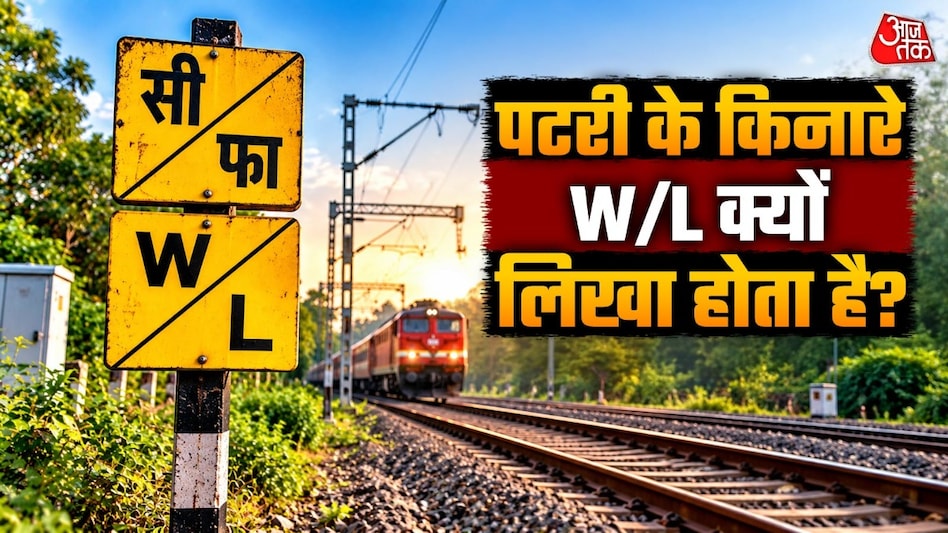
When traveling by train, passengers often notice various signs along the railway track. Among them is a sign with the inscription 'W/L', and sometimes in Hindi, 'सी/फा'. This raises the question of the meaning of these two letters, the reason the railway installs such a sign, and why the train driver sounds an alarm (honks the horn) upon its detection. In fact, this small sign is an important warning concerning the safety of people near the train and at level crossings.

In railway terminology, 'W/L' means 'Whistle for Level Crossing'. Simply put, it indicates the presence of a level crossing ahead, and the train is required to sound a horn or whistle. This same signal is designated as 'सी/फा' on some sections, which translates to 'Whistle for Level Crossing/Crossing'. When the engineer sees a W/L or सी/फा sign at the edge of the track, they understand that a crossing is approaching and are obligated to sound a signal.

The need to sound a horn near a level crossing is related to the fact that many such crossings are located in places where pedestrians walking on the road find it difficult to notice the train's approach in advance. This is especially relevant if visibility is hindered by trees, buildings, turns, or other obstacles. In such cases, the horn serves as a warning for nearby people. As the train approaches the crossing, sounding the horn, people on the road and staff working at the crossing can take necessary precautions.

According to railway rules, the W/L sign is installed near unguarded crossings where there is no personnel at the barrier. It is also placed at some guarded crossings if the crossing itself does not provide a clear view of the track.

If you look closely at the W/L sign, it is usually a square yellow plate with black letters. The purpose of this design is obvious: the yellow-black combination is easily visible from a distance, allowing the engineer to see the signal in time. Official railway rules also establish standards regarding the size, color, and placement of these signaling boards.

Not only W/L signs are installed on the railway track. In some places, you may encounter a sign that only says 'W'. The 'W' sign generally serves as an indication that a whistle or horn needs to be sounded. Such signs may be placed where the view of the track is obstructed by a curve, embankment, or other obstacle. Thus, both W and W/L warn the engineer about the need to sound a signal, but W/L specifically refers to a level crossing.

By listening to the train's horn, we tend to think that the engineer is warning people to move off the track. However, horns have various meanings within the railway system. The W/L sign is part of this system. Its purpose is to notify people near the level crossing about the train's approach. According to railway rules, upon spotting a W/L sign, the engineer is obliged to follow the procedure of sounding the horn/whistle before the corresponding crossing.

Next time you are watching the scenery from the train window, if you see a yellow W/L or 'सी/फा' sign at the edge of the track, understand that the railway is sending you an important message. It is not just an ordinary sign; it informs the engineer about the presence of a crossing ahead and the necessity of sounding a signal during passage to warn those around. That is, this small sign installed by the track is part of a large-scale railway safety system.
Similar stories

Explanation of the purpose of the 'C/FA' sign on railway tracks
Read more
www.aajtak.in

Explanation of the purpose of the 'C/FA' sign on railway tracks

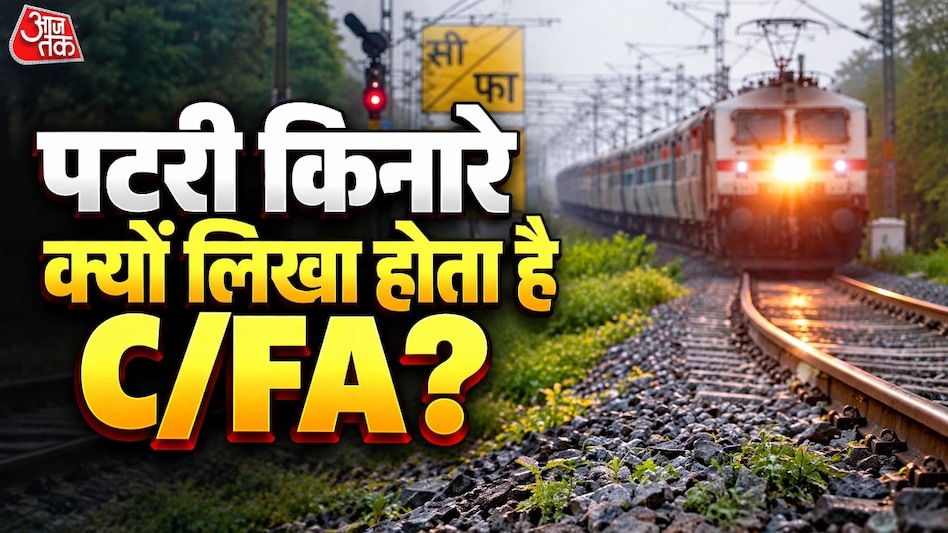
When traveling by train, passengers often notice small signs along the railway track bearing various letters and numbers. However, some of these signs may raise questions about their meaning. One such sign is 'C/FA', which is frequently seen while the train is moving, but most travelers do not know its true meaning or why the railway installs it near the tracks.

In fact, the C/FA sign serves as an important signal for the train driver, or locomotive operator. It informs the driver about the need to observe specific precautions on the upcoming section.

Meaning of C/FA

In the railway system, C/FA is used as an indication that the whistle must be sounded for the flagman, meaning 'Whistle for Flagman'. Simply put, when the locomotive driver needs to notify a staff member or flagman ahead on the track of their approach, this sign reminds them to sound the whistle. Thus, this sign is not intended for ordinary passengers but is an instruction for the locomotive driver.

Why should the driver sound the whistle?

The question arises as to why the driver needs to sound a signal. Railway employees work on the tracks, and there may also be areas where special work related to the tracks is being carried out, or where personnel need to be warned about the approaching train. In such places, the whistle serves as a warning before the train arrives. This allows workers near the tracks to take precautions and move to a safe place if necessary.

This sign is not for passengers

Seeing the C/FA sign, many passengers might assume it is related to a station, a crossing, or the train's speed. However, this is not the case. Such signs installed along the railway track are primarily intended for locomotive drivers and railway staff. Their main goal is to ensure the safety of train movement. This is why, although passengers on the train might ponder these signs, their meaning is extremely important for the driver.

Why are such signs placed on railway tracks?

Along the railway track, you can see many different signs and indicators. Each one has its own meaning. Some signs instruct the driver to sound the whistle, others relate to speed, and third ones contain information about the upcoming station, signal, or other important details. While operating the train, the locomotive driver must constantly monitor the tracks and these signs. Therefore, the small signs installed along the railway track play a key role in ensuring a safe journey.

Next time you travel by train and see a sign with the inscription 'C/FA' by the tracks, understand that it is not some useless or ordinary sign. It is an important railway signal related to the whistle for the locomotive driver. That is, where this sign is installed, the train driver is obliged to sound the whistle according to established instructions. Such small signs along the railway track are part of the entire system for ensuring the safe operation of trains. So, next time you look out the window, you will notice not only the tracks and vegetation but also many interesting railway signs.

Popular