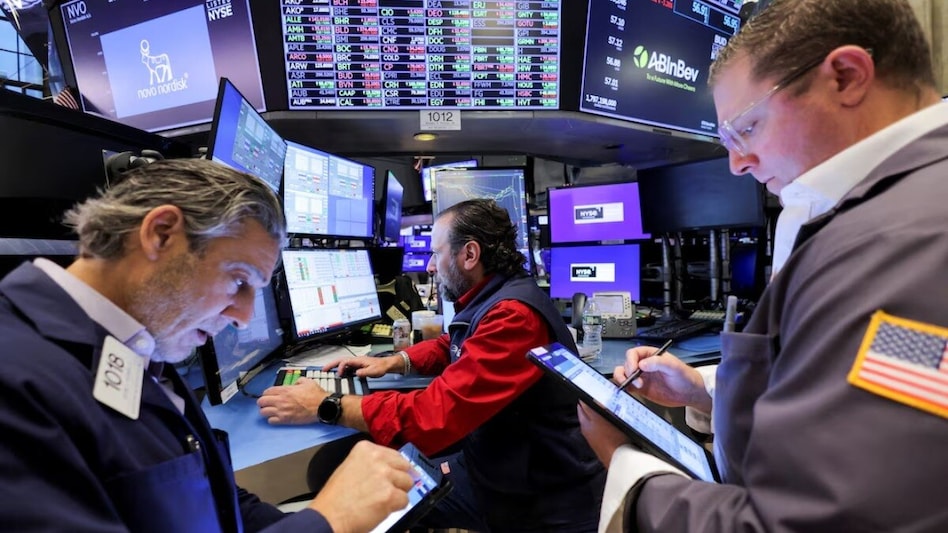
Significant changes are coming for participants in the US stock market. Currently, the main trading period for the New York Stock Exchange (NYSE) and Nasdaq runs from 9:30 AM to 4 PM. However, starting December 6, 2026, a new night trading session will commence on the American stock market. Under this new provision, buying and selling stocks will be possible from 9 PM to 4 AM.
Thus, the US market will be open for trading for approximately 23 hours per week. Currently, the main market session runs from 9:30 AM to 4:00 PM. In addition, there are opportunities for pre-market and after-market trading. The pre-market session starts at 4 AM, and after-market trading occurs from 4:00 PM to 8:00 PM. This is followed by an hour-long break from 8:00 PM to 9:00 PM. After this break, the new night session will begin from 9:00 PM to 4:00 AM, leading to a total trading time of about 23 hours daily.
After the launch of the new night session, the structure of the American stock market will look like this. This system is aimed at keeping the market operational for 23 hours daily, from Sunday evening to Friday evening.
The main reason cited for this change is the growing interest from foreign investors. Investors in different time zones will be given more time to trade American stocks. Furthermore, the US market needs to compete with platforms such as crypto and predictive markets, where investments and trading are available for a longer period compared to the traditional market. According to Bloomberg, exchanges are extending trading hours in light of this growing demand.
Nighttime trading is not entirely a new concept. Previously, US company stocks were traded during the night through certain Alternative Trading Systems (ATS), but the share of participation was very small. According to the U.S. Securities and Exchange Commission (SEC) data for August 2026, the average daily volume of night trading was about 14.46 billion shares. This represents an increase of approximately 359% compared to the previous year. Nevertheless, the share of this night trading in the overall stock trading volume remains less than 1%, indicating rapid growth in demand for night trading, but most transactions are still conducted during standard business hours.
The most significant advantage is that investors outside of America will have more time to trade American stocks. For example, if major news concerning an Asian company emerges outside of the US market's main operating hours, investors will be able to react to this news even at night after the new session is introduced. Similarly, following sudden changes in foreign markets or important company announcements, investors will not have to wait for the next main session.
Longer trading hours do not mean that nighttime market operations will be as straightforward as during the day. Compared to regular business hours, the number of buyers and sellers in the night market may be lower. This could lead to reduced liquidity and an increased spread between buying and selling prices. Simply put, the difference between the buy and sell price of a stock might be larger, which could require the investor to pay a higher price when trading or make it difficult to sell shares at the expected price. When discussing the 23/5 trading regime, the SEC also addressed issues such as liquidity, market stability, and investor protection.
Extending trading hours requires preparation not only from the exchanges. Other parts of the market are also adapting to the new schedule. The Depository Trust & Clearing Corporation (DTCC) adopted the 23-hour weekly model for clearing US stocks in June 2026. Concurrently, the operating hours of Securities Information Processors (SIPs) are also being extended to provide price and trade information during the night.