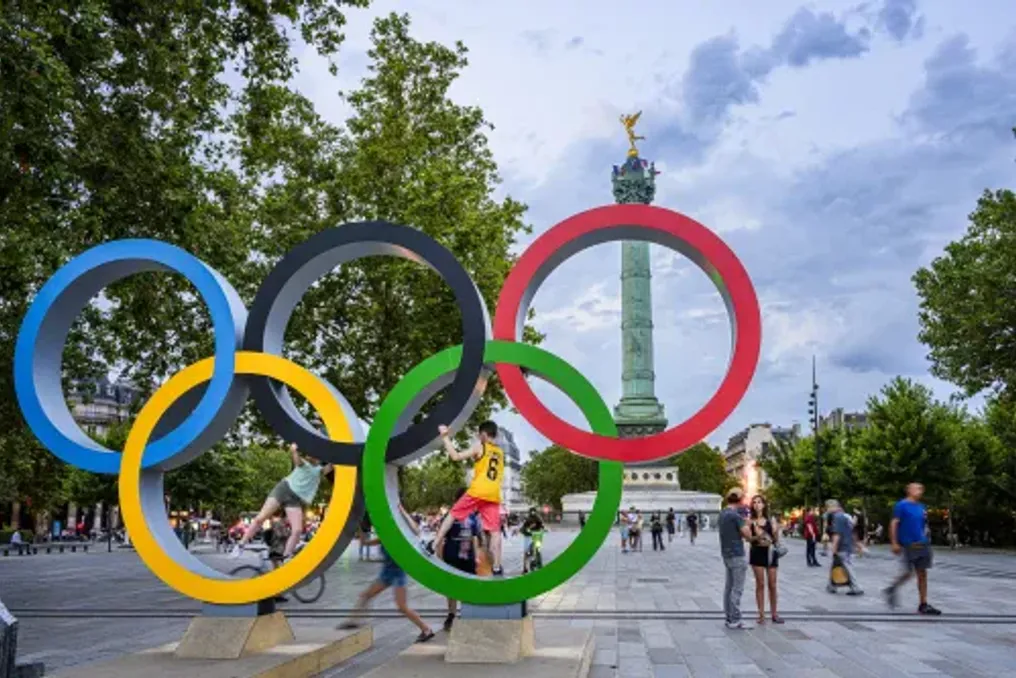
South Africa is taking steps to become the first African nation to host the Olympic Games in 2036 or 2040, but internal problems within various sports federations threaten the collapse of this potential bid.
South Africa's ambitions to host the Olympic Games are gaining momentum but face deep internal divisions. On one hand, there is a political apparatus interested in using global sports as an economic stimulus; on the other, a sports governance system paralyzed by executive dismissals, financial difficulties, and board cleanups.
Earlier this year, the president of the South African Sports Confederation and Olympic Committee (SASCOC), Barry Hendrix, confirmed the Cabinet's approval to officially begin dialogue with the International Olympic Committee (IOC) regarding the 2036 or 2040 Games.
Hendrix advocated for a hybrid model inspired by Paris 2024, proposing a multi-city approach combining Cape Town, Johannesburg, and Durban to distribute the required multi-billion dollar financial costs. However, months after this announcement, Hendrix himself was suspended by SASCOC following an internal investigation conducted by former referee Bashir Waglae concerning safety standards and the code of conduct.
His suspension highlights the central paradox of South Africa's pursuit of the Olympics: the political drive for legacy bids accelerates precisely when its administrative mechanism breaks down.
Driving Force Behind the Bid
The push towards 2036 is largely driven by political ambition. Minister of Sport, Arts and Culture Gethon Mackenzie actively promotes sport as a serious business sector, not just entertainment, openly aiming to bring the sector's contribution to GDP closer to international standards.
In an candid interview with BizNews, Mackenzie admitted disappointment over the pace of administrative clean-up, stating that he is amending the 25-year-old National Sport and Recreation Act to eliminate legal loopholes that historically protected entrenched sports bosses. He said: 'I inherited the first point of misdirection that occurs in most of these sports codes. I found that people receive money from the government, and some don't even have offices—they work from their cars. These people committed all these abuses because they thought they had political protection. For the first time, that political protection has disappeared.'
Mackenzie emphasized that his aggressive promotion of mega-events is dictated by viewing sport as an economic engine, not a passive expense item. He added: 'The previous government viewed sport as entertainment; they didn't see it as a business. Currently, we contribute 2.6% to GDP, like agriculture. In China and America, it is 5%–7%. I had to change this mindset among my colleagues by saying: this is a real business.'
Although Mackenzie worked through international governing bodies to bypass domestic legislative restrictions—notably coordinating with World Athletics to address credit card abuse allegations in Athletics SA—the technical apparatus required to host the Olympic Games remains fundamentally compromised. In SASCOC and its affiliated federations, administrators are busy managing crises rather than long-term strategic execution.
Administrative Imperfection
For a country to submit a convincing bid for the Olympics, its National Olympic Committee (NOC) must demonstrate institutional stability, financial integrity, and clear operational oversight. The current sports landscape in South Africa shows the opposite.
Hendrix remains suspended by SASCOC pending the conclusion of a formal judicial inquiry, while First Vice President Lwandile Simelane acts in his stead. Large-scale cleanups are occurring in federations, with major Olympic federations—including Swimming SA, Athletics SA, Karate SA, and Basketball SA—currently experiencing leadership suspensions, management audits, or High Court challenges, and more such cases are expected.
Due to frozen grants from the National Lottery Commission (NLC) and limited state funding, elite athletes are often forced to self-fund or use crowdfunding for their international qualification campaigns, costing them up to 300,000 rand per athlete annually.
In an exclusive interview with IOL Sport, Second Vice President and SASCOC board member Kim Popl acknowledged the gap between grand hosting plans and administrative reality. She confirmed that the ministry expects an official host city decision by the end of October. Popl stated: 'The minister announced that he will announce the candidate city by the end of October. You must tidy up your house long before that—resolve administrative disputes and put sport back in the spotlight. Corporations hear 'crisis' and do not want to participate. We must fix the governance to bring back corporate support.'
Deputy Minister of Sport, Arts and Culture Piess Mabe warned at the opening ceremony of a multi-purpose sports facility in Durban mid-week that the department would not fund the league battles of warring federation bosses.
Balancing Government Constraints and IOC Autonomy
The quest for an Olympic bid also exposes a delicate political balance. While Deputy Minister of Sport Piess Mabe affirmed government support for the African Olympic bid, she issued a sharp warning that public funds would not be used to pay the legal bills of warring federations.
Mabe cautioned: 'If you fight each other as federations, we will not use departmental money to defend your battles in court—it will be at your expense. When we vote for people in federations, be careful who you vote for. Vote for people who, as you know, love sport, love the country, and whose meetings are always dedicated to the development of sport—nothing else.'
At the same time, the ministry must consider the strict IOC charter regarding state interference. If the government intervenes too aggressively to fix dysfunctional federations, it risks international sanctions; if it remains passive, the ongoing administrative collapse threatens to completely derail the bid.
Addressing this legal deadlock, Mackenzie explained: 'The Sport and Recreation Act currently restricts my hands somewhat. I cannot simply fire people—it is not permitted by law, and the IOC would intervene. Therefore, I had to find loopholes by working through international parent bodies while we change the law.'
Conclusion: Priorities Must Shift
A successful Olympic bid requires more than political enthusiasm, legislative reform, and joint multi-city infrastructure—it demands a stable, transparent sports structure. If South Africa hopes to present a compelling argument to the IOC for 2036 or 2040, the ministry and SASCOC must prioritize internal reform. Tidying up boards of directors, restoring corporate trust, and supporting elite athletes are not optional prerequisites; they are the foundation upon which any credible Olympic bid must be built.