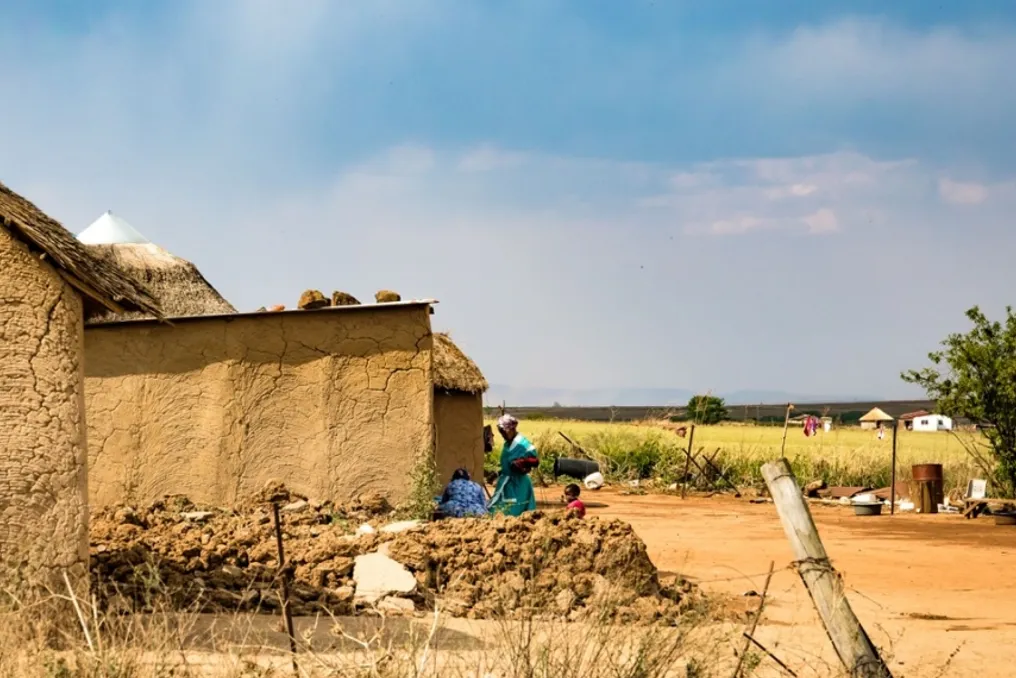
Discussions about rural development in South Africa often begin with the assumption that if rural households have more land, they can produce more food, earn more money, and become commercial farmers. This concept features in several government programs, including the National Development Plan to 2030, the Integrated Rural Development Programme, the Smallholder Support Strategy, as well as the Agricultural and Agro-processing Master Plan.
Within these documents and political rhetoric, it is expected that agriculture will be the main driver of economic growth in South Africa's former disadvantaged lands. This goal is rooted in the country's history. During colonialism and apartheid, laws such as the Natives Land Act of 1913 restricted land ownership by Black communities and concentrated a significant portion of this population in former 'lands'. These areas were characterized by overpopulation, poverty, and inadequate infrastructure, which continues to affect life in rural areas to this day.
Modern agricultural and rural development policy therefore combines several objectives: correcting unequal access to land, increasing agricultural production and food security, creating jobs, expanding market participation, and fostering an inclusive rural economy. This has often implied providing smallholder farmers with land alongside agricultural resources, infrastructure, financing, training, and other forms of support aimed at increasing production and involvement in agricultural value chains.
However, findings from studies of two rural communities indicate that this picture is overly simplistic. A team of agricultural systems researchers from the University of the Free State examined the actual role agriculture plays in the livelihoods of rural households, the constraints on agricultural production, and alternative futures in agriculture.
The researchers worked with 132 smallholder farming households in two provinces. Household surveys, life experience interviews, farm mapping, and focus groups were used to collect data. The study sites were Emmaus, near Bergville, and the Drakensberg mountains in northern KwaZulu-Natal, as well as Taba Nchu, located about 60 km from Bloemfontein, the capital of the Free State. These communities were chosen because they are located in former lands but differ in their ecological and socio-economic conditions.
The study found that while agriculture remains important for ensuring food security and income for rural households, it is rarely the primary source of earnings. Instead, households combine farming with wage labor, small businesses, social grants, and other activities to sustain themselves.
This is significant because rural development policymakers who focus predominantly on increasing agricultural output or expanding land access (as is done in South Africa) overlook the interconnected factors that actually determine households' ability to improve their well-being. These factors include labor dynamics, infrastructure, markets, institutions, and household aspirations, which determine whether people can expand farming and whether they want to.
Agriculture is part of a broader subsistence system, not an independent path out of poverty. Agriculture is just one component of rural livelihoods.
The first phase involved a household survey that collected a wide range of information on land, production, income, and so on. Rural households in both locations varied greatly among themselves. Some households had very limited incomes and relied heavily on off-farm sources of income, such as social grants, wage labor, and small businesses. They often reinvested these resources back into farming. For most households, agriculture contributed to food security and provided some income, but was rarely sufficient to support the household independently.
Only 16% of households in Emmaus and 19% in Taba Nchu managed to exceed the South African Food Poverty Line (currently 868 rand or 54 US dollars per person per month), with off-farm sources contributing the largest share to their income. Differences between households matter. A household with a stable income from work can afford to buy livestock, hire labor, or invest in agricultural resources. A poorer household may own land but lack the money or labor to cultivate it. Thus, two households may have access to similar agricultural resources but vastly different opportunities to benefit from them.
The same applies to aspirations. Some households view farming primarily as a means of food provision. Others see it as an income source. Only 12% of household heads in Emmaus and 36% in Taba Nchu aspired for farming to become a business. Unmarried household members (aged 18 to 32) instead aspired to education, wage labor, or migration (64% in Emmaus and 80% in Taba Nchu).
This means there is no single path from smallholder farming to improved living conditions. Rural households start from different positions, face different constraints, and aspire to different futures. Viewing them as a single category of 'smallholder farmers' may lead to policies that help some households but have little impact on others.
Another notable finding was that land was not necessarily the biggest obstacle to increased production. Many households had access to land but could not utilize it fully. The study identified four barriers. First, labor. A household may have available land but lack sufficient labor to cultivate it. Second, infrastructure. For example, in Emmaus, poor roads and inadequate water infrastructure limited the potential for expansion or diversification of production. Third, in Taba Nchu, communal grazing lands were important for pastoralists, but conflicts over their use and management undermined productivity. Fourth, farmers could not always develop alternative farming enterprises. For instance, in Emmaus, people prefer growing maize and beans for self-consumption, leaving less land for market-oriented crops and other forms of farming activity.
An agricultural system may look productive and profitable on paper but still fail in practice if it does not align with the social and institutional realities of the community.
Rural households also have aspirations that extend beyond farming. One of the key lessons is that many rural households are not simply waiting for agricultural intervention; they have their own ideas about what a better future might look like. Many households participating in the study viewed farming as a means of survival and social protection, rather than a long-term commercial career. Young household members are not all interested in taking over the farm.
This does not mean that agriculture has no future in South Africa's former lands. Rather, the future of rural livelihoods will likely involve a combination of various activities. Rural development programs must be designed with this in mind. The entire system must be considered. Instead of only asking about whether farmers have enough land, fertilizer, water, or technology, the question should be how these factors interact with the household, labor availability, markets, institutions, natural resources, and people's aspirations. Instead of only asking how to turn smallholders into commercial entities, one should also ask: what combination of opportunities can help rural households build the future they desire? For the younger generation, in particular, the best opportunities may lie partially outside of agriculture.