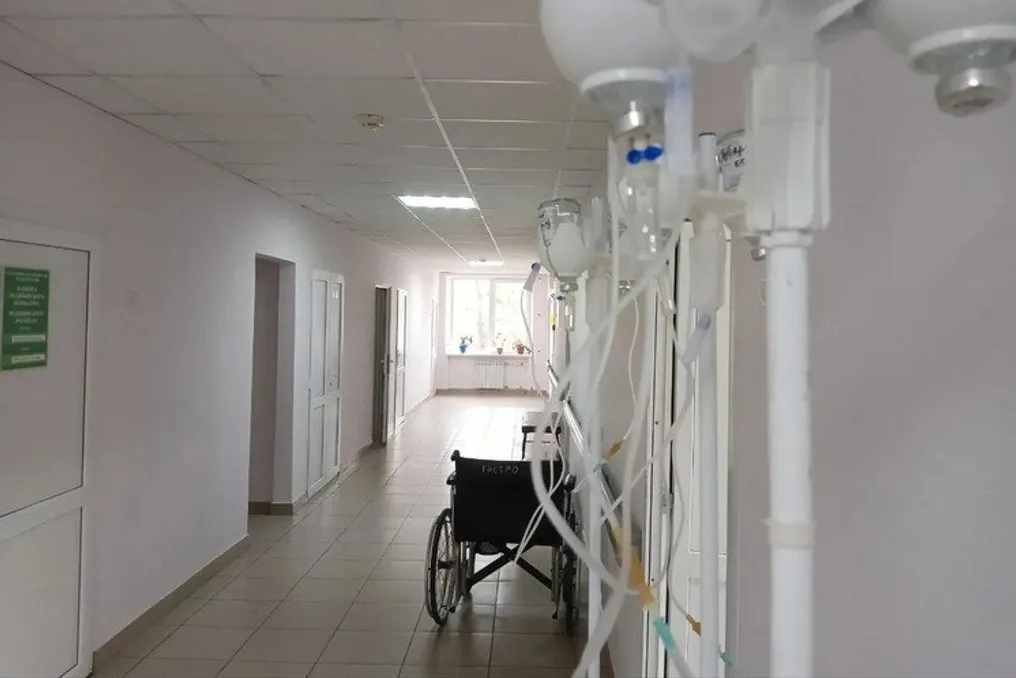
Uzbekistan activates readiness measures amid reports of possible plague case in Irkutsk region
Read more
Podrobno.uz [uz]
podrobno.uz

Uzbekistan activates readiness measures amid reports of possible plague case in Irkutsk region

The Sanitary and Epidemiological Committee of Uzbekistan is closely monitoring the developments in the Irkutsk region of Russia following the confirmation of the death of a 27-year-old woman who may have contracted the plague. A quarantine regime was introduced at the medical facility where the patient was located.

Immediately prior to this, information about a probable case of a highly dangerous infectious disease appeared in various media outlets and social networks in the Irkutsk region. The cause of the woman's death is linked to the possible case of the plague. After her death, the hospital was closed for quarantine, and all individuals who had been in contact with her were isolated and are under close medical observation.

Currently, specialists are working to determine the exact cause of death and the nature of this infectious disease. The Sanitary and Epidemiological Committee of Uzbekistan stated that it is monitoring the situation jointly with relevant Russian agencies and official representatives of the World Health Organization.

As part of the investigation, the agency is analyzing whether the diagnosis has been confirmed through laboratory tests, what the potential sources and modes of infection transmission might be, and is also studying the patient's travel route and the circle of people who had contact with her.

In parallel, readiness measures for services were strengthened across Uzbekistan in case the infection is brought in or begins to spread. The SanEpiCom advised the public to ignore unreliable reports and obtain information exclusively from official channels. Authorities promised to provide additional details if the situation changes.

It should be noted that previously, specialists had recorded activity of a natural plague focus on the border between Russia and Mongolia.


Similar stories

Husband helps wife give birth at home in Paraná minutes before SAMU arrives
Read more
g1.globo.com

Husband helps wife give birth at home in Paraná minutes before SAMU arrives

Jonatas Mendes da Luz, a civil construction worker, assisted his wife, Rosemari Ferraz, with the couple's birth at home, on the sofa, during the early morning hours. The event occurred shortly before the arrival of the Mobile Emergency Care Service (SAMU) team.

The man contacted SAMU as soon as the pregnant woman started feeling contractions. However, the baby was born before the medical team arrived and also before the expected date, as the pregnancy was complete at 38 weeks and 4 days, with delivery only expected the following week.

In an interview with g1, Jonatas related that despite never having experience assisting someone or being sensitive to seeing blood, he experienced a strong adrenaline rush during the birth, which reminded him of a medical television series. He described the moment: «She felt very strong pains when she went to the bathroom, called me, and I positioned her on the sofa. When I lifted her leg, I already saw the baby's head coming out, and it was all very fast!»

After the birth, he removed the baby and, since it didn't cry immediately, remembered the show Grey's Anatomy and gently shook it until it started crying, confirming that it was fine. Then, he placed the newborn in his wife's arms.

Later, Jonatas called SAMU again to provide information about the child's health condition. He mentioned that he was very nervous at that moment, having difficulty standing. About fifteen minutes later, SAMU arrived, provided him with scissors to cut the umbilical cord, and transported them to the hospital.

The story was recorded in the birth certificate, which lists the family's residence as the place of birth, and it remains in the memory of the rescuers. The SAMU team reported finding the newborn crying and being warmed by the father while in the mother's arms. They proceeded with the evaluation and provided all necessary support to the family.

Jean Marcelo Toledo, a nursing technician, commented that although the parents lacked technical knowledge, they achieved something extraordinary with love. He added: «We were instruments in the postpartum period. It is an occurrence that will remain marked for me». Jônatas de Moura, the driver, reinforced that despite attending many sad situations daily, being able to participate in the beginning of a life brings great joy and reinforces his love for the profession.

Rosemari Ferraz, who already has four other children, was aware of the signs of labor but reported that this pregnancy was extremely fast. She recounted that on Monday afternoon, passing pains appeared, and at night, while preparing to sleep, the pains returned. Around midnight, the contractions intensified, even though they were not expecting the baby. When she got up to go to the bathroom, she realized the moment was near.

While the mother was still in the bathroom, she felt the amniotic sac rupture and called her husband. He called SAMU and helped her get to the sofa. The father recalls that at that moment, a doctor tried to calm them down, saying they would arrive in time, but in less than five minutes, she announced: «It's happening!»

Feeling of déjà vu

Jonatas also shared that he felt a «déjà vu» while helping his wife. This psychological sensation of experiencing a moment before describes exactly what happened. He concluded: «I had dreamed a few days earlier that she was giving birth on the living room sofa and I was helping. And it really happened! And thank God, everything turned out well and everyone is fine».

What materials do dentists use for tooth fillings: an overview of composite resins, amalgam, and other substances
Read more
www.aajtak.in

What materials do dentists use for tooth fillings: an overview of composite resins, amalgam, and other substances

When caries or tooth decay occurs, it is often heard that the dentist fills the tooth with some 'material.' Many wonder what this material consists of, whether it contains silver, or if it resembles glass or a chemical substance. In fact, one type of material is not used to restore a tooth; the choice depends on the condition of the tooth, the size of the cavity, the location of the tooth, and the patient's needs.

When caries appears, the damaged part of the tooth is gradually removed. If this problem is not stopped in time, the decay can penetrate deep inside the tooth, causing pain, infection, or root problems. In such cases, the dentist usually cleans the damaged area and fills the resulting empty space. This process is colloquially called 'filling the tooth with material.' The goal is not only to close the void but also to facilitate the further normal use of the tooth and reduce the likelihood of food getting stuck.

Currently, the most noticeable are white fillings that match the color of the tooth. They are usually called composite resin. These are special dental products that incorporate tiny glass particles along with resin. It is thanks to this composition that it can be made strong and close to the natural color of the tooth. The dentist applies this material into the tooth and hardens it using a special light. After hardening, it securely bonds with the tooth.

Some filling materials may contain very fine glass particles. However, this does not mean that the dentist places a piece of glass into the tooth. The product used in dentistry consists of minute particles mixed with other components. Its function is to strengthen the filling and improve its properties.

Historically, a special metallic material called dental amalgam was used for teeth. It has a silvery tint, so in casual speech, it is often called a 'silver filling.' But it is not pure silver. Amalgam is a mixture that mainly includes metals such as silver, tin, and copper, and which is prepared by mixing with mercury. Nevertheless, nowadays, other materials that imitate the tooth color are increasingly used. The choice of material is determined by the condition of the tooth and the dentist's advice.

A product called glass ionomer cement is also used in teeth. As the name suggests, it contains compounds related to glass. It has the ability to adhere to the tooth and is used in certain circumstances, especially where specific properties of the filling are required. The service life of the filling depends on many factors: the type of material, the size of the carious cavity, the load on the tooth, and the quality of the person's oral hygiene. The filling may fail when chewing very hard objects, poor tooth brushing, or new caries forming around the filling.

Many mistakenly believe that once the tooth is filled with material, the problem is solved. This is not true. The filling helps restore the damaged part, but it does not prevent new caries from appearing. Therefore, brushing teeth daily, removing food debris between teeth, and regularly visiting the dentist are extremely important. Thus, the 'material' that the dentist places in the tooth is not a single substance; it can be a composite compound, amalgam, glass ionomer cement, or another dental material. The dentist determines which component will be optimal based on the condition of the tooth.

Popular