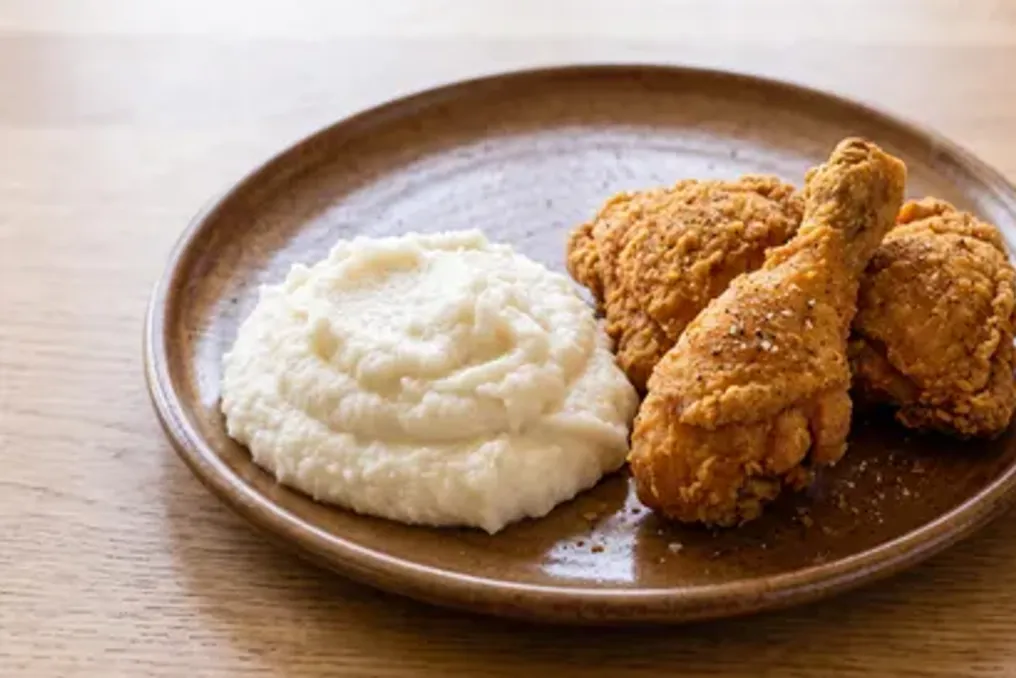
Uber Eats celebrates its tenth anniversary in South Africa by providing a detailed analysis of the dishes ordered by the country's residents. Convenience has become an integral part of South Africans' daily lives, influencing how they eat and shop.
Ten years ago, Uber Eats entered South Africa with a simple concept—delivering restaurant food from the kitchen to the customer. Today, the platform has transformed from a small number of restaurants in Johannesburg into a nationwide market covering all nine provinces.
Pap and fried chicken remain a popular combination
Over the last decade, the most frequently ordered dish on Uber Eats in South Africa remains fried chicken with traditional pap. Other popular local dishes include chakalaka, malva pudding, and lamb bunny chow, demonstrating that South Africans' taste preferences remain tied to familiar favorites despite the growing digitalization of delivery.
However, food choices vary by location. Residents of Cape Town show interest in sushi, while Durban customers prefer grilled chicken. In Johannesburg and Pretoria, burgers and Peri-Peri grilled chicken are popular; Johannesburg also leads in burger orders.
Regarding vegan dishes, Cape Town leads this trend, followed by Johannesburg, Durban, and Nelspruit. Furthermore, Cape Town residents are among the most active late consumers in the country, whereas Durban customers tend to go to bed earlier.
Some South Africans use Uber Eats very actively. For example, one customer placed over 2500 orders in just 10 months. Another ordered the same coffee more than 700 times in a year. Yet another user placed orders via Uber Eats on 97% of days in 2022. On Valentine's Day, 454 orders were placed in Johannesburg and Pretoria. For some South Africans, Uber Eats has become not just a one-off solution but a habit.
From coffee to premium tequila
The platform offers more than just food. Alcoholic beverages are also available, and in 2024, one customer demonstrated a love for luxury by spending 22,000 Rand on premium alcohol. In 2025, premium tequila, rare single malt scotch, and 18-year-old aged whiskey featured among the most expensive purchases on Uber Eats.
From two-minute groceries to 50-second iced tea
Delivery speed has also significantly increased over the past decade. In 2022, grocery delivery in Cape Town took less than two minutes. By 2025, the platform achieved even greater speed: peach-flavored rooibos tea arrived in under 50 seconds. For a convenience-based industry, every second counts.
But the platform's influence extends beyond food. The growth of Uber Eats has changed how businesses interact with customers. When Uber Eats launched in Johannesburg in September 2016, it was primarily a restaurant delivery service. Today, it operates in all nine provinces, and the network of vendors extends far beyond the country's largest cities, including areas such as East London, Gqeberha, Portefortnum, Clerksdorp, Polokwane, Middelburg, and eMalahleni.
This year, thousands of new vendors have joined the platform, almost three-quarters of whom are small and medium-sized enterprises. This expansion has contributed to the inclusion of more companies and couriers in the digital economy.
According to Uber Eats, the platform has created additional value of approximately 1.6 billion Rand for restaurants and saves consumers over 12.7 million hours annually. A partnership with the Gauteng Department of Economic Development attracted thousands more vendors and couriers into the digital economy, bringing the company over 1 billion Rand in economic value. Uber Eats has also implemented the HDP feature, which highlights stores and restaurants owned by historically disadvantaged groups to increase their visibility and access to demand. Johannesburg and Pretoria currently account for the largest share of such vendors, followed by Cape Town and Durban.
This data shows that the platform has long gone beyond simple dinner delivery. The decade of changing South African eating habits is characterized by pap and fried chicken being delivered alongside sushi and vegan dishes, and bunny chow arriving at the door. It also reflects how small businesses find customers outside their neighborhood, and how delivery workers become part of the growing digital market. Since Uber Eats launched in Johannesburg ten years ago, the platform has become part of the country's daily food culture, reflecting not only what South Africans like to eat but also how willing they are to have it delivered.