10 New Office Terms Used in Gen Z Work Culture
Read more
Aaj Tak
www.aajtak.in

10 New Office Terms Used in Gen Z Work Culture

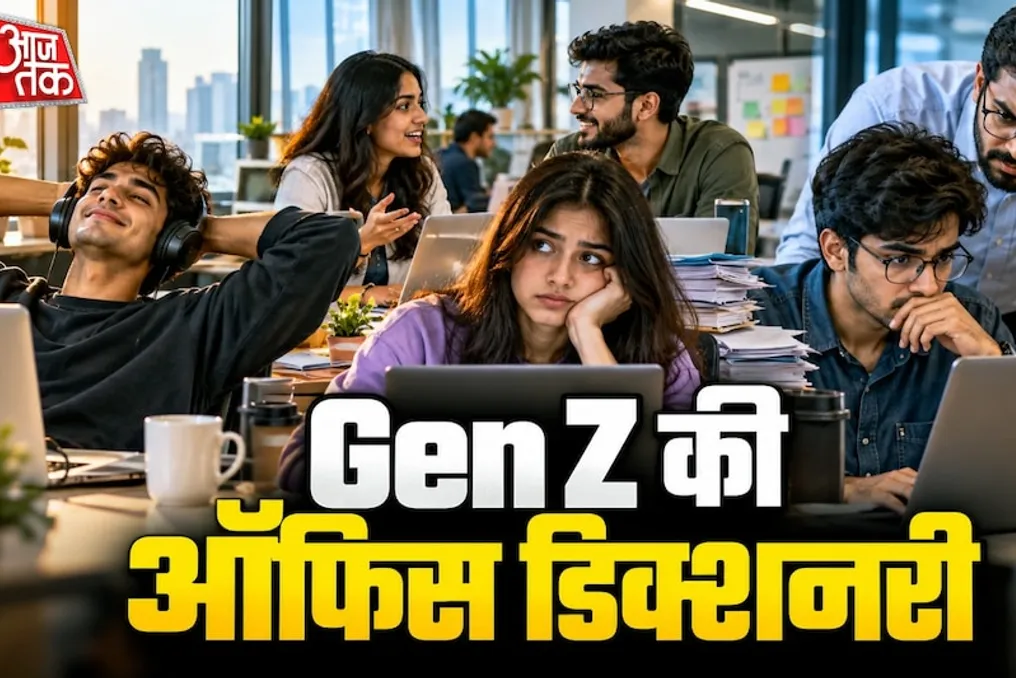
For today's Gen Z, the office is no longer just a place to work; the way of working, communication with colleagues, interaction with bosses, and attitude towards work are significantly different from previous generations. As a result, many terms have become common in office conversations that Gen Z often uses in their work culture. If you work with any Gen Z individuals, knowing the meaning of these words can be useful for you.

One such term is 'quiet quitting,' which does not mean leaving a job. Under this concept, an employee works according to their designated responsibilities and working hours and does not accept the expectation to overwork every time. This means doing the job with full dedication, but not making it your entire life.

'Bare Minimum Monday' is the idea of focusing only on essential tasks on Monday instead of starting the week with excessive work pressure. The goal is to gradually pick up the pace of work on Monday rather than tackling everything at once, instead of putting extra strain on oneself.

'Work-life balance' is a very prevalent term in Gen Z's office language. It means taking adequate time for personal life, rest, family, friends, and oneself alongside one's job. It indicates that work is important, but life should not be limited only to the job.

When a person becomes extremely physically and mentally exhausted due to constant work pressure, long hours, or continuous stress, they are said to be experiencing 'burnout.' Gen Z uses this word to express permanent fatigue and stress arising from work.

'Micromanaging' occurs when a boss or manager unnecessarily interferes in an employee's small tasks and monitors every step. This reduces the employee's freedom to work and forces them to constantly answer for every task or activity.

A 'toxic workplace' is a workplace where there is an environment of constant stress, inappropriate behavior, disrespect, bias, or unhealthy work culture. Gen Z uses this term quite naturally when describing their office experiences.

'Red flag' refers to a situation or behavior in the office that could signal major problems in the future. For example, continuously making someone work late without reason, making an employee uncomfortable when they take leave, or not respecting their boundaries.

When Gen Z says they want 'growth' in a job, it does not just mean a salary increase. It also includes learning new things, gaining new responsibilities, achieving better roles, and opportunities for career advancement.

'Feedback' is the opinion given by a boss or colleague with the aim of improving an employee's work. For Gen Z, timely, clear, and work-related feedback matters more than an annual review.

'Logging off' happens when an employee completely disconnects from work after finishing office tasks and distances themselves from emails, messages, or other office activities. For Gen Z, this means giving equal importance to personal time after work hours end.

All these words indicate that for Gen Z, office vocabulary is not limited to work; it also encompasses topics such as working hours, stress, personal time, career progression, boss's behavior, and mental fatigue.
Similar stories

Reasons Why Generation Z Calls Different Life Stages an 'Era'
Read more
www.aajtak.in

Reasons Why Generation Z Calls Different Life Stages an 'Era'

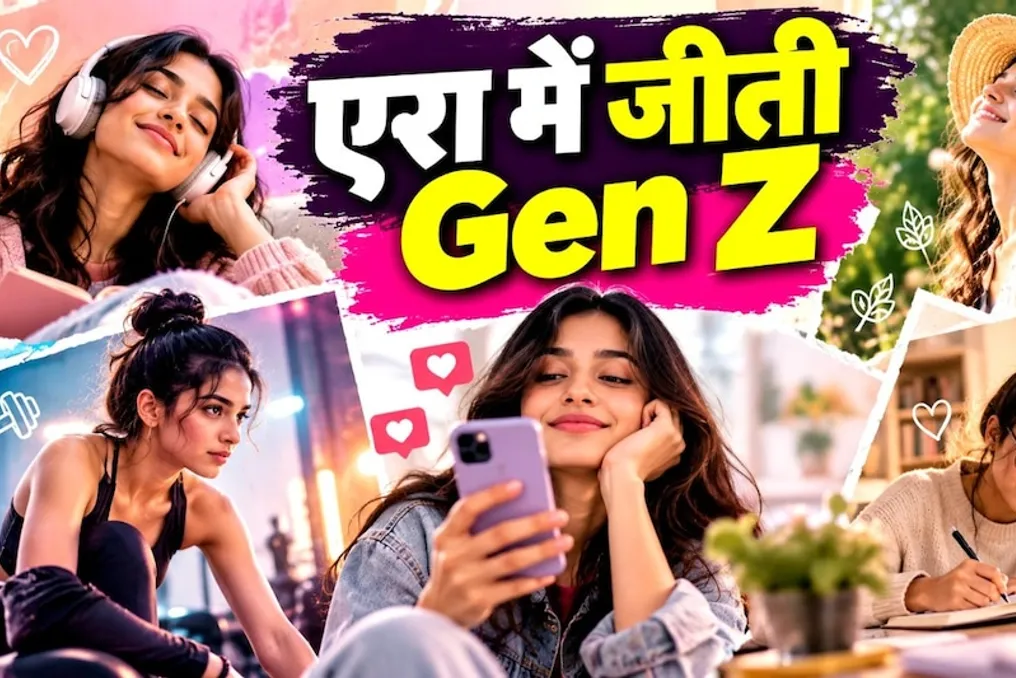
Social media has changed not only how people communicate and follow trends but also their approach to self-perception and self-expression. Today, people have started assigning special names to specific aspects of their lives, moods, or lifestyles.

In the digital language of Generation Z, the term 'era' is part of this trend. Some are in a 'soft girl era,' others in a 'healing era,' a 'fitness era,' or a 'self-love era.' Thus, any new stage of life can become a new 'era.'

What does 'era' mean?

Simply put, 'era' is used to denote a specific period or phase in a person's life. Whatever currently holds the most significance in your life can be called your 'era.' For example, if a person focuses on their health and physical shape, they might jokingly or casually call themselves someone in a 'fitness era.' Similarly, after a breakup, a person focused on themselves might call their life a 'healing era.'

Why has the 'soft girl era' become popular?

'Soft girl era' is a prime example of this phenomenon. It is not just a trend related to clothing or makeup. It includes elements such as softness, self-care, comfort, and prioritizing one's own happiness. An academic article published in 2025 examined the 'soft girl era' as a lifestyle trend emphasizing comfort, healing, and joy.

A distinct visual image has formed on social media, including pastel tones, soft makeup, journaling, self-care, and a calm lifestyle. Although the 'soft girl' trend did not start solely in this form, over time its meaning has expanded from fashion to lifestyle and personal choice.

Why name every stage?

For Generation Z, 'era' is not just a fashionable word but a form of self-expression. It allows describing a long period or mood with a single short word. A phrase like 'I am currently in my healing era' often seems simpler and more suitable for social media than telling the whole story. According to a report presented at the Meta and Instagram trend walk in 2024, interest among Indian Gen Z in personal growth and self-improvement was noticeable. Specifically, 43% of Indian Gen Z expressed hope for creating a 'self-improvement era.'

Thus, 'era' has ceased to be just an internet trend. It has transformed into a method of naming, recognizing, and expressing one's story across various life stages on social media. Sometimes it is related to fashion and lifestyle, and sometimes to personal growth and self-care. However, the question remains: why does Generation Z enjoy calling every new stage of their life a new 'era'?

Differences in Slang Between Gen Z and Gen Alpha: From 'Rizz' to 'Aura'
Read more
www.aajtak.in

Differences in Slang Between Gen Z and Gen Alpha: From 'Rizz' to 'Aura'

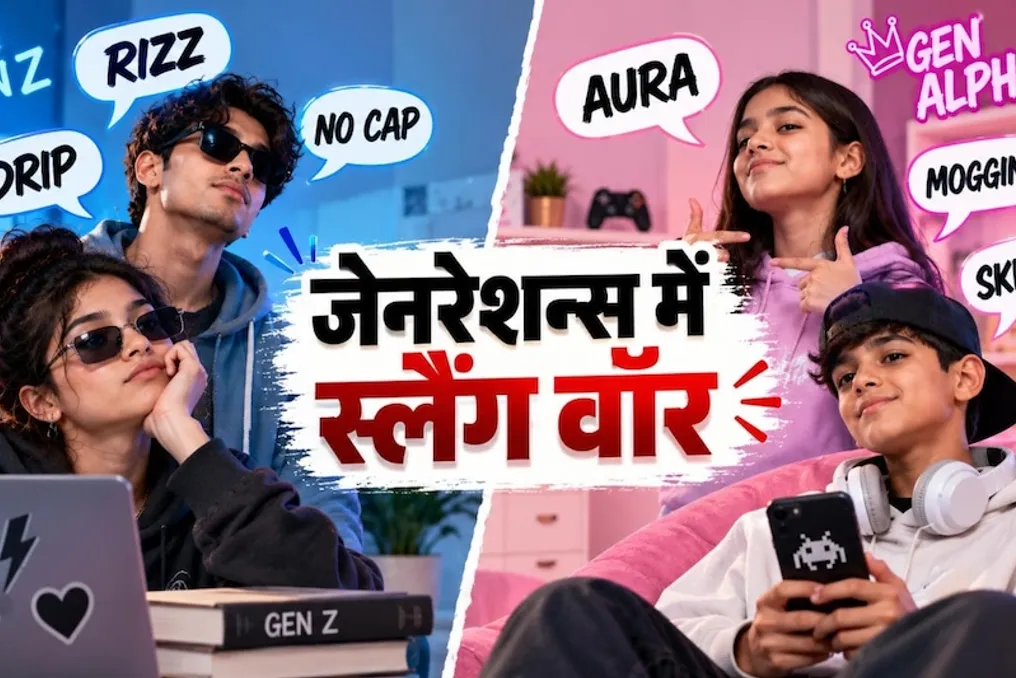
Each generation possesses its own unique communication style, and especially in the era of the internet and social media, youth language is undergoing rapid changes. Words popular among Gen Z, such as 'rizz', 'drip', and 'no cap', are gradually being replaced by new and different terms in Gen Alpha communication. This shift in slang demonstrates how the internet and social media continuously transform our spoken language.

Comparing 'Rizz' and 'Aura'

The term refers to the ability to charm or attract attention. Gen Z uses 'rizz' to describe a person's ability to easily influence others, for example: 'Look at his 'rizz', he can easily influence anyone!'. Meanwhile, Gen Alpha applies 'aura' to indicate a person's presence and influence, saying: 'He just has a different 'aura', everyone watches him wherever he goes!'

Thus, while Gen Z uses 'rizz' to characterize charisma and the ability to attract people, Gen Alpha uses 'aura' to describe a person's aura and influence.

Comparing 'Drip' and 'Sigma'

These words relate to appearance—stylish, confident, or impressive. Gen Z evaluates appearance through 'drip', noting: 'Did you see his clothes? What amazing 'drip' he has!'. In turn, Gen Alpha often uses 'sigma' to describe someone who is considered self-sufficient, unconventional, or imposing, as in the example: 'He looks like a true 'sigma', his manner of behavior is special!'

For Gen Z, 'drip' serves as a way to praise excellent fashion style or sense of fashion, whereas in Gen Alpha's lexicon, 'sigma' is applied to those perceived as confident, different from others, or influential.

Comparing 'No Cap' and 'Skibidi'

These expressions are used to affirm the truth or describe something in an unusual or funny way. Gen Z uses 'no cap' to emphasize the truthfulness of what is said, for example: 'No 'no cap', I ate the best food of my life!'. Gen Alpha, on the other hand, applies 'skibidi' to something strange or amusing, as in the phrase: 'His manner of behavior is just 'skibidi', nothing is clear!'

'No cap' in Gen Z internet language is used to emphasize the truthfulness of a statement. And 'skibidi' is a term related to Gen Alpha internet culture, often used in the context of something bizarre, funny, or absurd.

Who are Gen Z and Gen Alpha?

Generation Gen Z generally includes people born approximately between 1997 and 2012. The next generation, known as Gen Alpha, covers children born roughly from the early 2010s to 2024. Both generations grew up in the age of the internet and digital technologies, but their childhood and experience interacting with social media differ, which is reflected in their language and slang.

When and how to use new Gen Z slang words: From Rizz to Mogging
Read more
www.aajtak.in

When and how to use new Gen Z slang words: From Rizz to Mogging

The communication of Generation Z features numerous new words that may be unfamiliar to those hearing them for the first time. Internet culture, memes, music, and social media have significantly altered the language of this generation. Slang expressions such as Rizz, Drip, No Cap, Ate, and Left No Crumbs have moved beyond being purely online terms and have become part of casual conversations among friends. These words are characterized by their ability to convey a complete reaction using just a few words instead of long explanations.

Rizz: When it comes to charm

The word Rizz is used to describe someone's ability to flirt or attract attention. If a person can impress a conversational partner without much effort, they are said to have 'Rizz'. For example, the phrase 'He made her laugh in two minutes, he has Rizz' means it applies to charisma, confidence, or flirting skills.

Drip: When the look is flawless

Drip is used to describe stylish and fashionable clothing or a person's overall appearance. If an outfit looks very impressive, one might say: 'Look at his Drip.' This expression is primarily used in the context of fashion, clothing, and personal style, for instance: 'His Drip today is fire.'

No Cap means absolute truth, stated without hesitation or embellishment. When Gen Z says 'No Cap,' it implies that what is being said is sincere, without lies, doubt, or exaggeration. It is used to emphasize the truthfulness of one's statement or to present something completely openly. For example: 'No Cap, I saw the best movie of my life.'

Ate: When someone exceeded expectations

If someone performs, showcases an outfit, gives a speech, or accomplishes something exceptionally brilliantly, Gen Z might say: 'She ate.' Here, 'Ate' does not mean 'to eat,' but rather signifies performing something at the highest level. Example: 'She performed so well on stage, she ate!'

Left No Crumbs is a stronger form of 'Ate.' It means that a person handled something so wonderfully that there were no flaws in their work. (In other words, they succeeded completely). Example: 'Her look on the red carpet? She ate and left no crumbs.'

Mogging: When someone overshadows everyone else

The word Mogging is used when one person significantly surpasses another in comparison regarding appearance, physique, style, or overall charisma. In social media, this is often seen in internet battles and comparisons based on looks. For example: 'He outshines everyone in this photo.'

Skibidi: Random internet atmosphere

Skibidi does not have one fixed meaning. It became popular through internet memes and is most often used to humorously describe some random, strange, or chaotic situation. If a friend suddenly behaves very unusually, you might ask: 'What was that Skibidi moment?' This sounds more natural in informal, meme-style conversations.

The main rule of slang is context

The enjoyment of Gen Z slang lies not only in memorizing these words but also in knowing how to apply them in the appropriate context. It is not necessary to insert Rizz, Drip, or Ate into every conversation. Although the popularity of these words originated from internet culture, their correct usage is only possible when they organically fit the situation. Thus, Gen Z is not just changing its vocabulary; it is transforming the very approach to expressing thoughts.

Popular