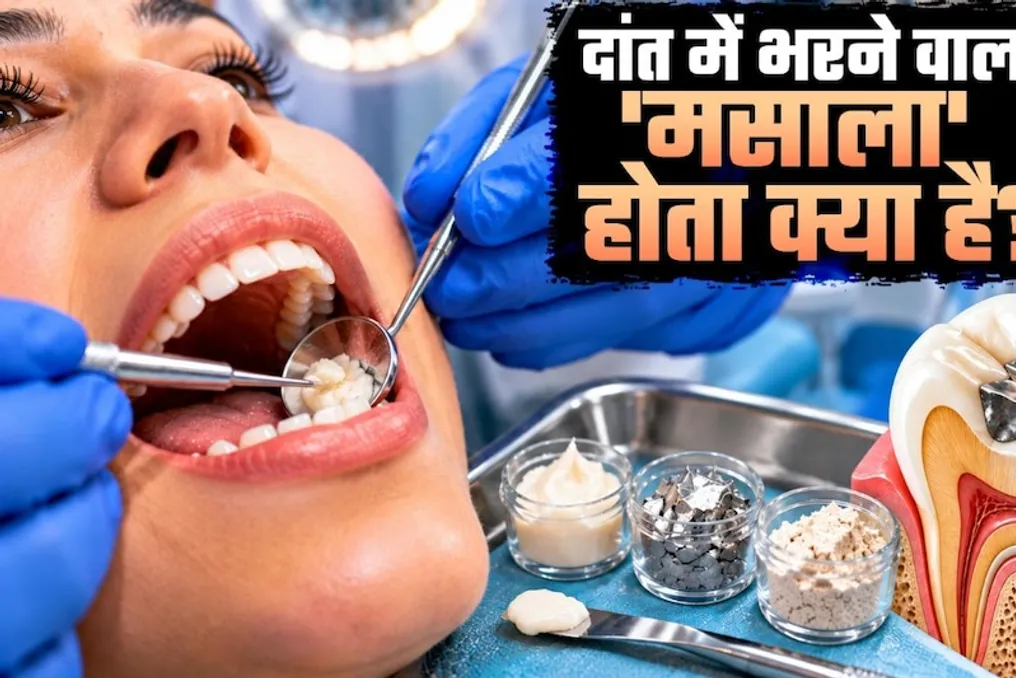
When caries or tooth decay occurs, it is often heard that the dentist fills the tooth with some 'material.' Many wonder what this material consists of, whether it contains silver, or if it resembles glass or a chemical substance. In fact, one type of material is not used to restore a tooth; the choice depends on the condition of the tooth, the size of the cavity, the location of the tooth, and the patient's needs.
When caries appears, the damaged part of the tooth is gradually removed. If this problem is not stopped in time, the decay can penetrate deep inside the tooth, causing pain, infection, or root problems. In such cases, the dentist usually cleans the damaged area and fills the resulting empty space. This process is colloquially called 'filling the tooth with material.' The goal is not only to close the void but also to facilitate the further normal use of the tooth and reduce the likelihood of food getting stuck.
Currently, the most noticeable are white fillings that match the color of the tooth. They are usually called composite resin. These are special dental products that incorporate tiny glass particles along with resin. It is thanks to this composition that it can be made strong and close to the natural color of the tooth. The dentist applies this material into the tooth and hardens it using a special light. After hardening, it securely bonds with the tooth.
Some filling materials may contain very fine glass particles. However, this does not mean that the dentist places a piece of glass into the tooth. The product used in dentistry consists of minute particles mixed with other components. Its function is to strengthen the filling and improve its properties.
Historically, a special metallic material called dental amalgam was used for teeth. It has a silvery tint, so in casual speech, it is often called a 'silver filling.' But it is not pure silver. Amalgam is a mixture that mainly includes metals such as silver, tin, and copper, and which is prepared by mixing with mercury. Nevertheless, nowadays, other materials that imitate the tooth color are increasingly used. The choice of material is determined by the condition of the tooth and the dentist's advice.
A product called glass ionomer cement is also used in teeth. As the name suggests, it contains compounds related to glass. It has the ability to adhere to the tooth and is used in certain circumstances, especially where specific properties of the filling are required. The service life of the filling depends on many factors: the type of material, the size of the carious cavity, the load on the tooth, and the quality of the person's oral hygiene. The filling may fail when chewing very hard objects, poor tooth brushing, or new caries forming around the filling.
Many mistakenly believe that once the tooth is filled with material, the problem is solved. This is not true. The filling helps restore the damaged part, but it does not prevent new caries from appearing. Therefore, brushing teeth daily, removing food debris between teeth, and regularly visiting the dentist are extremely important. Thus, the 'material' that the dentist places in the tooth is not a single substance; it can be a composite compound, amalgam, glass ionomer cement, or another dental material. The dentist determines which component will be optimal based on the condition of the tooth.