For millions of people, vision problems can be corrected with just glasses, yet there is a significant barrier between the need for ophthalmic care and the ability to receive it, especially in underserved areas.
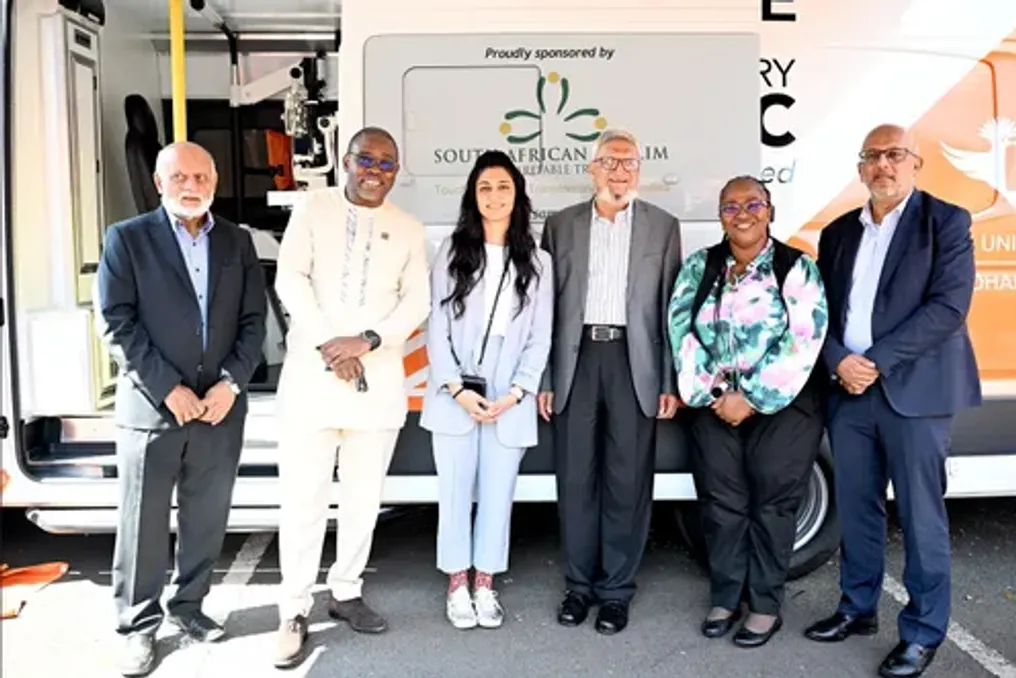
The University of Johannesburg (UJ), in collaboration with the South African Muslim Charitable Trust (SAMCT), handed over a new, fully equipped mobile optometry clinic valued at 2.5 million rands on Monday. This clinic is designed to provide comprehensive eye care directly within populated areas.
Speaking at the opening ceremony, Professor Nabeela Hasrod Ghani, Head of the Optometry Department at UJ, explained the ideology behind the project. She emphasized that merely diagnosing a problem is insufficient; the project aims to bridge the gap between identifying a condition and immediate treatment by delivering doctors, equipment, and an optical lab directly into communities. This allows for the detection of a problem and the provision of corrective glasses right on site.
This step addresses a global issue related both to healthcare access and eye diseases themselves. According to the World Health Organization (WHO), approximately 2.2 billion people worldwide suffer from myopia or hyperopia, and at least one billion cases could be prevented or remain undiagnosed. Uncorrected refractive error remains a primary cause of vision impairment in both children and adults.
WHO also estimates that out of three people in low-income countries who need glasses, two do not have access to them. The UJ Optometry Department has launched a community outreach program. In 2025 alone, the department conducted 53 community initiatives, screened approximately 5,520 patients, and distributed 1,038 pairs of free glasses.
However, traditional outreach events face a major hurdle: while doctors may visit a community, examine a patient, and diagnose a refractive issue, the manufacturing and subsequent delivery of glasses often occur elsewhere.
Professor Letlhokwa Mpedi, Vice-Chancellor and Director of UJ, highlighted the significance of these figures, adding that behind every number is a person. He recalled a child trying to see the board in class, an adult whose vision affects their ability to work, or an elderly person for whom clear vision means greater independence. This underscores the importance of today's launch.
For patients living far from existing ophthalmic services, returning to obtain glasses can require additional transportation costs, time spent away from work or study, and another trip that is not always feasible. Mpedi clarified that the UJ-SAMCT Mobile Optometry Clinic changes this dynamic. Instead of waiting for the patient to come to the university, the university can go to the patient. They believe that access to healthcare should not be determined solely by a person's place of residence or their resources.
The new Mobile Optometry Clinic was specifically designed to fill this gap. Unlike standard screening vans, the mobile clinic is equipped to conduct comprehensive vision examinations and eye health assessments. It includes a fully integrated lens grinding laboratory, allowing for lens fitting and polishing on site. This enables a patient to complete the journey from eye examination to prescription, manufacturing, and dispensing of glasses within a single community visit.
This model is particularly important because a seemingly simple issue like uncorrected refractive error can impact education, employment, independence, and quality of life. Globally, vision impairment is linked to annual productivity losses estimated at $411 billion.
Shabir Chauhan, one of SAMCT's patrons, proposed replicating this model nationally and expanding it to integrated community development. The trust committed to exploring partnerships with other faculties and donors to scale up this initiative.
Following its launch at UJ, the Mobile Optometry Clinic will conduct its first deployment in Cosmo City during World Sight Day in October 2026, directly providing comprehensive eye care and optical services to the community. The clinic will also serve as a mobile teaching platform for UJ optometry students, familiarizing future professionals with healthcare access realities while developing clinical competence, adaptability, and socially responsible practice. This initiative merges education, community engagement, and social impact, creating a sustainable platform through which UJ can extend its medical presence beyond the physical university campuses.