Tradition of Refusing Handshakes Between India and Pakistan Continues in Asian Games Final
Read more
Aaj Tak
www.aajtak.in

Tradition of Refusing Handshakes Between India and Pakistan Continues in Asian Games Final

In the final cricket match of the 2026 Asian Games, held on Saturday, October 3rd, the teams of India and Pakistan faced each other. The captain of the Indian team, Shreyas Iyer, decided to start the game with batting after winning the toss.

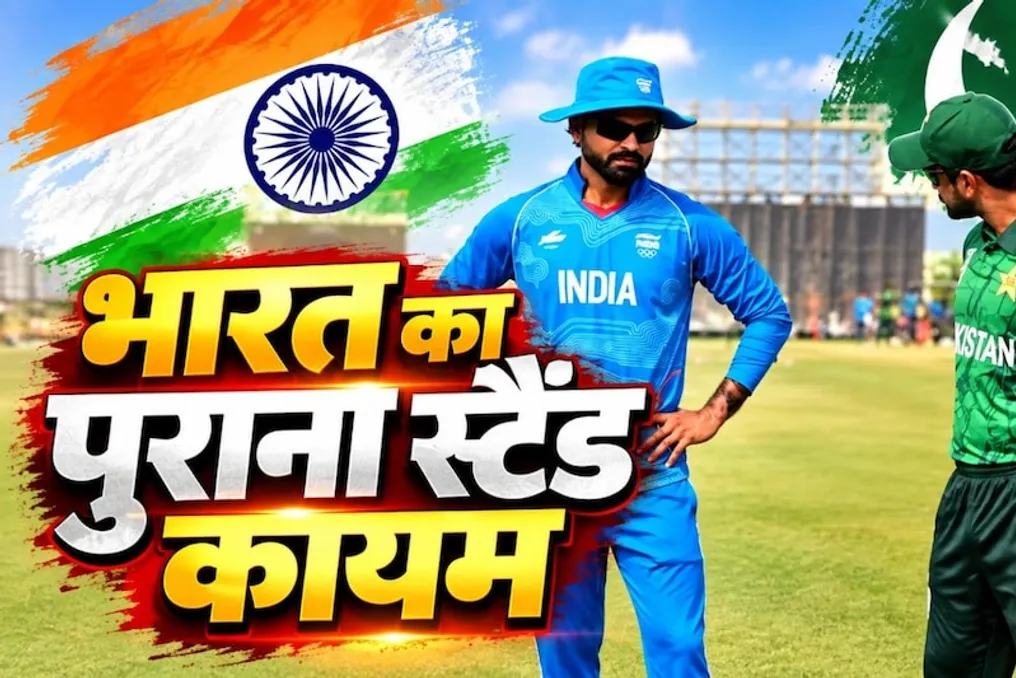
During the toss procedure between the captains of India and Pakistan, there was no handshake, continuing the trend of avoiding handshakes in Indo-Pakistani cricket, even in the Asian Games gold medal match.

India reached the final by defeating Sri Lanka 124 in the semi-final, while Pakistan qualified for the decisive match by beating Bangladesh. It is worth noting that previously, in matches between India and Pakistan at the Asia Cup and ICC tournaments, players also avoided handshakes. Even during the toss in the Asian Games final, both captains kept their distance and did not shake hands.

During the toss between Shreyas and Sahibzada, there was some exchange of words, but they maintained distance and did not shake hands.

Meanwhile, in other sports at the Asian Games, players from India and Pakistan greeted each other in the usual manner; for example, table tennis and hockey players exchanged handshakes after the match. However, in cricket, the policy of refusing handshakes is a separate case. Although OCA or IOC rules do not make shaking hands mandatory for players, it is considered a widely accepted tradition in the spirit of sportsmanship.

The situation at the Asian Games gains additional context: the Indian women's cricket team won gold, while Pakistan received bronze. Both teams did not meet each other in the tournament, but players from both countries were present at the same award ceremony. Now, the men's cricket final has brought up this topic of 'no handshake' in Indo-Pakistani cricket to the level of the Asian Games.

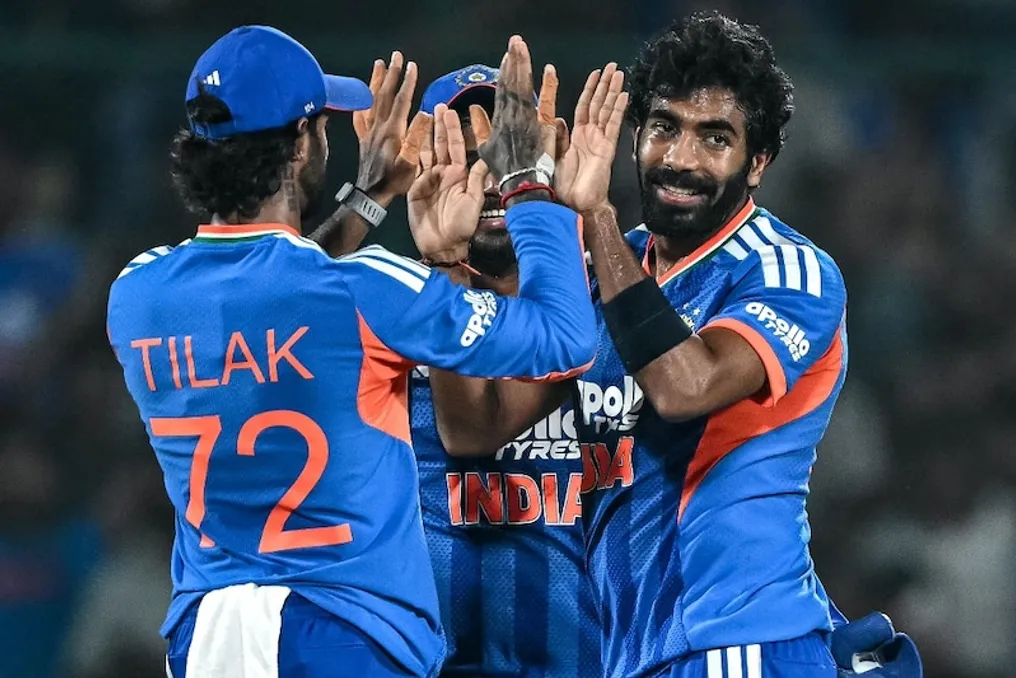
The Indian team squad for the Asian Games final included: Vaibhav Suryavanshi, Abhishek Sharma, Sanju Samson (wicketkeeper), Shreyas Iyer (captain), Ishan Kishan, Tilak Verma, Shivam Dube, Axar Patel, Washington Sundar, Ravi Bishnoi, and Jasprit Bumrah.

The Pakistani team squad for the Asian Games final consisted of: Farhan Sahibzada (captain), Sam Ayub, Usman Khan (wicketkeeper), Majed Sadakat, Hasan Nawaz, Abdul Samad, Arafat Minhaj, Ahmed Daniyal, Mohammad Wasim Jr., Abrar Ahmed, and Sufian Mukim.

Similar stories

Despite 10 Gold Medals at Asian Games 2026, India Is Not Yet Satisfied with the Results
Read more
www.aajtak.in

Despite 10 Gold Medals at Asian Games 2026, India Is Not Yet Satisfied with the Results

Although achieving ten gold medals at the 2026 Asian Games seems like a reason to celebrate, the joy is not yet complete within the Indian sports community. The reason lies not only in the current medal table but also in the benchmark of 28 gold medals achieved in Hangzhou, which has changed the standards of expectation for Indian sports.

As of the 11th day of the 2026 Asian Games, India has secured 10 gold medals, but the question remains whether this pace is sufficient to match the results of 2022. Although the number of gold medals has reached double digits, the ultimate goal is still far off.

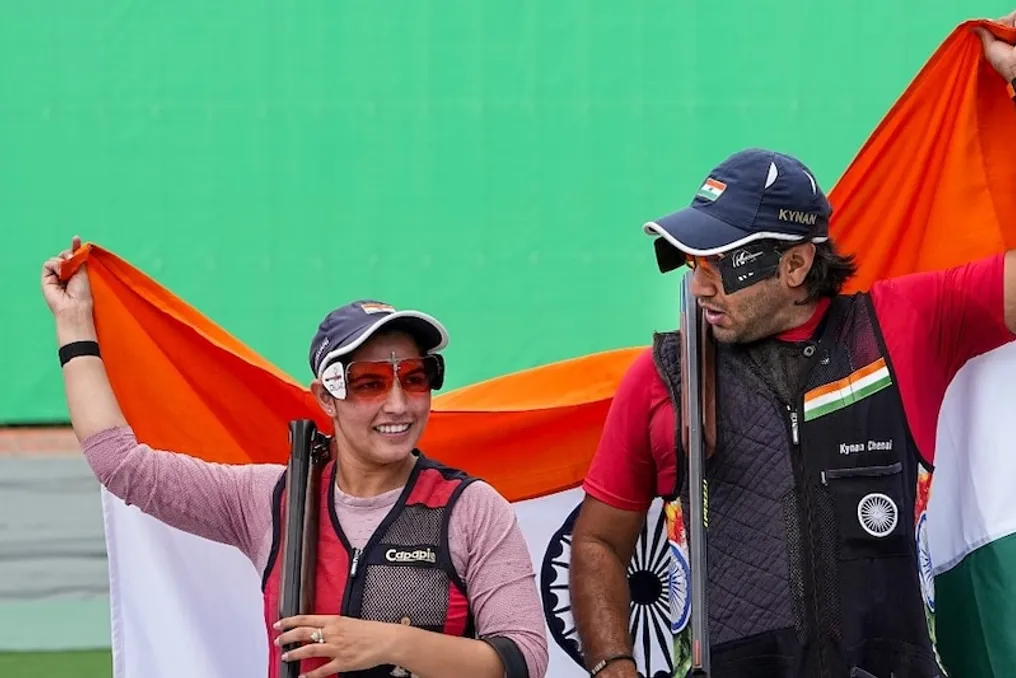
In Nagoya on September 30th, India began gaining momentum in winning gold. The women's compound shooting team, the mixed team, and the men's team each won three gold medals. Additionally, India secured gold in the mixed team trap shooting discipline. Thus, four gold medals were won in a single day, bringing India's total gold count to 10. India now has 60 medals in total (10 gold, 21 silver, and 29 bronze).

Even before that day, on September 29th, India added 6 gold medals thanks to Niru Dande in shooting and the women's 4x400m relay team. Niru became the first Indian woman to win individual trap gold. Consequently, six gold medals were added to India's tally over two days. Nevertheless, despite the rapid increase in gold medals, a serious question arises: has the Indian 'gold machine' truly performed, or was it due to sudden success in several individual sports?

The most significant benchmark for India is Hangzhou. Three years ago, India first surpassed the mark of 100 medals at the Asian Games. At that time, the country ranked fourth with a total of 106 medals and 28 gold. Now, with 10 golds in Nagoya, India still needs 18 more gold medals to match the 2022 performance.

Therefore, one cannot be satisfied with the overall medal count; it is only half the picture. At the Asian Games, the gold medal is the most important criterion.

India has indeed won 60 medals, but among them are 21 silver and 29 bronze compared to 10 gold. This means that Indian athletes consistently reach the podium, but they lack the final step to convert silver and bronze into gold.

This is an important characteristic of the campaign. Indian athletes win medals, but to increase the number of golds, they need to dominate the final competitions.

The medal table further emphasizes the challenges for India. As of the update on September 30th, China leads with 150 gold and 274 total medals. Japan is in second place with 49 gold, and South Korea is third with 24 gold. India, with 10 golds, ranks eighth.

Thus, India has strengthened its presence among major Asian sporting powers, but it is still far from China, Japan, and South Korea when it comes to gold.

However, the story of Nagoya is not over. In the remaining days of the Asian Games, India has several competitions where hope for gold remains. Sports such as hockey, boxing, wrestling, squash, and cricket could significantly increase India's gold medal count.

On September 30th, the women's hockey team defeated South Korea 2-0 in the semi-finals and advanced to the final. Now they have a chance not only to win gold but also to secure a ticket to the Los Angeles 2028 Olympics.

That is, the coming days will determine whether the 10 gold medals will remain just an intermediate stop, or if India can raise its gold medal count to a new level.

In Nagoya, India certainly has a reason to celebrate: 60 medals is a great achievement. But due to the new standard set by Hangzhou, the story does not end at 10 gold medals. The goal of 28 gold medals is still far away, but the narrative continues in Nagoya. In upcoming matches, India has the opportunity not just to increase its medal count but also to turn silver and bronze into gold. Now every final matters, and every gold medal is priceless. India, having reached 10 golds, now faces the main question of Nagoya: at what level will it stop?

Mixed team archery squad from India wins gold medal at Asian Games 2026
Read more
www.aajtak.in

Mixed team archery squad from India wins gold medal at Asian Games 2026

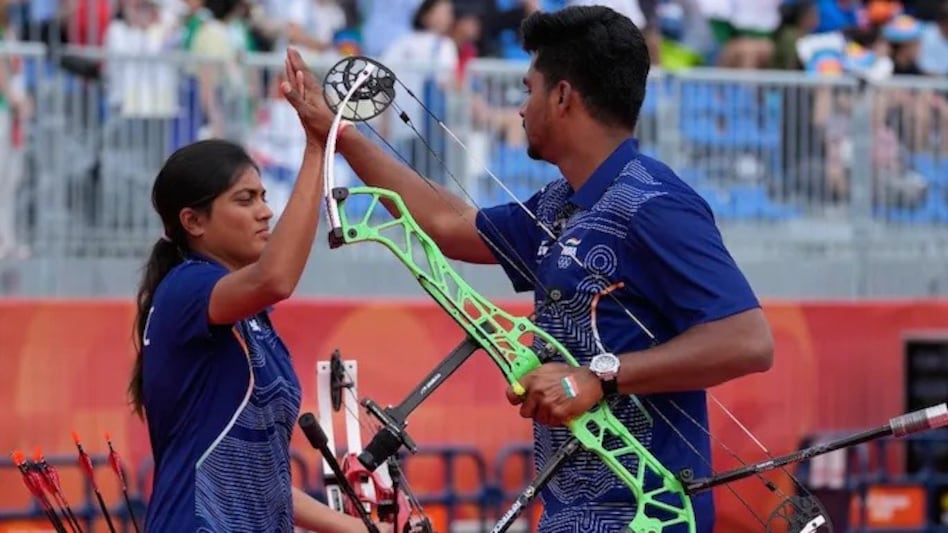
India has another good piece of news at the Asian Games: following an impressive success by the women's team, the mixed team in archery also won a gold medal, creating history.

In the mixed archery final against South Korea, India's dominance was evident from the start. The pair Chikita Taniparty and Sahil Rajesh Jadhav hit the ten ring on every arrow in the first two sets. Thanks to brilliant play in the first half of the match, India gained a confident two-point lead, leading 80-78 against Korea.

In the semi-final of the team tournament, the pair Chikita Taniparty and Sahil (Rajesh) Jadhav played a tense match against Thailand. The Indian pair demonstrated incredible composure in this fierce battle and defeated Thailand by a very narrow margin—156-155, securing their place in the final.

The Indian archers displayed aggressive play from the beginning of the competition. After taking the lead with a score of 39-37 in the first round, the pair continued to show excellent shots even under pressure. Although the Thai team tried to make a comeback, Chikita and Sahil secured India's victory with flawless shots in the closing moments.

Asian Games 2026 Quarterfinal Schedule: India to Play Afghanistan, Pakistan to Meet Hong Kong
Read more
www.aajtak.in

Asian Games 2026 Quarterfinal Schedule: India to Play Afghanistan, Pakistan to Meet Hong Kong

The quarterfinals of the men's cricket tournament at the Asian Games 2026 in Nagoya have been fully determined. After the match in Group A was cancelled due to rain on September 26 (Saturday), Nepal and Afghanistan advanced to the next round, while the host country Japan was eliminated from the tournament.

Malaysia and Hong Kong advanced to the next stage from Group B. In the last match of Group A, Nepal and Japan faced each other. This match took place at Korogi Sports Park in Nishin city. Nepal, having lost the toss, started with bat, scoring a strong total of 149/4 in 15 overs. Sandeep Jora and Lokesh Bam helped the team reach a good position, but then it started raining. Due to the continuous rain, Japan's innings did not begin, and the match ended without a winner.

This result brought direct benefits to Nepal and Afghanistan. Earlier, Nepal achieved a major surprise in Group A by defeating Afghanistan. For Japan, this match was the last chance to remain in the tournament, but the rain dashed its hopes.

In Group B, the match between Malaysia and Oman was also cancelled due to rain, and no balls were bowled. As a result of this match, Malaysia and Hong Kong qualified for the quarterfinals, and Oman's campaign ended.

Following the completion of the preliminary round matches, the full quarterfinal schedule was announced. India will face Afghanistan on September 28 (Monday) at 10:00 AM. On the same day, at 5:30 AM Indian time, Pakistan and Hong Kong will meet. The third quarterfinal match will feature Sri Lanka against Nepal, and in the fourth quarterfinal, Malaysia will play against Bangladesh. Both of these matches will take place on September 29 (Tuesday).

Popular