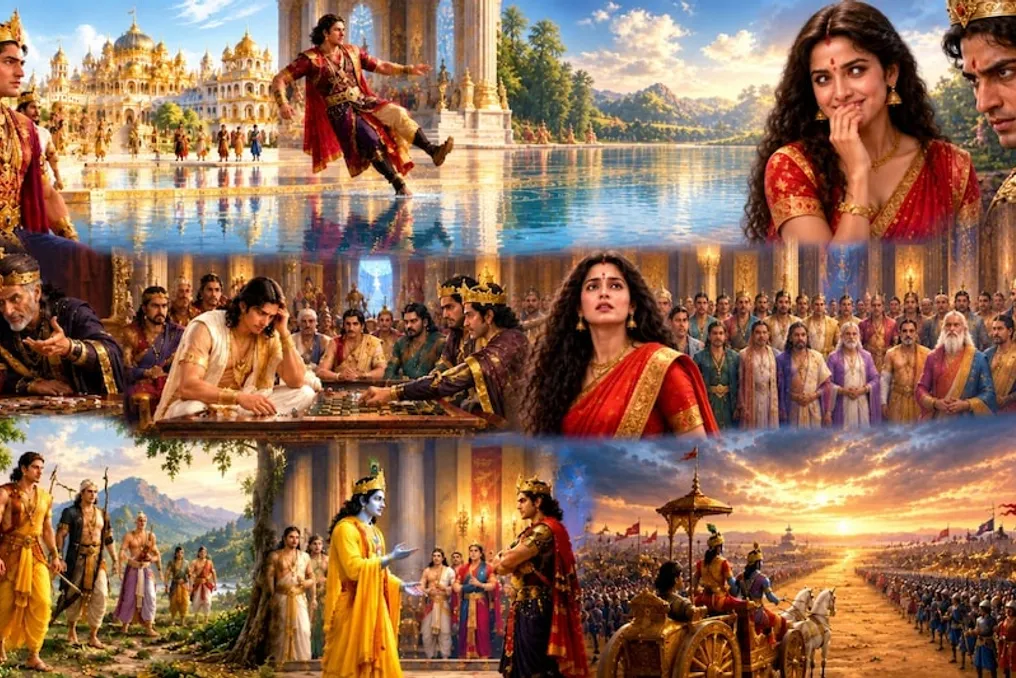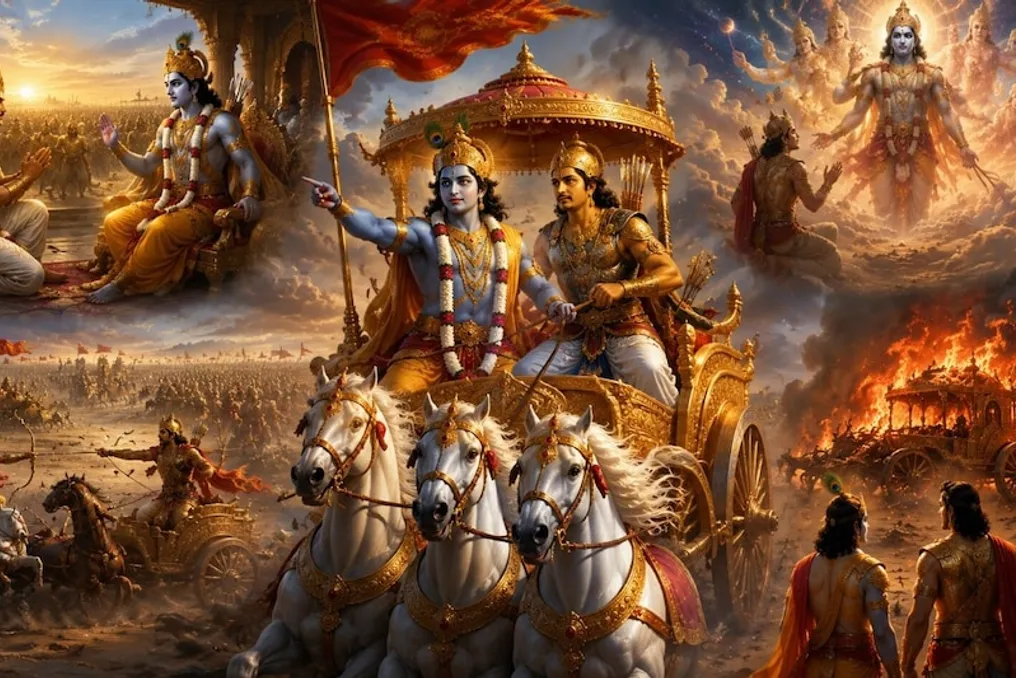
Since childhood, we have heard many fascinating and mysterious stories from the epic Mahabharata. This epic is full of narratives about war, politics, relationships, vows, love, sacrifice, and ambition that influenced subsequent events. Usually, when speaking of the Mahabharata war, the main causes cited are the humiliation of Draupadi, disputes over the throne of Hastinapura, and the arrogance of Duryodhana. However, did you know that the roots of this great war run much deeper?
Various explanations for the causes of the Mahabharata war are presented in mythological tales. One such story connects the entire course of these events to King Shantanu, the goddess Ganga, and Satyavati. So, what was Satyavati's connection to the Mahabharata war? How did one vow change the entire history of the succession of Hastinapura? Let's find out the details.
King Mahabhisheka Received a Curse from Brahma
According to ancient legends, King Mahabhisheka is an important link in the history of the Mahabharata. It is said that Mahabhisheka was a righteous and ascetic ruler. Once, pleased with his asceticism and piety, Brahma gave him the opportunity to visit Brahloka. During this visit, the goddess Ganga was also present in Brahma's assembly. Due to a strong wind, part of Ganga's garment slipped off. All the deities in the assembly lowered their eyes, but Mahabhisheka's gaze was fixed only on Ganga. This angered Brahma, who cursed Mahabhisheka, condemning him to be born in a human body. According to legend, the goddess Ganga also received a curse to be born in human form on Earth. This curse later became a turning point in the history of the Mahabharata.
Mahabhisheka Became King Shantanu
Under the influence of the curse, Mahabhisheka was born on Earth as King Shantanu, who became a powerful ruler of Hastinapura. One day during a hunt, his attention was drawn to an extremely beautiful woman—it was the goddess Ganga. Shantanu was captivated by Ganga's beauty and proposed marriage to her. Ganga set a condition for the marriage: Shantanu must never ask her questions or interfere with her affairs. On the day he broke this promise, Ganga would leave him. Shantanu agreed to this condition, and they married.
After this, Ganga gave birth to seven children, whom she then abandoned in the river. Shantanu's heart broke at this sight, but due to the promise made, he could not ask Ganga anything. Then another seven sons were born to them, and Ganga abandoned all of them in the river. It was unbearable for Shantanu to see this, but he was bound by his word.
Breaking the Vow to Save the Eighth Son
When Ganga gave birth to the eighth son and was about to take him to the river, Shantanu could no longer restrain himself. He asked Ganga why she was throwing her own children into the water. His promise was broken. Ganga then told him that she was taking their eighth son with her. This son later became known as Devavrata. Ganga raised Devavrata, teaching him warfare, politics, sacred scriptures, and dharma. After many years, Ganga returned her son Devavrata to Shantanu. Devavrata grew into a great warrior and scholar, and it was he who later received the name Bhishma-patima.
Bhishma Took a Vow for Satyavati
Time passed, and one day King Shantanu met Satyavati. In various tales, Satyavati is also known as Matsyaganda. This name was given to her because of the fishy smell emanating from her body. According to mythology, later, thanks to the blessing of the sage Parashara, the smell of her body disappeared, and a pleasant fragrance emanated from her. This situation is connected to another important event in her life. Satyavati and her son gave birth to the sage Vedavyasa. Later, Satyavati appeared in King Shantanu's life, and he wished to marry her. However, Satyavati's father wanted the heir to the throne of Hastinapura to be the son born from his daughter. This situation was difficult for Shantanu, as his eldest son Devavrata was already the crown prince. Understanding his father's wish and love, Devavrata made a decision that changed history. He vowed eternal celibacy and promised never to claim the throne of Hastinapura. Because of this terrible vow, Devavrata received the name Bhishma.
The Lineage of Hastinapura Continues Through Satyavati's Sons
Shantanu and Satyavati had two sons—Chitrangada and Vichitravirya. Chitrangada died in battle. After this, Vichitravirya became the king of Hastinapura. He married Ambika and Ambalika, but they had no children. Some time later, Vichitravirya also passed away. Now, Hastinapura faced its biggest problem—lineage and succession. Satyavati called her first son, the sage Vedavyasa. According to mythology, conception occurred through the tradition of Niyoga from Ambika and Ambalika.