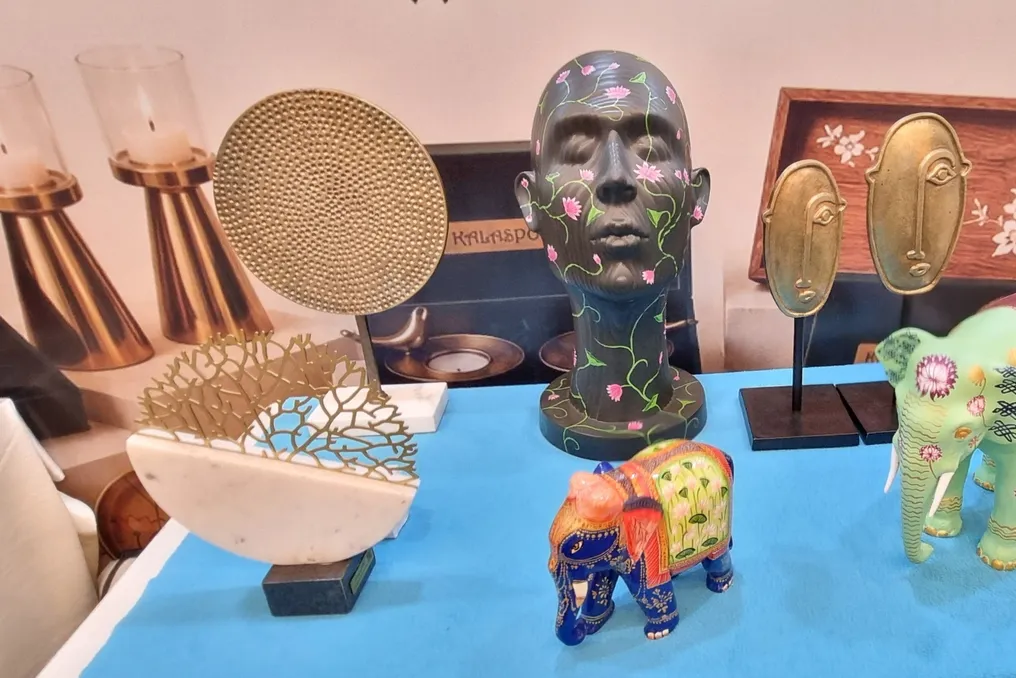
The gift industry is undergoing significant changes, becoming more thoughtful, personalized, and environmentally responsible. This opens up promising opportunities for Indian brands capable of combining quality design with deep meaning, as noted by exhibitors at the recent Gifts World Expo in Bengaluru.
The Gifts World Expo, organized by MEX Exhibitions and Messe Frankfurt Asia Holdings, gathered several participants, including Coconut Sugar, EcoCradle, Haath ka Bana, Kalaspoorthi, Nutraj, Rene Kolkata, and Smartivity. During a series of interviews, these companies presented new trends in the gifting sector and offered recommendations to budding entrepreneurs.
Roshan Ray, founder of Seed Paper India, believes that the gift industry is going through an important transition. He emphasizes that the focus has shifted from 'What can we give?' to 'What does this gift say about us?'. For Seed Paper India, sustainable development is the core of its operations, as the company transforms waste into valuable items that are given a second life.
Companies are increasingly aiming for their gifts to reflect the values of the brand itself, rather than just bearing a logo on a standard item. According to Ray, this is particularly relevant for Seed Paper India, as they turn sustainability into an experience: the gift can be planted and grow into a plant.
He also notes that the most successful designs in this area are characterized by simplicity, utility, aesthetics, and connection to the brand's story. Corporate buyers, Ray found out, prefer subtle branding combined with a product that the recipient will genuinely use or remember.
Ravi Lalwani, Head of Corporate Communications at consumer electronics firm XECH, asserts that corporate gifting is moving towards premium, functional, technological, and lifestyle products, moving away from traditional souvenirs. He concludes that minimalist, modern designs with strong functionality and subtle branding are the most effective.
Another perspective is offered by Dhruv Natani, founder of the digital music gifting platform RAAAG. He observes how physical hampers are giving way to experiences and personalization, as buyers begin to value emotional memory over economic viability. Natani adds that gifts are becoming event-driven, not just festival-oriented; instead of two annual gifts, companies now give gifts for employee adaptation, work anniversaries, promotions, retirements, Women's Day, and personal events such as weddings and births.
Furthermore, Natani highlights the growing importance of regional specificity in gifts, pointing out that a gift in one culture's language does not resonate as strongly with an employee from another culture. Regarding design principles, he advises that the format must suit the moment: a gift at a general meeting differs from a farewell gift upon retirement, even if the brand is the same.
Natani also insists that specificity matters more than generosity, arguing that a small gift personalized with an employee's name always surpasses an expensive but generic one. He advises against excessive pomp, as there is often overproduction in the Indian corporate environment, and modest, well-made gifts are received better than lavish ones.
Kanika Agarwal, co-founder of Gulaab Jaipur – House of Gulab, advises that when selecting gifts for the corporate sector, it is important to showcase the company's brand and align the packaging theme with the corporate identity after finalizing the product. She also notes that simple designs with variations in color and size, as well as handmade and eco-friendly, reusable packaging, are valued.
Roshan Ray offers advice for aspiring entrepreneurs looking to enter this field. He insists that gifting cannot simply be viewed as selling goods; in reality, emotion, experience, and relationships are being sold. It is critically important to find a clear differentiator because the market is saturated with products, and you need a strong story that compels customers to choose you. Before developing a wide range, one should study the customer, start with a few strong products, conduct testing, listen carefully to buyers, and then expand.
Ray warns that strong execution capabilities are also crucial. In the gift sector, quality, customization, packaging, and most importantly, delivery timelines can be as important as the product itself. Ravi Lalwani from XECH recommends not just becoming a sourcing or trading company, but creating a competitive advantage through product, design, quality, and service. It is necessary to understand the end recipient and create products that people genuinely want to receive and use.