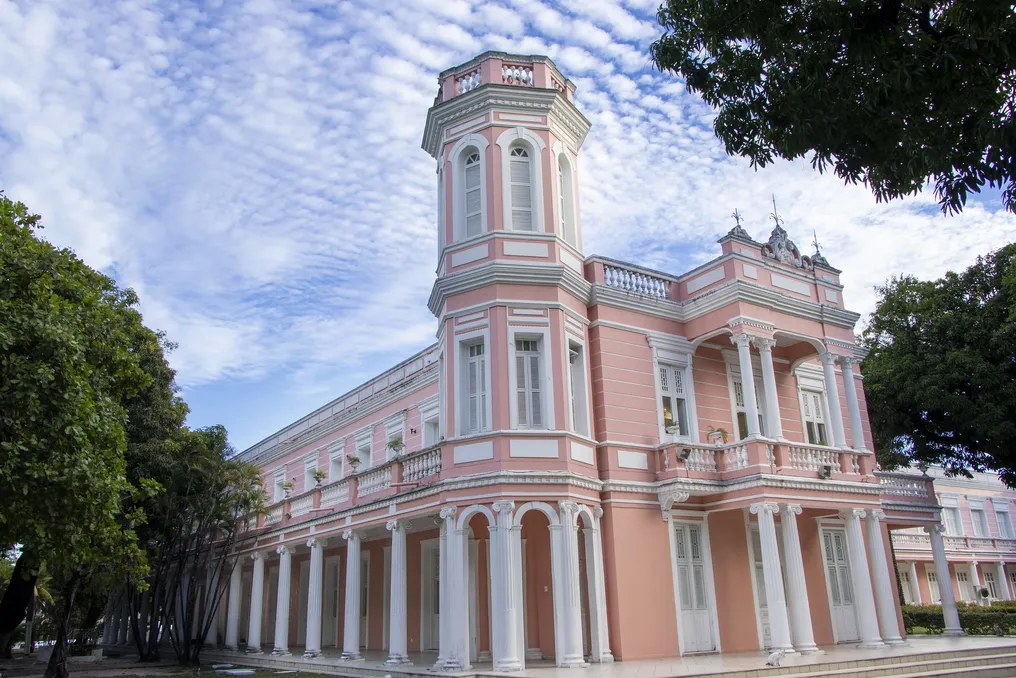
The Federal University of Ceará (UFC) announced the creation of five new undergraduate programs starting in 2027. The UFC's University Council (Consuni) approved the new formations last Friday, the 25th.
The new fields of study include Archaeology, Libras Languages, and Special Education, intended for the Fortaleza campus. Additionally, Computer Engineering for Russians and Cybersecurity for Quixadá will be offered.
The pedagogical projects for these courses have already been validated by the Council of Teaching, Research, and Extension (Cepe) and will be available in the first edition of the Unified Selection System (Sisu) next year.
Details about the new courses
The Archaeology course, which will grant a bachelor's degree, will be linked to the Center for Sciences (CC) and will have a capacity of 40 spots per year. Its curriculum structure covers eight semesters in full-time (morning and afternoon) mode, totaling 3,328 hours. This course aims to train specialists capable of working in the preservation, management, and research of archaeological heritage, including components on musealization and conservation, in alignment with the National Institute of Historical and Artistic Heritage (Iphan).
Regarding Libras Languages, the new bachelor's degree will join the existing offering of a teaching degree in the area. Offered in the afternoon shift, it will provide 30 annual spots and have a total workload of 2,808 hours, which can be completed in a minimum of eight and a maximum of twelve semesters. The training will take place at the Ernando Pinheiro Chaves Block for Libras Languages and Accessibility, focusing on translation and interpretation between Libras and Portuguese Language, in dialogue with the UFC's Postgraduate Program in Translation Studies.
The Special Education teaching degree, linked to the Faculty of Education, is intended for the initial training of teachers to strengthen inclusive education. With an afternoon shift, the course will offer 50 annual spots, totaling 3,200 workload hours, to be completed in 8 semesters. Its pedagogical project emphasizes collaboration between the Special Education teacher, mainstream teachers, school management, support professionals, and families, in addition to planning strategies to ensure student autonomy and learning.
For Russians, the Computer Engineering course will be offered in full-time (morning and afternoon) mode, with 50 annual spots. The bachelor's degree training has a curriculum structure of 3,600 hours, requiring a full-time period between 10 and 15 semesters. The objective is to qualify professionals to design, test, and maintain computer systems that combine hardware and software, covering areas such as robotics, Internet of Things, automation, and networks.
Finally, the Cybersecurity course, also a bachelor's degree, will be held at the UFC Campus in Quixadá. There will be 50 annual spots in full-time (morning and afternoon) mode, with a total workload of 3,200 hours, to be completed in up to 12 semesters. Graduates must be prepared to work in Industry 4.0, dealing with cyber-physical systems, artificial intelligence, and data analysis, being able to prevent threats, manage risks, and protect infrastructures.