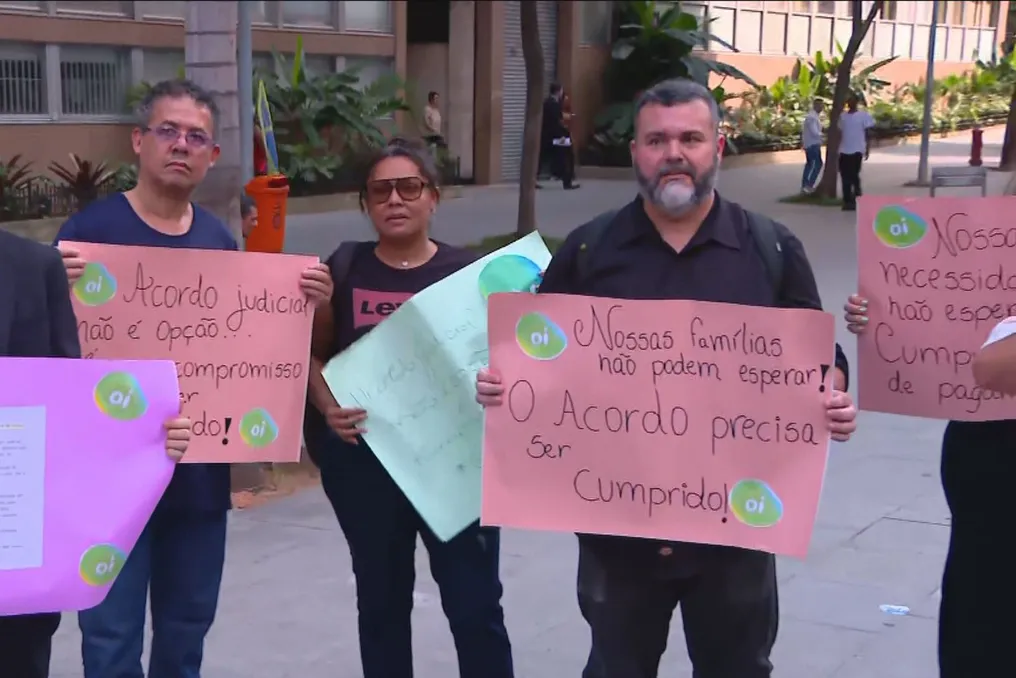
More than nine hundred former Oi employees are awaiting the receipt of compensation established in a judicial agreement. Although the workers expected the deposit of the first installment in September, the amount has not been credited to date.
At its peak, Oi was the largest telecommunications operator in Latin America. The company originated from the privatization of Telebrás and once had 70 million customers in the country and 15 thousand direct employees.
However, due to a succession of administrative problems and billions in debt, the company began facing judicial recovery proceedings, a crisis that has persisted for approximately ten years.
Operator Bankruptcy
Last month, the court officially declared the operator bankrupt, which had debts with over 160 thousand workers, suppliers, and service providers. To ensure the continuity of vital services, such as calls to the police, firefighters, Samu, and even the Regional Electoral Court (TRE) during the election period, the staff was cut in half.
About 900 laid-off workers signed an agreement to receive their severance pay in installments. However, no payment has been made so far. The lawyer and former Oi employee, Caio Marcius Simões, reported: 'The first people who were dismissed on August 18 should have received the first installment and the 40% of the Guarantee Fund on September 17, and so far they haven't paid anything.'
The agreement, negotiated between the company's judicial administration and the unions with court approval, stipulates the payment of outstanding amounts in six monthly installments for those with salaries up to R$ 5 thousand, and in ten installments for others. Furthermore, a fine of 40% of the Service Time Guarantee Fund (FGTS) is provided for, the full payment of which will occur within deadlines ranging from 30 to 120 days, depending on the salary bracket.
Despite this, the court has not yet validated the payments. José Evaristo Santos Cruz, a Telecommunications technician with almost twenty years of service at Oi, faces the risk of eviction because he cannot cover his debts. He stated: 'I live in a rented apartment, I am two months behind, I have an eviction order, and I cannot afford to pay. The water is overdue, the electricity is overdue. Anyway, my stomach is rumbling because we have been waiting for this money for a month.'
What the mentioned parties say
Oi itself communicated that it will only comment in the case files. For its part, the Court of Justice informed that new deliberations on the case may still arise, which cannot be disclosed due to legal restrictions. It was clarified that the transfer of installments will depend on Oi's financial capacity.