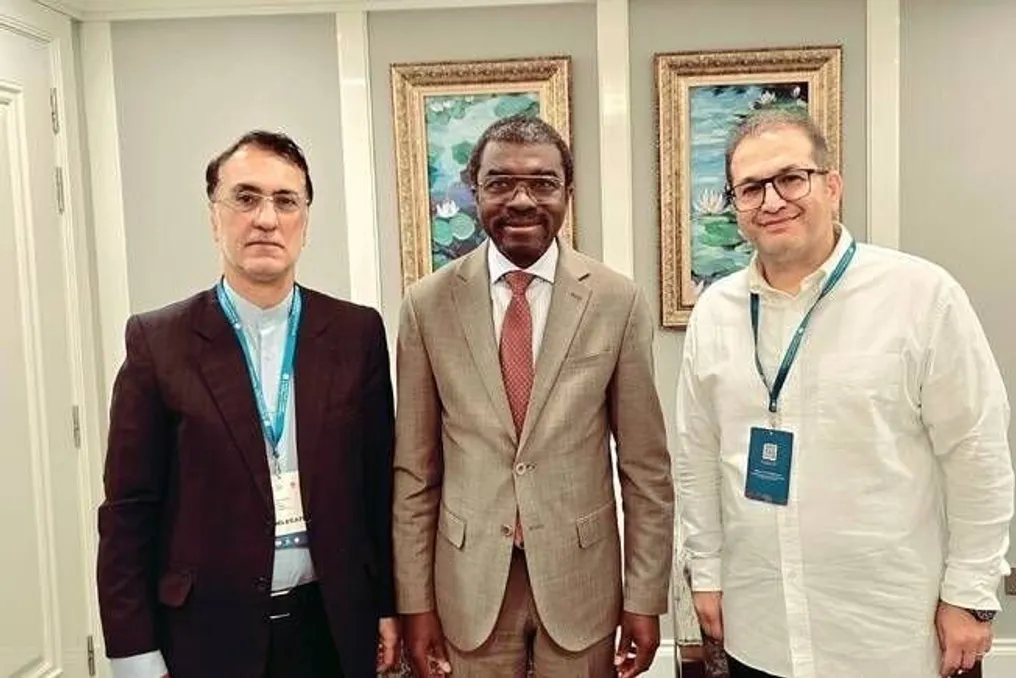
Iran and UNESCO held discussions on expanding technical and international cooperation to assess, document, restore, and protect Iran's World Heritage sites, including those reportedly damaged during the recent war.
Fareh ad-Dizi Zelani, Director General of Iran's World Heritage Sites under the Ministry of Cultural Heritage, Tourism and Handicrafts, met with Lazare Elundu Assomo, Director of the UNESCO World Heritage Centre. This meeting took place on the sidelines of the Asia-Pacific Dialogue on Heritage and Authenticity in Hanoi, Vietnam.
During the negotiations, Zelani presented up-to-date information on the condition of Iran's cultural sites, paying particular attention to World Heritage sites damaged in the recent conflict with the combined forces of the US and the Israeli regime. He outlined the presumed scale of the damage, as well as current expert assessments, documentation, and emergency measures aimed at protecting and restoring the affected locations.
The Iranian official also conveyed his ministry's expectations from the UNESCO World Heritage Centre, emphasizing the need for more active utilization of its technical, professional, and international capabilities. The parties discussed the possibility of expanding expert cooperation, sharing experience and technical knowledge, as well as supporting conservation programs and facilitating the participation of international specialists in assessing damaged heritage sites.
Assomo stated that the World Heritage Centre supports Iran's cultural heritage and World Heritage listed sites. He also reported that UNESCO plans to dispatch representatives to conduct field assessments, study the extent of the damage, and determine possible forms of support and cooperation.
He stressed the importance of maintaining professional interaction and coordination between relevant institutions, noting that continuous technical involvement can help strengthen efforts to preserve and implement more effective approaches to protecting Iran's World Heritage. Both sides also highlighted the historical, civilizational, and international significance of Iran's cultural heritage and called for closer cooperation between Iran and the World Heritage Centre to effectively utilize available opportunities for the protection of heritage of universal value. Among the mentioned sites were Golestan Palace in Tehran and Imam Mosque in Naqsh-e Jahan Square in Isfahan.