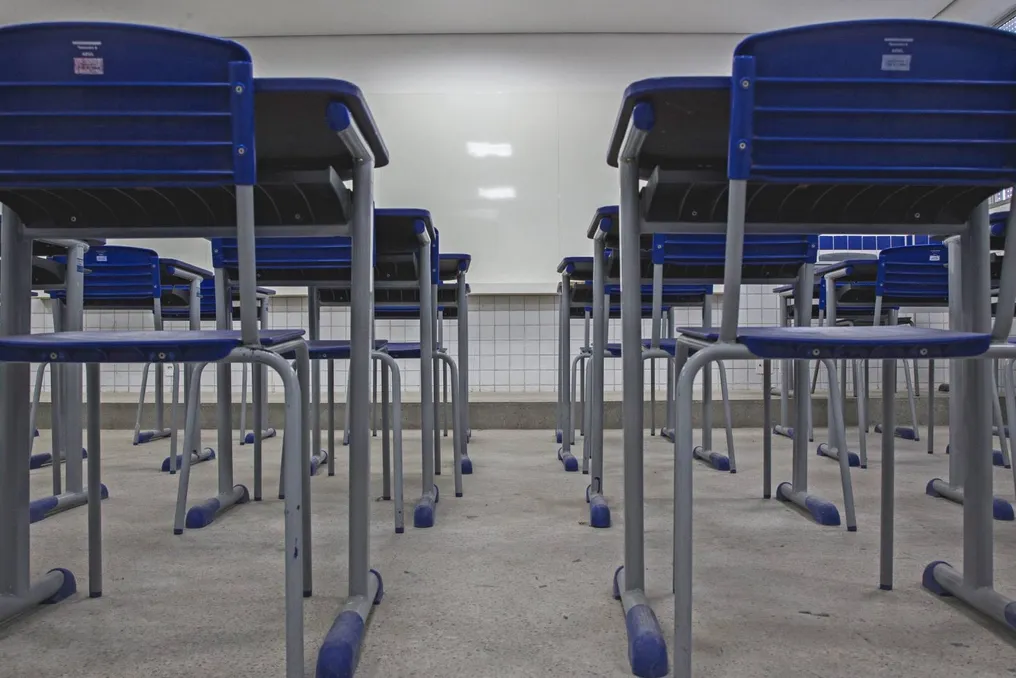
Data collected by the INSPIRE platform, developed by the Institute for Future and Healthy Childhood (Infinis), points to a critical situation in the state of Amapá: 43.4% of students aged between 13 and 17 in Amapá reported being victims of bullying. This type of violence includes mockery, intimidation, humiliation, or scorn practiced by peers in the school environment.
Amapá has the second-highest victimization rate in the entire North Region, significantly surpassing the Brazilian national average of 40.0%. The INSPIRE platform was conceived by Infinis, using international guidelines from the World Health Organization (WHO) and UNICEF, with the aim of consolidating strategic indicators and supporting public managers in planning measures against child and youth violence.
Infinis/Quaest Survey on Perceptions of Insecurity and Violence Among Students
In an additional survey conducted by Infinis in collaboration with the Quaest Institute and the José Luiz Setúbal Foundation, the view of the Brazilian population regarding safety in school environments was analyzed. In the North Region, 73% of residents consider schools unsafe or completely unsafe for children and adolescents. Among those who perceive the school environment as unsafe, 79% blame violence among students themselves, representing the highest percentage in the country, surpassing the Center-West (77%), Northeast (71%), Southeast (70%), and South (61%).
Márcia Kalvon, executive director of Infinis, emphasized that the progression of violence into classrooms harms the learning process. She stressed that school must be a safe place for development and bond formation, and that the research indicates ways to reverse this scenario, such as strengthening the capacity of educators and families to identify and deal with violence situations.
Internet and Cyberbullying
The study also investigated risks present in the virtual environment. In the North Region, 82% of the population assesses that children and young people are subject to virtual crimes, and 31% report knowing victims of online harassment or cyberbullying. Nationally, 89% of respondents consider the youth audience vulnerable online. According to the executive, it is urgent to implement the Digital Child and Adolescent Statute (ECA) to protect young people in the region.
Kalvon added that the Digital ECA introduced innovative guidelines and accountability mechanisms, but the current challenge lies in ensuring that this legislation ceases to be just a document and integrates into the daily routine of families. The survey also highlighted a reduction in family surveillance as age advances: while 94% of parents monitor internet use by children up to 5 years old, this index drops to 68% in the 15 to 17 age group. For Márcia, this phase change requires guided dialogue, advising parents to talk to young people about virtual dangers without violating their privacy.
How Managers Can Use the Data
The INSPIRE platform, presented during a forum in São Paulo, functions as a tool based on the standards of international organizations. Its purpose is to assist public managers, both state and municipal in Amapá, in planning strategies against child and youth violence. Director Márcia underlined that any planning in the North Region must take into account indigenous peoples and traditional communities.
She stated that it is not feasible to plan interventions in the North without considering cultural and territorial aspects, riverside communities, and the fight against racism. She affirmed that public action needs to respect local and regional particularities to avoid creating new forms of violence.
Low Trust and Integration
According to the survey conducted by Quaest, only 30% of Brazilians express high confidence in schools to protect young people. To bring educational institutions closer to the community, the director advocates for integration between the Education, Health, and Social Assistance sectors. She concluded that since violence is a multifaceted phenomenon, it is necessary to unify the school, families, Guardianship Councils, and the entire rights guarantee system into an effective protective network.
About the Research
The research entitled 'Attitudes and perceptions about childhood and violence against children and adolescents in Brazil' involved 2,202 participants aged 18 or older, covering 128 Brazilian municipalities. Data collection took place between May 29 and June 7, 2026, with an estimated margin of error of two percentage points higher or lower, maintaining a 95% confidence level.