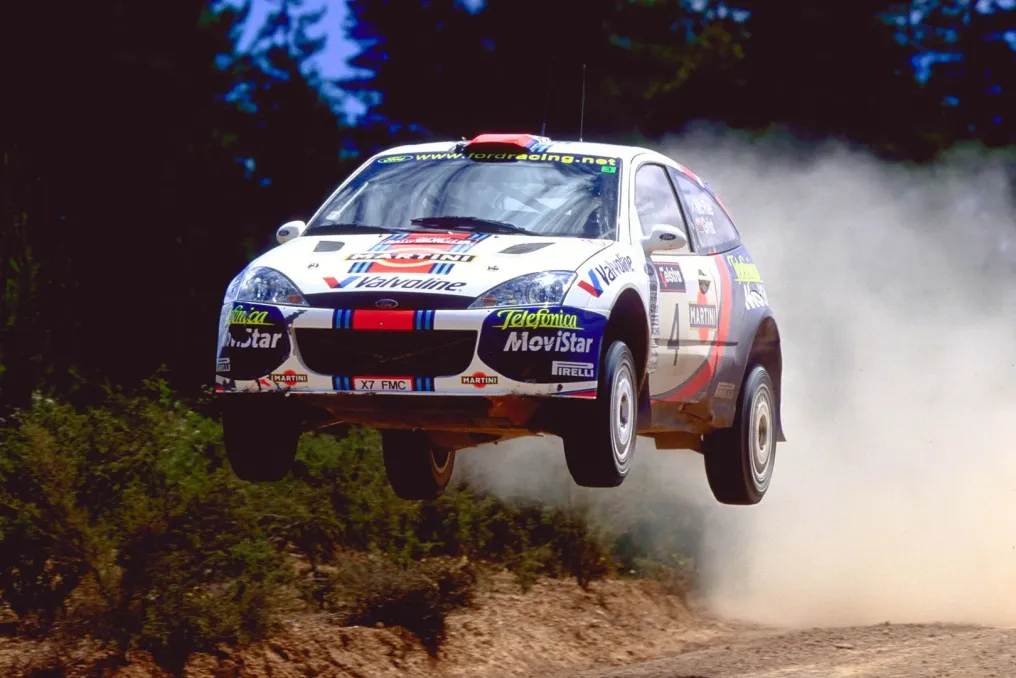
Ford's Long Journey in the WRC Championship
Read more
FlatOut
flatout.com.br

Ford's Long Journey in the WRC Championship

The provided text is an advertisement and does not contain factual news information about Ford's long history in the WRC. Instead, it contains a call to action to subscribe to Flatout content.

Become a Flatout Member!

By subscribing, you gain unlimited access to deep and authentic content, avoiding superficial and sensational journalism. Users are invited to check out subscriber reviews, free samples, and additional benefits offered by Flatouter.

If you already have an account or are a Flatout subscriber, please note that this content may be restricted: it might be material available only to paid users, or you may have exceeded the limit of free articles for the current month.

Similar stories

Italy drew with France in Zinedine Zidane's first home match after Olise's brilliant goal
Read more
iol.co.za

Italy drew with France in Zinedine Zidane's first home match after Olise's brilliant goal

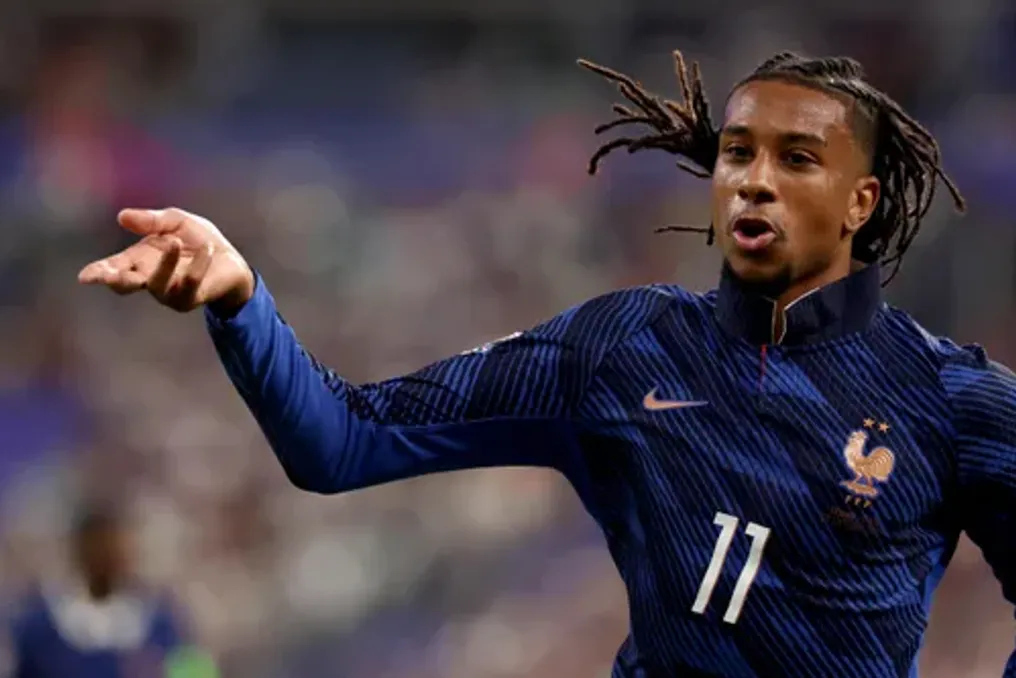
France lost to Italy in a match that ended in a 1-1 draw, in Zinedine Zidane's first home game after he was appointed manager of the French national team. This match took place after Michael Olise scored an impressive goal.

Four days after Olise came on as a substitute and scored a stunning individual goal that secured a 1-0 victory for France in Belgium, the 'Bayern' star once again demonstrated his outstanding talent. Early in the second half, he struck an unobstructed shot that hit the crossbar.

However, Inter defender Alessandro Bastoni equalized for Italy in the middle of the second half, preventing Zidane from achieving a third consecutive win in charge of his country.

France, which previously suspended defender Dayot Upamecano due to a red card late in the match, is in first place in Group A1 of the UEFA Nations League with seven points, while Belgium trails by six points after defeating Turkey 3-0. France and Belgium will meet on Monday in the final match of this two-week international break. Italy has four points before playing against Turkey.

Zidane was in the spotlight as his home debut in front of a full crowd of 77,118 spectators at the Stade de France near Paris was against the same team as his last match as a player. The icon, who is now 54 years old and a Ballon d'Or winner, never played again after being sent off for the infamous header against Marco Materazzi in the 2006 World Cup final in Berlin, which Italy won on penalties.

This was the former Real playmaker's first appearance at the French national stadium since participating in a friendly match against Mexico in May 2006, during which he earned his 100th cap. He stated: 'It was magnificent. We would have liked to win for our fans tonight, but I was obviously very moved and happy to return to the Stade de France.'

Beyond the attention on his past, Zidane aims to leave his mark on the French team in this Nations League campaign, focusing on the next major tournament—Euro 2028. He noted: 'I am satisfied with the play, although not with the result. We had chances to score a second goal, and we didn't. But I am very proud of my players.'

He could not start alongside captain Kylian Mbappé again, as the Real forward returned to his club after a knee injury sustained while scoring the winning goal in Turkey last week.

Champions forced to sell medals to survive: the tragic reality of professional sports
Read more
iol.co.za

Champions forced to sell medals to survive: the tragic reality of professional sports

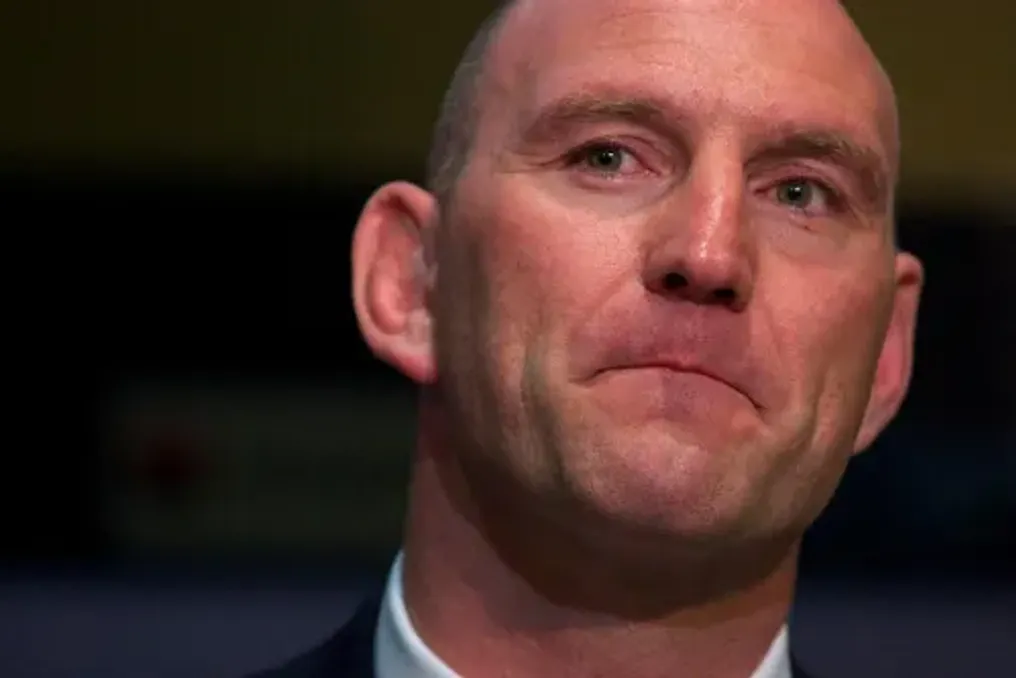
The auction related to Lawrence Dallaglio's bankruptcy highlights a sad trend in professional sports, where financial difficulties and post-career challenges force legendary athletes to sell their greatest achievements.

Few things symbolize an athlete's decline as painfully as putting a championship medal up for sale. This week, former England captain Lawrence Dallaglio announced that he is selling his 2003 Rugby World Cup winner's medal after declaring himself bankrupt.

The 54-year-old athlete put up for auction a number of valuable items from his brilliant career, including medals, trophies, and caps. Dallaglio was one of the stars of the England team that dramatically defeated Australia in Sydney 23 years ago to win the World Cup in extra time. Now, the gold medal, which symbolized the peak of his career, has become a financial asset.

"I had financial problems — I could have done much better," admitted Dallaglio. His story resonated in South Africa as well.

Last year, former South African Springbok player Adrian Richter also parted with his 1995 Rugby World Cup winner's medal. Richter captained the 'Boks' team in a group match against Romania, scoring two touchdowns, and also scored twice against Canada. He came on as a substitute in the quarter-final against Samoa but did not participate in the semi-finals or the final.

For Richter, selling the medal was a matter of survival, not sentiment or choice. "I definitely didn't sell it because I wanted to. I can't find a job. It's not good," he stated. Richter, who was 59 at the time, candidly spoke about the pressure of providing for his family: "At my age, I can't find a job. Nobody wants to hire me. It's absolutely awful."

The stories of Dallaglio and Richter serve as a harsh reminder that sporting immortality does not guarantee financial stability. While some athletes successfully turn fame and wealth into a comfortable life after retirement, others face difficulties when the applause fades, contracts disappear, and income dries up.

Some make catastrophic investments. Others spend more than they can afford, unable or unwilling to adjust a lavish lifestyle after their careers end. Problems can be exacerbated by gambling, alcohol, and other addictions, while the loss of purpose and identity accompanying retirement can make the transition even harder.

The sports world is full of cautionary tales. O. J. Simpson went from being a superstar of American football to an actor and TV host before his life descended into one of the most famous sagas in American sports history. Although he was acquitted of the murders of Nicole Brown Simpson and Ron Goldman in 1995, he was later convicted in 2008 of armed robbery and kidnapping in Las Vegas and served nine years in prison.

Mike Tyson earned hundreds of millions of dollars during his illustrious heavyweight boxing career, but extravagant spending and a series of legal and personal problems ultimately led to his bankruptcy in 2003. His expenses included luxury mansions, expensive cars, and even Bengal tigers. The man who once ruled the heavyweight division eventually served several prison terms.

John Daly was one of golf's bright figures—capable of incredible shots, heavy drinking, and extraordinary gambling losses. He won the PGA Championship in 1991 and The Open Championship in 1995, but his off-course problems became almost as famous as his on-course successes. Daly said that he once lost $1.65 million playing slot machines in just five hours, estimating his lifetime gambling losses to be in the range of $50 to $60 million. His career was a striking combination of triumph and turmoil. Today, he sells merchandise outside the Augusta National Golf Club during the Masters week.

Evander Holyfield became a heavyweight world champion and earned an estimated $200 million during his career. However, he admitted that it was difficult to refuse friends and family who asked him for financial help. Poor financial decisions ultimately cost him most of his fortune, including his mansion and valuable memorabilia. Today, Holyfield earns money through appearances and other commercial projects.

Diego Maradona was one of the greatest football players, representing Argentina in four World Cups and earning a multimillion-dollar fortune. However, his life outside of football is overshadowed by addiction, financial problems, and legal battles. Tax debts and fines worsened his problems, and his restless lifestyle consumed much of his wealth. When Maradona died in 2020, his financial affairs were still subject to legal disputes.

Boris Becker seemed destined for success. The German won 49 singles titles, six Grand Slam tournaments, and Olympic gold, earning a huge fortune during his brilliant career. Reckless spending and serious tax issues ultimately destroyed much of his wealth. In 2017, Becker was declared bankrupt, and in 2022, he was sentenced to two and a half years in prison in the UK for concealing assets and loans during bankruptcy proceedings. He served part of his sentence before being released and deported to Germany. Becker's story, like those of many others, illustrates the brutal difference between earning wealth and keeping it.

Perhaps the saddest part of the stories of Dallaglio and Richter is this: the medals they won are priceless from a sporting perspective, but when bills need to be paid, even a piece of history has a price.
Tradition of Refusing Handshakes Between India and Pakistan Continues in Asian Games Final
Read more
www.aajtak.in

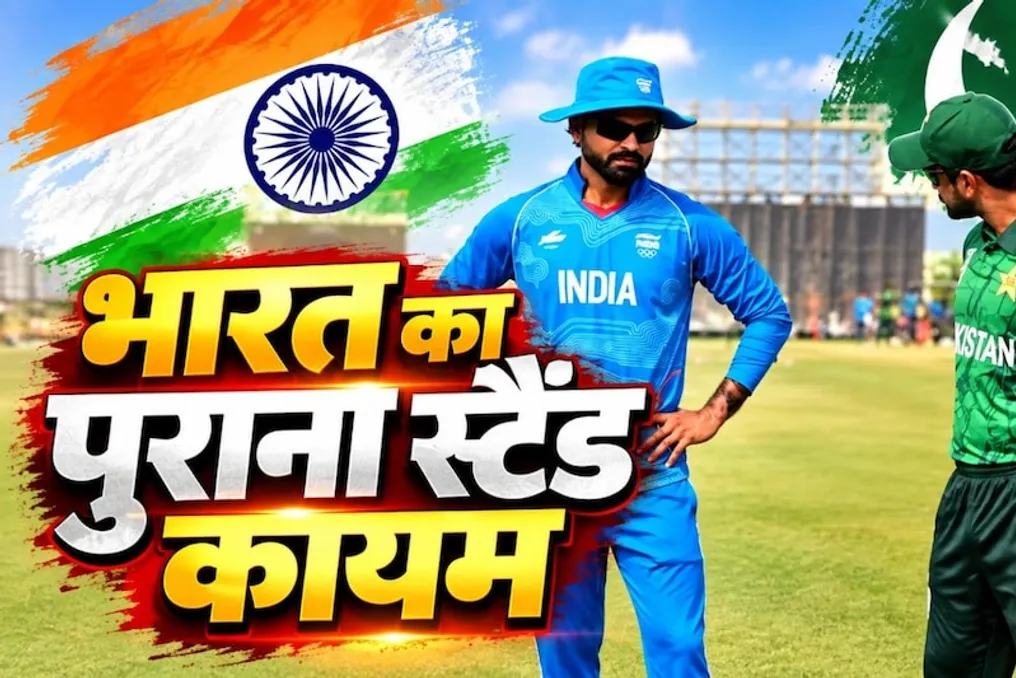
Tradition of Refusing Handshakes Between India and Pakistan Continues in Asian Games Final

In the final cricket match of the 2026 Asian Games, held on Saturday, October 3rd, the teams of India and Pakistan faced each other. The captain of the Indian team, Shreyas Iyer, decided to start the game with batting after winning the toss.

During the toss procedure between the captains of India and Pakistan, there was no handshake, continuing the trend of avoiding handshakes in Indo-Pakistani cricket, even in the Asian Games gold medal match.

India reached the final by defeating Sri Lanka 124 in the semi-final, while Pakistan qualified for the decisive match by beating Bangladesh. It is worth noting that previously, in matches between India and Pakistan at the Asia Cup and ICC tournaments, players also avoided handshakes. Even during the toss in the Asian Games final, both captains kept their distance and did not shake hands.

During the toss between Shreyas and Sahibzada, there was some exchange of words, but they maintained distance and did not shake hands.

Meanwhile, in other sports at the Asian Games, players from India and Pakistan greeted each other in the usual manner; for example, table tennis and hockey players exchanged handshakes after the match. However, in cricket, the policy of refusing handshakes is a separate case. Although OCA or IOC rules do not make shaking hands mandatory for players, it is considered a widely accepted tradition in the spirit of sportsmanship.

The situation at the Asian Games gains additional context: the Indian women's cricket team won gold, while Pakistan received bronze. Both teams did not meet each other in the tournament, but players from both countries were present at the same award ceremony. Now, the men's cricket final has brought up this topic of 'no handshake' in Indo-Pakistani cricket to the level of the Asian Games.

The Indian team squad for the Asian Games final included: Vaibhav Suryavanshi, Abhishek Sharma, Sanju Samson (wicketkeeper), Shreyas Iyer (captain), Ishan Kishan, Tilak Verma, Shivam Dube, Axar Patel, Washington Sundar, Ravi Bishnoi, and Jasprit Bumrah.

The Pakistani team squad for the Asian Games final consisted of: Farhan Sahibzada (captain), Sam Ayub, Usman Khan (wicketkeeper), Majed Sadakat, Hasan Nawaz, Abdul Samad, Arafat Minhaj, Ahmed Daniyal, Mohammad Wasim Jr., Abrar Ahmed, and Sufian Mukim.

Popular