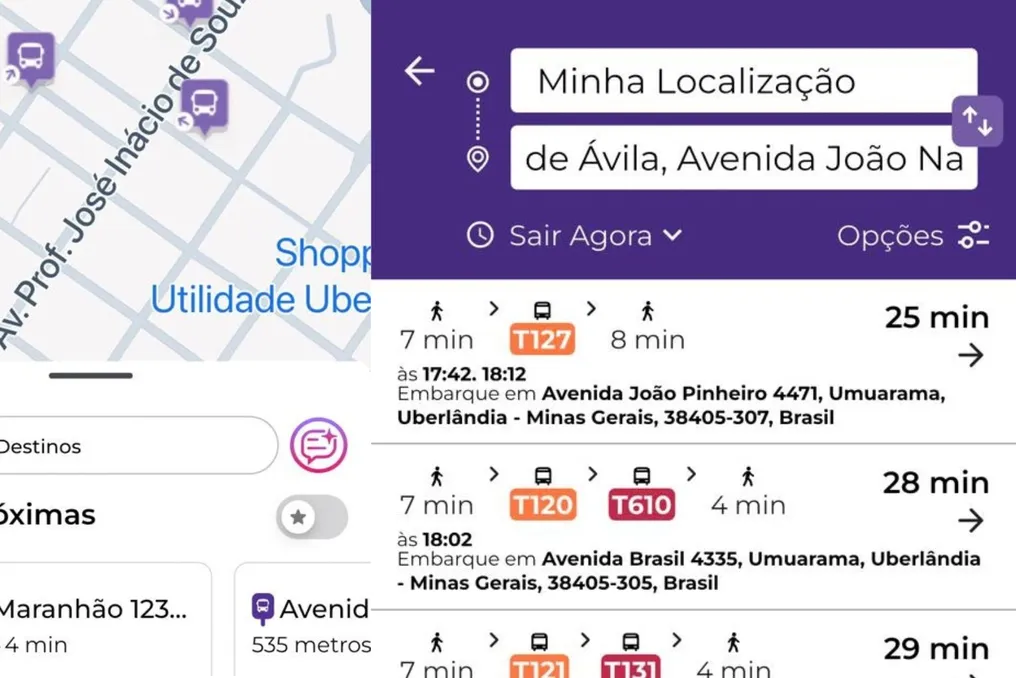
The new public transport application for Uberlândia, named Cittamobi, is already operational and can be obtained free of charge by users of the Integrated Transport System (SIT). This tool functions to gradually replace UdiBus, offering passengers the ability to monitor buses in real time, check available lines and routes, and plan their journeys.
According to municipal information, the application has already been downloaded by 850 people. The introduction of this change was formalized by the Municipal Secretariat of Traffic and Transport (Settran) last Tuesday, the 29th, during the launch event of the Udi APP, held at the Municipal Administrative Center.
Although Cittamobi is being implemented, UdiBus will remain available during the transition period. Settran recommends that passengers install Cittamobi and familiarize themselves with all its functionalities before the replacement of the old system is definitively completed.
How to download Cittamobi
The application is available for free on both Android and iOS devices. For Android users, the download must be done through Google Play, while for iPhones (iOS), it can be downloaded from the App Store. After installation, the user can access all information related to public transport in Uberlândia and use all the resources the platform offers.
What changes with the new application?
Cittamobi consolidates several features designed to simplify bus journey planning. Among the most important features are the ability to track buses in real time, allowing users to check their location and estimate arrival times at stops. Furthermore, it provides detailed consultation of the lines and routes that make up the SIT, and assists the passenger in planning their travel by suggesting route options.
Another relevant aspect is the service suggestion functionality, which opens channels for users to submit proposals for improvements or changes to public transport routes.
Accessibility
Cittamobi also has a specific version with accessibility features, primarily aimed at visually impaired people. This feature uses voice commands and a virtual assistant to support passengers throughout the journey. Functionalities include displaying real-time information about bus arrivals, identifying lines approaching the chosen stop, and providing alerts upon arrival at the final destination.
Additionally, the accessible version allows the user to register frequently used locations, such as home and workplace, create predefined routes, and record personalized landmarks. During the trip, the application can announce street names, avenues, and other geographical landmarks, helping the individual know where to board and when to alight.
This accessibility feature was developed by software engineer and visually impaired person Luiz Eduardo Porto.