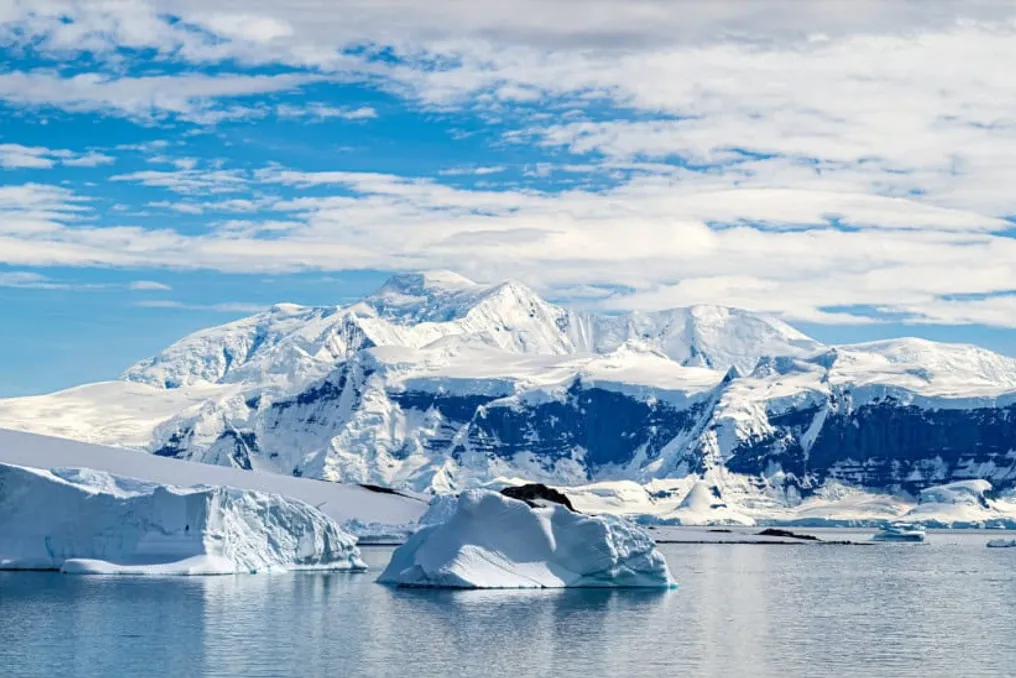
During the winter of 2024, a hole measuring 89,121 square kilometers formed in the sea ice of Antarctica. This area, known as a polynya, appeared in Breyard Bay on the eastern part of the continent and reached a size only slightly smaller than the territory of Portugal, which is about 92 thousand square kilometers.
Researchers from India, led by Earth scientist Jibandjyoti Swain, found that a combination of intense atmospheric rivers, warm sea waves, and strong winds hindered the formation and growth of ice. The research findings were published in the journal Geophysical Research Letters.
Every winter, the area covered by sea ice practically doubles as ocean water freezes around Antarctica. Usually, the surface in Breyard Bay remains completely covered from July to August. However, in August 2024, satellite images revealed a huge area of open ocean amidst the ice.
According to the researchers, such a large-scale phenomenon had not been observed at this time of year. The investigation identified six atmospheric rivers reaching the region between July and August. These systems, known as 'rivers in the sky,' transported large volumes of moisture and warm air from lower latitudes into Antarctica.
These events were among the strongest episodes of moisture transport recorded in mid-winter. The effect was not limited to air warming: the transported moisture and heat also altered the surface and ocean conditions.
The authors explained: 'Together they caused an increase in downward longwave radiation, atmospheric warming, warm snow, and positive heat flux into the ocean, which collectively suppressed sea ice growth.'
Winds added another factor. They triggered the so-called Ekman transport, a process related to how wind moves ocean water. When strong winds blow over the surface, they shift this layer of water. This movement promotes the upwelling of masses from deeper layers of the ocean that occupy the space vacated by the surface waters.
In Breyard Bay, this process led to circumpolar deep waters rising to the surface, which are relatively warmer and more turbulent than the surface waters typically found in winter. With the influx of warmer water from below, freezing became even more complicated. Persistent warm sea waves helped maintain the heating of the upper ocean layers.
Sea ice floats, so its disappearance does not directly raise sea levels. Nevertheless, it performs an important function by protecting the Antarctic ice shelves and glaciers from contact with warmer waters.
Additional Information
Without this protection, much of the ice cover could be exposed to the ocean. Sea ice is also vital for Antarctic ecosystems, as the food chains supporting most life in the oceans depend on its seasonal return.
The team predicts that conditions with low ice cover and the formation of polynyas may become more frequent in regions where sea ice has historically remained stable. The researchers wrote: 'Low sea ice conditions and polynya formation may become common in regions where sea ice has historically remained stable.'
A recent trend is also attracting attention. The four lowest sea ice records in winter occurred over the last four years: 2023 was the minimum, and 2024 ranked second.
In June 2026, a similar episode occurred in the Bellingshausen Sea, west of the Antarctic Peninsula. An ocean area roughly the size of France remained unfrozen where sea ice should have been.