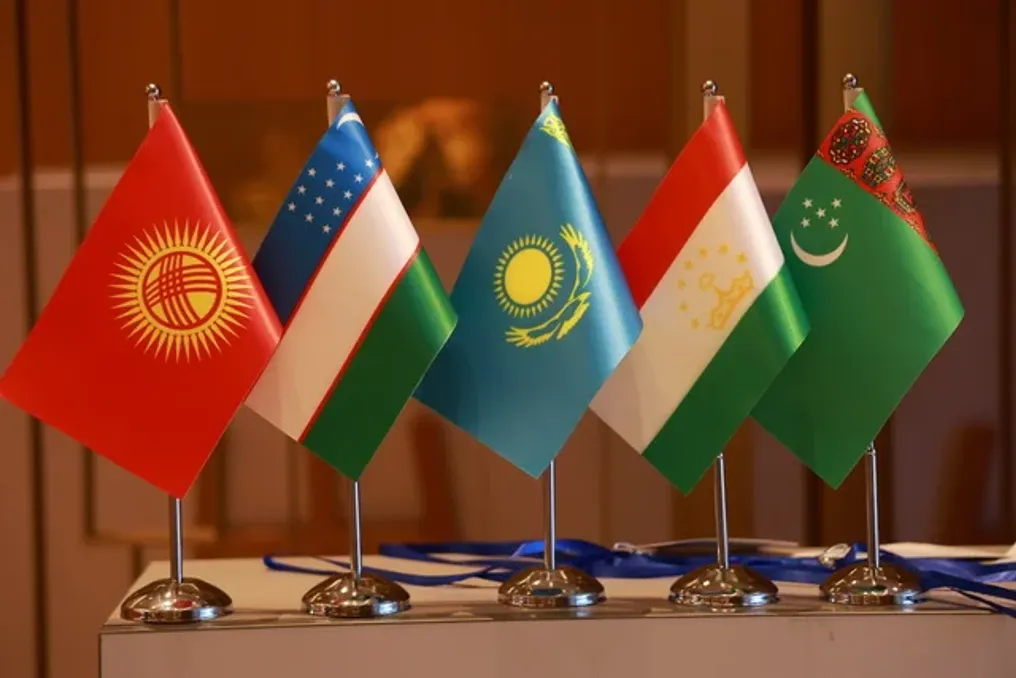
Central Asia is gradually moving towards a new stage of economic growth. Although Kazakhstan, Uzbekistan, Kyrgyzstan, Tajikistan, and Turkmenistan differ significantly in economic scale, resources, and institutional potential, they all face a common challenge: future growth will depend more on human capital, technology, and productivity.
For decades, the region relied on natural resources, state investment, infrastructure development, labor migration, and relatively low production costs. These factors remain significant, but they are unlikely to provide a sufficient foundation for long-term competitiveness.
Nevertheless, important changes are occurring: digital services are expanding, higher education systems are developing, technology companies are emerging, and governments are paying more attention to startups, research, and technological modernization. The key question is whether these investments can transform into commercially successful innovations.
The Global Innovation Index (GII) 2026, published by the World Intellectual Property Organization (WIPO), provides useful insight into the region's current standing.
The 2026 ranking features four Central Asian countries. Kazakhstan ranks 73rd out of 139 economies, improving its position by eight places. Uzbekistan follows at 77th place, and Kyrgyzstan rises to 92nd. Tajikistan remains lower in the ranking, while Turkmenistan is not included, making direct regional comparison incomplete.
The rankings show significant differences but also point to a general trend: several Central Asian economies are simultaneously improving their performance. More important than the positions themselves is the ability of countries to convert innovative resources—education, infrastructure, research, and financing—into outcomes such as technologies, intellectual property, productive companies, and export products. This remains one of the region's main weaknesses.
Kazakhstan possesses a relatively developed digital infrastructure, financial institutions, and a growing technology ecosystem. Its main problem is commercialization. Strengthening ties between universities, research institutes, and companies, as well as increasing private R&D spending and deepening venture markets, may determine whether the recent improvement becomes sustainable.
Uzbekistan benefits from a large population, a growing domestic market, industrial potential, and a significant pool of technical graduates. Its main opportunity lies in scale. However, the country needs to transform its human capital into higher productivity, strengthen research capabilities, and create internationally competitive technology companies.
Despite its smaller economy, Kyrgyzstan has prospects in software, digital services, and creative industries. Instead of trying to replicate the industrial models of its larger neighbors, it can benefit from specialization, openness, and easier access to the wider Central Asian market.
Tajikistan faces major structural limitations in financing, research, and market size. Therefore, its strongest opportunities may lie in specialized areas such as hydropower, water resource management, agriculture, and mountain-adapted technologies.
Turkmenistan is not included in the GII 2026. An important first step for a more accurate assessment of its innovation potential will be increasing statistical transparency and the availability of internationally comparable data.
Despite different starting points, Central Asian countries share several priorities. Firstly, universities and scientific institutions need closer ties with private companies. Scientific research creates economic value when businesses can fund, commercialize, and scale up new technologies.
Secondly, there is a need to increase private investment in research and development. Government programs can lay the groundwork for an innovation ecosystem, but sustainable technological development ultimately requires companies to invest their own capital in research.
Thirdly, Central Asia needs deeper venture markets. Financing remains particularly challenging for technology companies that have moved beyond the startup phase and require capital for international expansion.
Human capital is another critical factor. The region does not just need more university graduates; it needs higher quality education, research capabilities, and skills that meet the demands of modern industries.
Finally, regional integration itself can be an innovation advantage. Individually, Central Asian markets are relatively small. Together, the five countries represent a market of over 80 million people. Simplifying cross-border business activity, specialist mobility, and joint research projects can significantly increase the scale available to regional technology companies.
Future positions in the Global Innovation Index cannot be predicted accurately, as rankings also depend on the results of other countries and changes in methodology and data. Nevertheless, several trajectories are visible.
Kazakhstan can continue to improve its standing if its existing digital and financial infrastructure begins to produce more commercially successful technology companies. Uzbekistan has significant scaling potential due to its population, industrial base, and technical workforce. Kyrgyzstan may advance through digital services and integration with neighboring markets, while Tajikistan is likely to progress through targeted specialization and gradual institutional improvements.
For Turkmenistan, broader access to international information remains an important prerequisite for assessing future progress.
However, the bigger issue is not which Central Asian country will take the top regional spot. None of the region's economies currently rank among the world's innovation hubs. Overcoming this gap requires shifting from building innovation infrastructure to achieving measurable economic results: research, private investment, intellectual property, technology companies, and internationally competitive products.
Thus, Central Asia has the opportunity to develop not just five separate national innovation systems, but a more integrated regional ecosystem where different economies contribute with their respective strengths.
Whether the recent improvements in the Global Innovation Index will lead to temporary shifts in rankings or to the beginning of a deep technological transformation will depend on how successfully the region can convert its growing human, financial, and institutional resources into productive innovations.