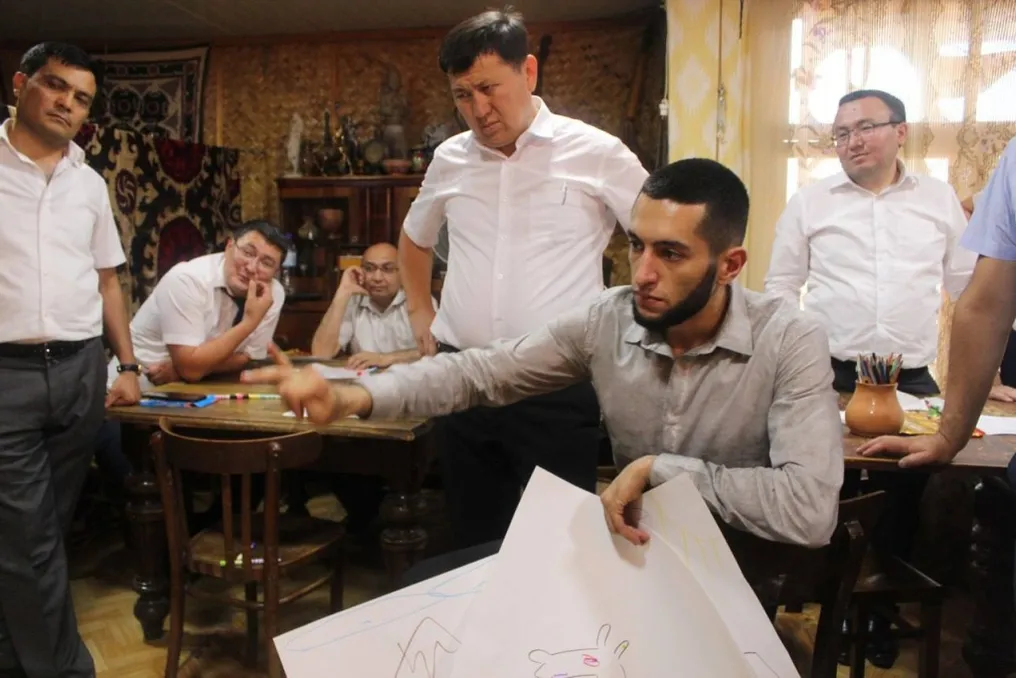
Events that outwardly appear to be simple corporate entertainment, such as building a tower from blocks or staging scenes, are actually designed to help employees practice key skills. These include communication, role distribution, conflict resolution, and the ability to ask for help. Team building expert Temur Karimov explains where the line is drawn between a regular corporate event and team development work, as well as how to determine the real benefit of such activities.
The Difference Between a Corporate Event and Team Work
In everyday life, the term 'team building' is often used to denote any offsite event, such as sports tournaments, dinners, or trips out of town. Such recreation does indeed contribute to bringing colleagues closer, as in a relaxed atmosphere, employees reveal themselves not only through their positions but also through common interests rarely discussed at official meetings.
However, a pleasant evening by itself does not guarantee that the team has learned to make decisions effectively, exchange information, or discuss mistakes constructively. According to Temur Karimov, benefit can be gained from anything that strengthens informal ties. The difference between formats arises when the meeting has a clear working goal, the facilitator controls the process, and participants analyze their actions after the exercise and determine how it can be applied in daily activities. A corporate event serves for relaxation and socializing, whereas team building, in the strict sense, acts as training.
Temurbek Karimov notes that client requests like 'increase team spirit, motivation, or efficiency' rely on the factor of trust. If trust is absent among employees, management, and subordinates, corporate culture remains merely a declaration. Therefore, the task formulation must be more specific than just 'unite the team.' Teams need to learn to listen attentively to quiet participants, coordinate actions between departments faster, or discuss failures without looking for culprits. The choice of format is determined by the goal: free conversation is suitable for getting acquainted, while role-playing tasks or joint assignments are for analyzing specific work habits.
How the Collective Became a Subject of Scientific Inquiry
The idea of targeted work not only with the individual but also with the internal relationships of a group appeared long before the advent of modern offsite programs. Productivity studies began in 1924 at the Western Electric factory in Hawthorne. These investigations continued until the early 1930s and drew managers' attention to the unofficial side of the organization, including group norms, personal relationships, and sense of belonging, which could influence behavior as much as instructions and pay. Although later the methodology and some conclusions of the Hawthorne experiments were criticized, they played a key role in shifting the focus of management from the mechanical structure of the workplace to human relationships.
In the 1940s, social psychologist Kurt Lewin introduced the concept of 'group dynamics,' proposing to view the group as a system where one member's behavior influences the conditions for others. After Lewin's death, his center at the Massachusetts Institute of Technology moved to the University of Michigan. There, concepts of T-groups and sensitivity training developed, where participants learned to become aware of their own behavior, receive feedback, and analyze what was happening during interaction. This approach is similar to the modern principle of 'did—discussed—tried differently.'
In 1965, American researcher Bruce Tuckman presented the well-known model of group development, which includes stages: forming, storming, norming, and performing. This model is often simplified for use in training, although it originally represented an overview of small group research, not a guarantee of passing through four stages via four exercises. The value of the model lies in the fact that tension and disagreements themselves do not mean the collapse of the team; the decisive factor is the group's ability to overcome these difficulties and agree on rules.
What Scientific Research Really Confirms
The scientific consensus states that carefully planned team building programs have an average positive impact, but the degree and longevity of this effect depend on the content of the program itself. A meta-analysis conducted in 2009 compared 60 statistical correlations and revealed a moderately positive effect in four areas: knowledge of collaboration, participants' attitude towards the team, workflows, and overall productivity. The strongest link was found between team building and changes in the emotional sphere and interaction processes.
Researchers focused on four key aspects: establishing common goals, clarifying roles, problem-solving, and working on interpersonal relationships. It is important to understand that under the term 'team building' in scientific literature, specially designed interventions are implied, not just any quest, picnic, or competition. A high rating of the event at the end of the day only indicates that the participants enjoyed it, but it does not prove that departments became more coordinated a month later.
Another important mechanism related to trust is psychological safety. This is the feeling within a team that one can ask a question, admit a mistake, or express doubt without fear of humiliation or punishment. A classic study by Amy Edmondson showed that psychological safety in 51 work teams correlated with learning-promoting behavior. The researcher herself emphasized the importance of context, including the support and behavior of the manager. A game can serve as a safe rehearsal, but it will not create the necessary environment if the boss punishes inconvenient questions the next day.
Modern international practice has long gone beyond simple rope courses and fun contests. A review in the journal American Psychologist highlights four tools for team development: team training, leadership development, team building itself, and collaborative work analysis. For example, the American healthcare program TeamSTEPPS is based on communication, leadership, situation monitoring, and mutual support. It uses simulations, implementation plans, and measurement methods, emphasizing the importance of the acquired skill rather than the trip itself.
How Play Contributes to Dialogue
In a normal work environment, employees tend to defend their professional reputation. A person might remain silent if they don't understand the task so as not to appear incompetent, or may not dare to propose a raw idea or object to management. Karimov believes that the game format temporarily removes this defensive reaction, returning adult specialists to a 'childhood level' where they can experiment, make mistakes, and agree without the pressure of job status.
Karimov argues that a team must have an atmosphere that allows people to speak freely and express themselves, because one thought often gives rise to another, forming the skill of collective thinking. It is at this moment that the exercise turns into a diagnostic tool. During the execution of a task or the construction of a structure within a limited time, one can quickly see who takes the lead, who stays aside from the discussion, how information is transmitted, and what happens after a mistake occurs. However, observation alone changes little; the team needs subsequent debriefing: what goal was set, what worked, why did the failure occur, and what rule will be applied in real work.
The significance of such debriefing is confirmed by a 2013 meta-analysis. The authors concluded that properly conducted debriefings can increase individual and team productivity by about 20–25%. This data refers to structured discussion of the experience gained in various conditions, not to any conversation after the game. The main principle is that participants must not just experience the shared experience but transform it into concrete conclusions about their own behavior.
Situations When Team Building Does Not Yield Results
The most common mistake occurs even before choosing the venue for the event. The company orders 'improvement of team spirit,' when the real problem may lie in excessive workload, unclear powers, unfair wages, or conflicting KPIs between departments. These fundamental causes cannot be eliminated by a sports relay race. Team building can help make the problem obvious and initiate discussion, but solving it requires managerial changes.
A second risk is related to the manager, who either observes from the sidelines or is unwilling to accept negative feedback. In Karimov's experience, the format is most effective when the manager actively participates in the employees' activities, acting as a team leader, not a judge. If the training encourages open expression, and then this is punished, the level of trust will drop below the initial level. Similarly, if participation is declared voluntary, but refusal is considered disloyalty, this will also lead to failure.
An overly generalized scenario can also be ineffective. Excessive competition can intensify existing disagreements, public recognition can violate personal boundaries, and physical tests can exclude some employees. Finally, even a good conversation will not bear fruit if the company is not ready to implement structural changes. Karimov particularly notes bureaucratic structures: ideas arise there, but unfortunately, they take too long to be implemented.
How to Assess Achieved Results
Results cannot be measured by the number of smiles in photos. Before conducting the event, the company must define one or two measurable indicators, such as the speed of task transfer between departments, the number of returns due to unclear instructions, employee activity in discussions, or readiness to report errors promptly. It is useful to record the initial state using a brief anonymous survey and work data, and then conduct a re-measurement after several weeks. Any simultaneous changes in management, workload, or motivation system must also be taken into account.
Immediately after the meeting, it is more important to ask questions like 'what did we notice in our work?' and 'what will we change in the future?' rather than asking about personal enjoyment. An responsible person must be assigned to the agreed-upon agreements, and a control deadline must be set. This could be implementing a new meeting regulation, changing the order of information exchange, or conducting a brief analysis after completing a complex project. Thus, the event becomes the first iteration of practice, not just a bright one-off event. Temurbek emphasizes that with ne
}, {