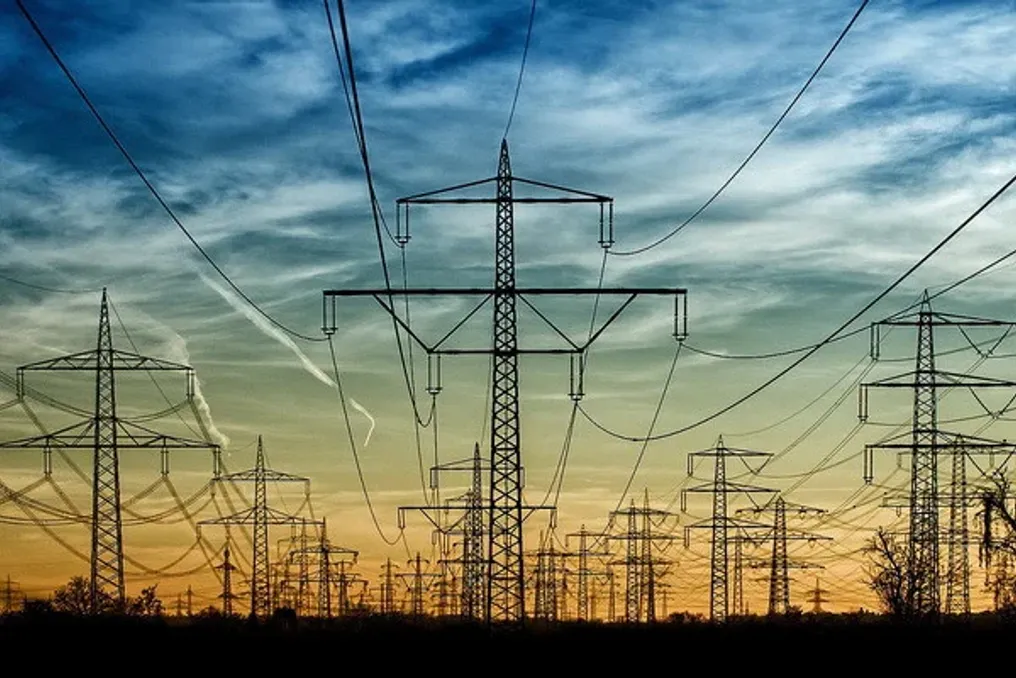
Electricity generation in Uzbekistan increased by 7.3% to reach 60.5 billion kWh
Read more
UzDaily
uzdaily.uz

Electricity generation in Uzbekistan increased by 7.3% to reach 60.5 billion kWh

According to data from the National Statistical Committee of Uzbekistan, between January and August 2026, Uzbekistan produced 60,528.7 million kWh of electricity. This figure demonstrates a 7.3% increase compared to the same period last year.

Production by large enterprises amounted to 40,357 million kWh, which is a decrease of 2% relative to the period from January to August 2025 (41,179.3 million kWh). Meanwhile, in the same period in 2024, these enterprises' output reached 48,711.6 million kWh.

Small enterprises whose main activity is related to electricity generation increased their production volume by 32.4%. In 2026, they produced 20,171.7 million kWh, compared to 15,233.3 million kWh in January-August 2025. In the same period in 2024, small enterprises generated 5,943.3 million kWh.

Furthermore, thermal output by large enterprises decreased by 19.1%. In January-August 2026, it was 10,902.9 thousand Gcal, whereas in January-August 2025, this indicator was 13,474.7 thousand Gcal. In January-August 2024, thermal output reached 15,252.7 thousand Gcal.

Similar stories

Uzbekistan's industrial production grew by 8% in January-August 2026 to 926.5 trillion soums
Read more
uzdaily.uz

Uzbekistan's industrial production grew by 8% in January-August 2026 to 926.5 trillion soums

According to data from the National Statistical Committee of Uzbekistan, industrial production in Uzbekistan reached 926.5 trillion soums from January to August 2026, demonstrating an 8% growth compared to the same period last year.

Manufacturing accounted for the largest share of total industrial output, providing 805.7 trillion soums, or 87% of the total amount. Production in this sector increased by 9.1%.

The electricity, gas, steam, and air conditioning production sector amounted to 58.2 trillion soums (6.3% of the total volume), showing an increase of 11.8%. Mineral extraction and quarrying contributed 57.8 trillion soums (6.2%), although production in this sector decreased by 2.4%. Water supply, sewerage, waste collection, and disposal provided 4.8 trillion soums (0.5%), with output growing by 10.2%.

Within the manufacturing sector, the food industry, beverages, and tobacco accounted for 20.1% of output, while textiles, clothing, and leather goods occupied 11.9%. Chemical products, rubber, and plastics provided 6.3%.

Metal products, electronics, mechanical engineering, automobiles, other transport equipment, as well as machine repair and installation collectively accounted for 15.2%. However, hydrocarbon extraction decreased: natural gas output fell by 16.3% to 24.2 billion cubic meters (from 28.9 billion last year), and condensate production decreased by 14.8% to 648.3 thousand tons. Oil production fell by 2.2% to 425 thousand tons, and coal mining decreased by 10.2% to 4.4 million tons.

Concurrently, gasoline production increased by 4.6% to 811.3 thousand tons, and diesel fuel output grew by 6.1% to 834.3 thousand tons. Portland cement production increased by 2.2% to 14.1 million tons.

Electricity generation increased by 7.3% to 60.5 billion kWh. Large enterprises produced 40.4 billion kWh, which was 2% less than the previous year. Small enterprises whose main activity is electricity production increased output by 32.4% to 20.2 billion kWh. Heat generation by large enterprises decreased by 19.1% to 10.9 million Gcal.

Passenger car production increased by 9.2% to 310.4 thousand units. Cobalt showed the largest production volume with 107.1 thousand cars, an 8.2% increase. Among brands, BYD demonstrated the fastest growth, increasing output by 84.5% from 12.9 thousand to 23.9 thousand cars. Onix production grew by 16.1% to 23.5 thousand units, KIA increased production by 12.9% to 19.4 thousand, and Haval by 17.4% to 6.2 thousand.

Meanwhile, Damas production decreased by 4.9% to 55 thousand cars, and Tracker output decreased by 0.5% to 29.8 thousand, while Chery production decreased by 2.7% to 5.8 thousand. An additional 1.5 thousand Chevrolet Damas Move cars were produced. Truck production increased by 42% to 3.9 thousand units, and automotive engine production grew by 6.9% to 160.7 thousand units.

In the textile sector, cotton fiber production increased by 50.9% to 543.7 thousand tons. Cotton fabric output grew by 18.2% to 74.7 million square meters, knitted fabric production increased by 5.2% to 56.6 thousand tons, and knitted underwear production grew by 43.4% to 96 million units. However, knitted outerwear production decreased by 9.5% to 35.1 million units. Additionally, Uzbekistan produced 972.3 thousand tons of wheat flour.

By region, the largest volumes of industrial output were recorded in Navoi region (205.7 trillion soums), Tashkent (158.4 trillion soums), and Tashkent region (147.7 trillion soums). The highest growth rates were shown by Jizzakh region (13.2%), followed by Samarkand region (9.4%) and Andijan region (9.1%). The lowest growth rates, at 7.2%, were noted in both Navoi region and Karakalpakstan Republic.

The average industrial output per capita across the country was 24.1 million soums, higher than 17.5 million soums the previous year. This indicator grew by 106.1%, corresponding to an increase of 6.1% in comparable prices.

Industrial output per capita exceeded the national average in Navoi region (184.4 million soums), Tashkent (49.6 million soums), and Tashkent region (46.5 million soums). Growth in production per capita above the national level was recorded in Jizzakh region (11.1%), Samarkand region (7.4%), and Andijan region (7.3%).

As of September 1, 2026, there were 65.3 thousand industrial enterprises in Uzbekistan. The largest group consisted of food producers with 13.2 thousand enterprises (20.2%), followed by producers of other non-metallic mineral products—9.2 thousand enterprises (14%), and clothing producers—6.7 thousand enterprises (10.3%).

Additionally, 5.4 thousand enterprises were engaged in finished metal product manufacturing, 4.5 thousand in furniture making, 4 thousand in textile production, and 3 thousand in rubber and plastic product manufacturing.

Uzbekistan's Industrial Production Grew by 8% Over Eight Months
Read more
uzdaily.uz

Uzbekistan's Industrial Production Grew by 8% Over Eight Months

According to data from the National Statistical Committee of the Republic of Uzbekistan, industrial production in Uzbekistan increased by 8% from January to August 2026 compared to the same period last year, reaching a volume of 926.5 trillion soums.

Over eight months, consumer sector inflation was 3.4%, while foreign trade turnover grew by 7.6%, reaching 57.4 billion US dollars.

Structure of Industrial Production

Production in the manufacturing industry accounted for 87% of the total industrial output. This sector saw a growth of 9.1%, and the production of electricity, gas, steam, and air conditioning increased by 11.8%. Growth was also noted in water supply, sewerage, waste collection, and disposal by 10.2%.

Within the manufacturing industry, the production of other transport equipment increased 1.4 times, and the output of leather goods, other finished goods, and basic pharmaceutical products increased 1.3 times. However, tobacco production decreased to 88.9% of the previous year's level, and the repair and installation of machinery and equipment decreased to 78.9%.

Price Dynamics and Retail Trade

The average annual increase in food prices was 1.9%, while prices for non-food items rose by 4.3%, and services by 4.7%. Housing and communal services and payments, food and non-alcoholic beverages, and transport contributed the most to price increases, accounting for 2.33 percentage points or 68.3% of the total index increase.

The most significant price increase since December 2025 was recorded in insurance and financial services, where the indicator reached 143.7% of the December level. The smallest increase was shown by educational services, which grew to 100.6%.

The volume of retail trade increased by 18.8%, reaching 370.6 trillion soums. Small businesses accounted for 69.8% of retail sales, large enterprises for 19.9%, and informal trade for 10.3%.

Trade and Market Services

The volume of market services grew by 17%, amounting to 908.6 trillion soums. The main driver of growth was trade services, which increased by 16.5%, financial services by 22.5%, accommodation and catering services by 14.4%, transport services by 15.9%, and communication and information technology services by 21.2%.

Construction works increased by 11.8%, reaching 259.4 trillion soums. Small enterprises and microfirms accounted for the largest share in construction (54.8%), followed by large organizations (25.7%) and the informal sector (19.5%).

Enterprises and Investments

As of September 1, 2026, there were 613,500 enterprises and organizations operating in Uzbekistan, excluding farms and dehqan farms. Of these, 451,900 were small enterprises and microfirms. The highest number of enterprises is registered in Tashkent (116,818), followed by Tashkent region (58,299) and Samarkand region (56,529).

During the first eight months of 2026, 60,500 new enterprises were created. The number of enterprises with foreign capital reached 21,490, including 4,758 joint ventures and 16,732 foreign-owned enterprises.

Exports and Imports

From January to August, exports decreased by 3.4%, amounting to 22.9 billion US dollars, while imports increased by 16.3%, reaching 34.5 billion US dollars. Goods accounted for 62.6% of exports, with industrial goods making up 14.1%. Machinery and transport equipment constituted the largest share of imports (32.6%), followed by industrial goods (13.9%) and chemical products (12.1%).

Industrial electricity consumption in Uzbekistan is set to increase by 40% by 2030
Read more
podrobno.uz

Industrial electricity consumption in Uzbekistan is set to increase by 40% by 2030

Electricity consumption in Uzbekistan's industrial sector is projected to increase by approximately 40% by 2030. The consumption volume will rise from 38 to 53.5 billion kilowatt-hours. This additional load on the energy system will be driven by the development of electric transport and data centers.

Shavkat Mirziyoyev reviewed a presentation on the prospects for power industry development, provided by the president's press service. It was noted that the current capacity of solar and wind stations already exceeds 6.3 gigawatts, and the number of hydroelectric power plants (HPPs) has surpassed 100, reaching a capacity of about 2.5 gigawatts.

According to approved plans, generating capacity should reach 46.1 gigawatts by 2030, ensuring the production of about 129 billion kilowatt-hours. More ambitious goals have been set for 2035: capacity should grow to 57.2 gigawatts, and output to 154.7 billion kilowatt-hours.

As part of the plan implementation, 26 energy storage system projects with a total capacity of 4.2 gigawatts have been formed, 17 of which are already under implementation. By 2030, the construction of nine 220-kilovolt substations and seven 500-kilovolt substations is planned, along with the laying of nearly five thousand kilometers of new power lines. In Karakalpakstan, the possibility of connecting wind farms with one-gigawatt data centers is being considered.

The President emphasized the need to develop plans that account for high rates of economic growth, as well as ensuring an adequate reserve of capacity. A new project management methodology has been proposed: first, the required demand is determined, then the necessary infrastructure and capacity are planned, and only after that is the investor selected through a competitive selection process.

The distribution of responsibilities between agencies is defined as follows: the Ministry of Economy and Finance will handle demand forecasting, the Ministry of Energy will develop the strategy, and the agency for energy market development and regulation will oversee tariffs. Furthermore, a long-term concept for the fuel and energy complex development until 2050 is provided, with mandatory review every five years.

At the meeting, the President was shown changes in the country's transport network. It is planned that by 2030, the volume of transport services will double, 9.1 billion dollars in investment will be attracted to the industry, and the export of transport services will reach 5.7 billion dollars.

Popular