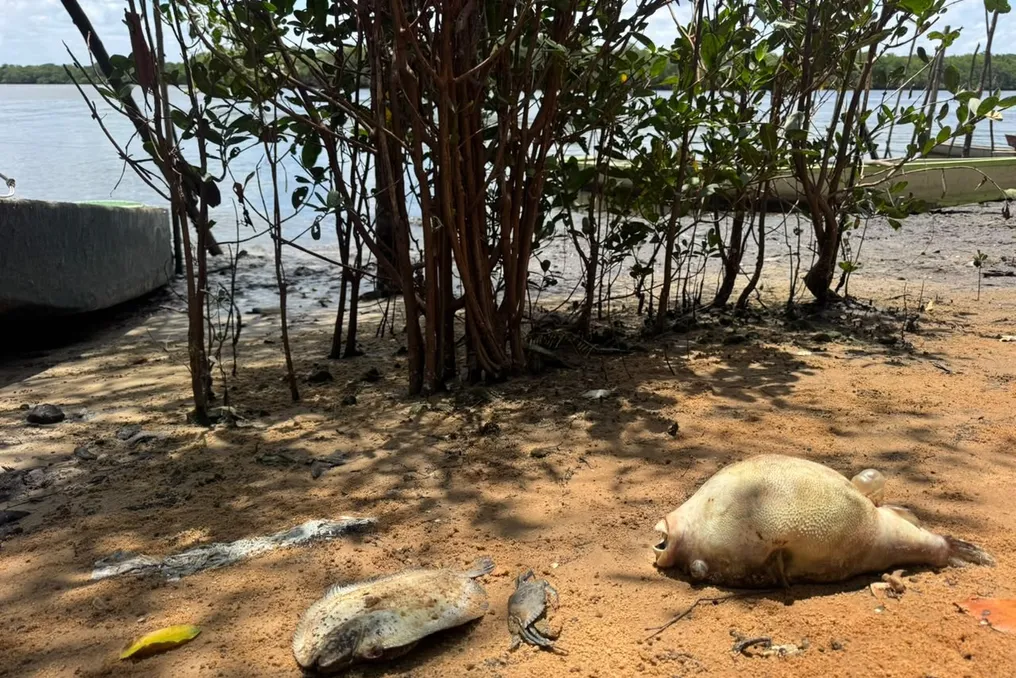
Fishermen from the Guarapes neighborhood, located in the West Zone of Natal, held a protest on Friday morning (2) to demand answers from environmental agencies. The demonstration was due to the recorded fish mortality in the Potengi and Jundiaí rivers, both in Natal and the Metropolitan Region. The fishermen state that they are unable to carry out their professional activity because of this problem.
The Institute of Sustainable Development and Environment of RN (Idema) is conducting the investigation and communicated on Friday that no elements have yet been found that could indicate the probable causes of the fish deaths. Meanwhile, the Water Management Institute of Rio Grande do Norte (Igarn) reported having collected samples of the water and the deceased fish in the affected stretch, with the results of these analyses expected within twenty days.
Images provided by the fishermen themselves to Idema showed fish floating and others jumping out of the water between the night of Wednesday (30) and the early morning of Thursday (1st). It was not possible to estimate the total number of dead fish. The fishermen reported the presence of various types of fish, in addition to crabs and shrimp, dead on the riverbanks. Idema confirmed the occurrence of the fish deaths after carrying out inspections at the site.
Marlúcia Arthur, a fisherwoman with forty years of experience in the community, expressed concern that the current situation might resemble the event that occurred almost two decades ago, in 2007. At that time, the death of forty tons of marine life was recorded in the Potengi and Jundiaí rivers, with the initial suspicion being the discharge of chemical residues and heavy metals. She recalled that at that time, fishermen were unable to live from fishing in the area for more than six months due to the contamination of the stretch.
Robério Nascimento, another fisherman, highlighted that there is a vast fishing community in the region suffering from the loss of fish. Residents suspect some type of contamination, although no environmental authority has confirmed this hypothesis. He lamented that everyone is affected, from Km 6 to Macaíba, and emphasized the need for someone to take responsibility, given that many families depend on the river to survive. He added that the canoes remained idle, and they demand answers so they can feed their families.
In addition to the fish mortality, a strong odor began to spread along the banks of the Potengi River, near the Guarapes neighborhood. According to the fishermen, the tide movement has been transporting the dead fish to other areas. Leandro Arthur Pinheiro reported finding the situation upon arriving to put his canoe in the river on Thursday morning, describing a large quantity of shrimp and good quality fish. Manoel Fernandes witnessed some fish and shrimp leaving the water, indicating that they were dying while being carried away by the current.